Photo by Steven Senne/AP
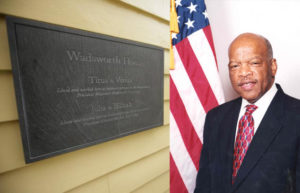
After years of dealing with protests regarding Harvard’s connection to slavery, the university unveiled a plaque Wednesday at the Wadsworth House — official residence of Harvard’s presidents until 1849 — recognizing the lives of Black people who were enslaved on the university campus.
The plaque will honor four enslaved Black people who lived and worked on the university lands under two different presidents.
The first two people, Titus and Venus, were enslaved by former university president Benjamin Wadsworth — the namesake of the house — who ran the college from 1725 until 1737. The others, Juba and Bilhah, were enslaved and mainly performed household duties for former president Edward Holyoke, who ran the college from 1737 until 1769. Wadsworth House will now be dedicated to them.
Local Massachusetts news outlet WBUR reported that the university has been investigating and researching the school’s ties to racism and slavery since 2007. Harvard history professor Sven Beckert has been at the forefront of that intensive process. Beckert said the plaque is a step in the right direction.
The plaque reads:
“Titus & Venus: Lived and worked here as enslaved persons in the household of President Benjamin Wadsworth (1725-1737); Juba & Bilhah: Lived and worked here as enslaved persons in the household of President Edward Holyoke (1737-1769).”
U.S. Rep. John Lewis of Georgia attended the dedication ceremony along with university president Drew Faust.
“The plaque is intended to remember them and honor them, and to remind us that slavery was not an abstraction but a cruelty inflicted on particular humans,” Faust said Wednesday. “We name the names to remember these stolen lives.”
In the recorded broadcast of the event, Lewis referenced the complex history of slavery and the impact enslaved Africans had on the foundation of this country:
“When I first got to Congress in 1987, … I noticed there was a strange absence of the contributions that slaves had made to the construction of federal buildings,” Lewis said. “Slaves helped build the White House, the U.S. Capitol and other monuments of power in Washington. But not one word was ever mentioned about their action and their sacrifice.”
Atlanta Black Star reported that the university’s law school removed the seal of wealthy slave owner Isaac Royall last month. The research and investigation started in 2007 also inspired this review of Royall. The Harvard faculty and many student protesters have raised concerns over the use of Royall’s family seal prior to the removal.
The new plaque comes months after the group, Reclaim Harvard Law, staged sit-ins and demanded that campus buildings be named after enslaved Black people.


