South Africa President Switches Gears About $23M Payback of State Funds, Says He Was Wrong

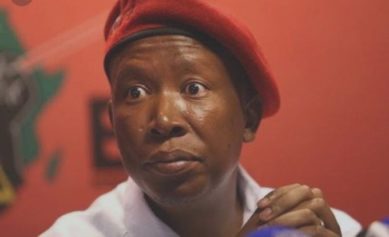
EFF leader Julius Malema (R) led protesters outside the court

EFF leader Julius Malema (R) led protesters outside the court.

South Africa’s President Jacob Zuma has made a U-turn in court over his refusal to repay some of the $23 million of state money used to upgrade his home.

His lawyer admitted he was wrong to ignore an anti-corruption watchdog’s report to pay back money spent on features such as a swimming pool.

The opposition brought the case, hoping it will open the way for impeachment proceedings against the president.

Thousands of people protested outside court, shouting “Zuma must fall.”

Police put up a strong show of force, as the protesters, led by Julius Malema’s left-wing Economic Freedom Fighters, marched to the court in the main city, Johannesburg.

The protest was against “corruption and cronyism” in government, the EFF said.

The main opposition Democratic Alliance also organized its own demonstration.

The governing African National Congress denounced the marches as a “political exercise”.

The opposition parties want the Constitutional Court to rule that Zuma flouted the constitution by ignoring a 2014 report by the anti-corruption watchdog, known as the Public Protector, that he should repay the money, as he had “unduly benefited” from the upgrade.

At the time, the police minister defended the expenditure as necessary security upgrades, saying the swimming pool was, in fact, a fire pool that could be used in the event a fire broke out at the residence in Zuma’s home village of Nkandla.

An amphitheatre, cattle enclosure and chicken run were also built.

Read more at www.bbc.com

Independent journalism still matters.

We hope this story was worth your time. For over 14 years, Atlanta Black Star has stayed Black-owned and independently run. We didn't get here by waiting on ad budgets that were never built to prioritize us. Our readers did that.

Corporate support for Black media has always been thin. Outlets like ours get roughly 1% of the $170 billion spent on U.S. advertising each year, and that margin is shrinking further as advertisers walk back the DEI-linked commitments they made in 2020. That's the backdrop. It's not why we're asking.

The wider picture isn't any steadier. Newspaper ad revenue has fallen more than 80% since 2005, and local newsrooms are closing at a rate of roughly two a week nationwide. When outlets go under, it's rarely the ones built to center a Black perspective from the ground up that get to stick around.

We know a request for support isn't why you came here. But without readers choosing to fund this work directly, the depth of reporting we can do at home and abroad shrinks along with everyone else's. If you're not in a position to give, that doesn't change how much we value you as a reader.

If you are able to, a recurring contribution does more for us than a single one-time gift, because it lets us plan the next investigation instead of just the next invoice. It takes about 30 seconds, no long form, no account. Thank you for continuing to support independent journalism and freedom of the press.

Back to top