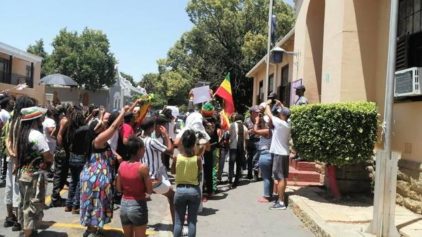
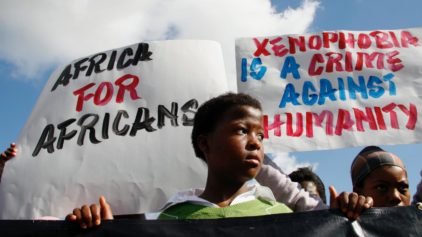
A South African politician said people attacking businesses of African migrants in the country have aimed at the wrong target.
“The owners of our wealth is white monopoly capital,” political leader Julius Malema said on Twitter Tuesday. “They are refusing to share it with us & the ruling party #ANC protects them.#OneAfricaIsPossible”
He sits at the head of the Economic Freedom Fighters, a far-left political party in South Africa.
Police confirmed to Times Live that at least 100 people have been arrested on charges ranging from public violence to malicious damage to property, and to theft in a surge of xenophobic violence in South Africa that has spread to Nigeria.
South Africa has temporarily closed its diplomatic missions in Nigeria following, the BBC reported Thursday.
South Africa’s Foreign Minister, Naledi Pandor, said the violence was an embarrassment for her country, according to the national broadcaster SABC.
“Our government regrets all violence against foreign-owned stores or Africans from other countries who are resident in South Africa,” she said.
The violence boiled over last Tuesday when taxi driver Jabu Baloyi was shot and killed by an accused Nigerian drug dealer in the capital city of Pretoria, according to multiple media reports.
The situation sparked looting and destruction throughout Johannesburg, and more than 50 shops and several vehicles were destroyed, Bloomberg reported.
The conflict, however is deeper than just a protest gone wrong. For some, it’s the result of growing frustrations about an unequal distribution of wealth in South Africa.
The country attracts residents from poorer nations in search of a better life, and their increased presence in poor neighborhoods has sparked resentment from locals who view foreigners as competitors for jobs and housing, Bloomberg reported.
That resentment, however is misplaced, South African advocates such as Malema have argued.
“Our anger is directed at wrong people,” Malema said on Twitter. “Like all of us, our African brothers & sisters are selling their cheap labour for survival.”
About 10 percent of South Africa’s population owns 90 percent of the country’s wealth, according to the South African Human Rights Commission.
The commission also reported in 2018 that 60 percent of Black South Africans live in poverty, while just 1 percent of white South Africans are poor.
Kadiye Mohamed, a Somalian store owner, has lived in South Africa for nine years.
“My fear is dying from being beaten,” Mohamed told Bloomberg.