Rastafarians in South Africa’s Wellington township are demanding police accountability following the in-custody death of a local businessman and father.
Jan de Bruin, 48, allegedly died at the hands of police last month after cops raided his home looking for drugs, South African outlet Independent Online reported. Family members said police assaulted de Bruin and others inside the home after he asked to see a search warrant.
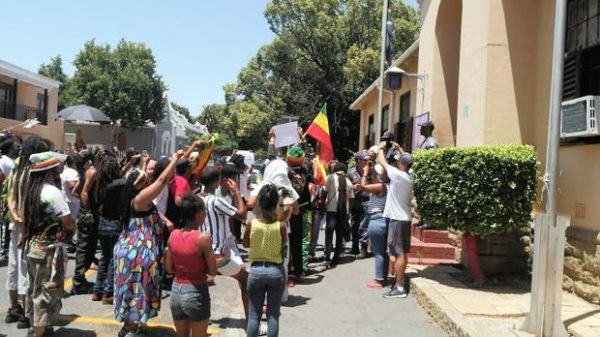
The local man was taken into custody, where he later died. Now the Rasta community is calling on police for answers.
“We call for an urgent investigation of Wellington police station where Jan de Bruin died in custody,” activist Ras Hein Scheepers told a crowd of protesters Sunday after marching to their local police precinct.
De Bruin’s beating and subsequent death have drawn collective outrage among community members, who’ve accused police of wanton brutality and violating their civil rights.
“There exists a culture of disrespect and impunity among perpetrators of human rights violations among [South African Police Service] and local government law enforcement agencies,” said protest organizer Mr. Gareth Prince, according to the news site.
He added: “These abuses cannot be allowed to continue within the state of South Africa, perpetuated by individuals employed in the public service.”
Protesters have also put the pressure on SAPS to suspend the officers involved in de Bruin’s death.
Police executed a drug raid on the man’s home on Dec. 14 during which officers say they were attacked, leading to a “scuffle between the [SAPS] members and residents.” The victim’s relatives painted a much different picture, saying they witnessed officers beat De Bruin and his friends.
De Bruin’s cousin, Anna de Bruin, believes her cousin was targeted.
“Because he is a Rasta they [police] assumed he sold [weed], but he didn’t,” she told Independent Online. “They [police] did not find anything, so we have no idea why they were even here. They have always targeted him, destroying his place.”
Rastafarianism, also known as a Rastafari, is an Abrahamic religion and social movement born out of Jamaica in the 1930s. The belief combines elements of Protestant Christianity, mysticism and pan-African political consciousness, according to the Encyclopedia Britannica.
Anna described her cousin as a successful businessman who sold fruit and herbs, and would sometimes make small cars out of wire. The day after his arrest, Anna De Bruin learned her cousin had passed.
“It was very painful for us,” she said. “There was nothing we could do.”
A police spokesman confirmed that an investigation into De Bruin’s death has been launched.
“An inquest and a case of attempted murder have been opened for investigation after an incident occurred at Colibri Street in Wellington,” they said.
The Independent Police Investigative Directorate (IPID) is also looking into the incident. So far, no arrests have been made.