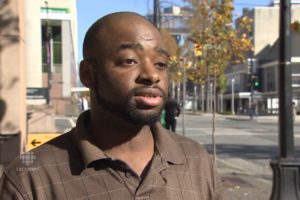
Kyle Lydell Canty
A Black United States citizen who sought asylum in Canada had his appeal rejected. According to VICE News, Kyle Lydell Canty crossed into Canada in September to take pictures but decided to apply for asylum, claiming he was being persecuted by American police and that his life was in jeopardy.
At an October Immigration and Refugee Board hearing, Canty presented video evidence of his encounters with American police. He also cited evidence from the United Nations’ handbook on refugees to bolster his claims for refugee status. Canty said Black people in the U.S. were “being exterminated at an alarming rate.”
According to The Huffington Post, Canty faces criminal charges in several states for misdemeanors such as jaywalking, threats, intimidation and disorderly conduct. However, Canty says those charges are false.
IRB member Ron Yamauchi wrote that Canty’s deportation would not put his life at risk. He cited some of the video evidence Canty provided as a reason to deny his request for asylum.
“On these clips the claimant is interacting with police officers, addressing them with comments such as ‘You guys are just ridiculous’ and ‘You’re dumb,’ ” he wrote. “His demeanor, in these videos, is not redolent of intimidation.”
Canada does have a history of accepting asylum seekers from south of the border. During the Vietnam war, thousands of American men who refused to be drafted sought refugee status. However, during the Iraq war, soldiers who refused to fight were denied asylum in Canada.
According to The Washington Post, Raha Jorjani, an immigration defense lawyer with the Office of the Alameda County Public Defender, said Black people could make a successful argument for refugee status if you took into consideration extrajudicial police killings, mass incarceration and unfair treatment in the criminal justice system.
Canty said he has not given up on his search for a new home outside America.
“This time I will pick America’s enemies. I still hate America just like I wrote and said,” he told Vice.
Canty might be part of a growing trend of Black people looking for alternative places to live other than America.
Last year Our Weekly interviewed Black people who had emigrated or were considering leaving the United States.
Retired educator Frank Farmer left the U.S. for Canada as a conscientious objector in the 1960s. He eventually settled in the North and became a Canadian citizen. Now he lives in Panama. Farmer said the racial situation in America hasn’t improved.
“In 1967 my father was chairman of a civilian review board dealing with police brutality. Now, it is much more public, and so is racism,” Farmer said.
Daniel Claxton, a data entry worker from the Bay Area, said police violence was one of the reasons he was considering emigrating.
“Police officers are killing minorities and still we don’t do anything about it but march and talk about it on social networks or in the media,” he said.