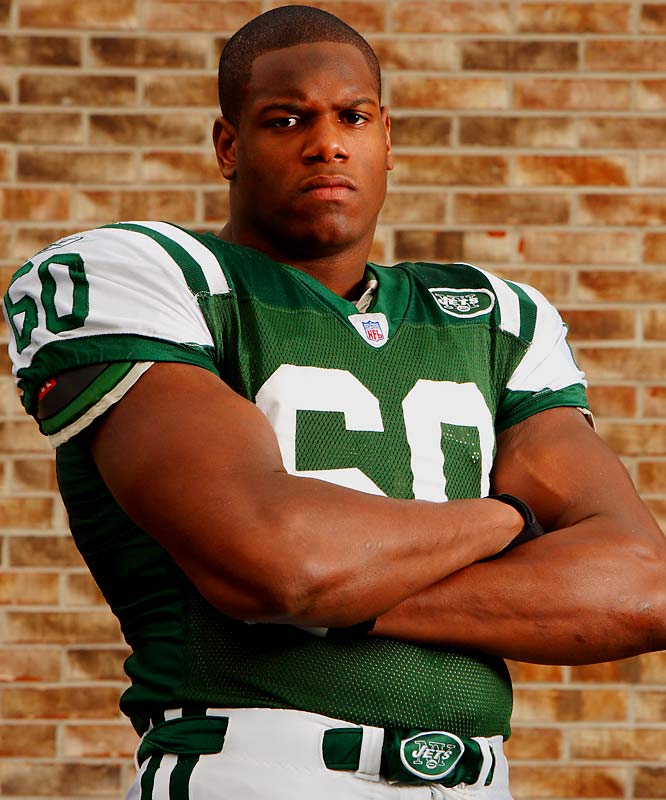
 Through his open letter to Sports Illustrated, New York Jets’ left tackle D’Brickashaw Ferguson funneled his fears over his future beyond football after seeing Concussion.
“Since seeing Concussion, I can’t avoid wondering if I am in danger of experiencing some degree of brain injury when I am done playing.”
The Will Smith starring football drama opened Christmas Day. Ferguson also read “Brain Game”, the GQ article written by Jeanne Marie Laskas. For Ferguson, the film’s impact hit with the force of a blindside block. He was not only devastated by the NFL’s extensive cover-up tactics but a doctor on the Jets medical staff played a major role in the conspiracy.
“I feel a bit betrayed by the people or committees put in place by the league who did not have my best interests at heart. Dr. Elliot Pellman was one of the Jets’ team doctors when I was a rookie in 2006, and to learn that he was a part of the group that tried to discredit the scope and impact of brain injuries among players within the league is disheartening.”
The dissemination of Dr. Bennett Omalu’s research forced the league to act and Ferguson acknowledges that the NFL has taken steps to make the game safer. However, he still contemplates the part he plays through continued participation, “I fear the unavoidable truth is that playing football has placed me in harm’s way, and I am not yet sure of the full extent of what it might cost me.”
It’s not just about how much football will cost Ferguson. An NFL Census taken last season shows that two-thirds of NFL rosters are comprised of black players. Black players held a majority in 10 of the 17 positions analyzed including high impact positions like linebackers (180), wide receivers (159), safeties (121) and running backs (107). According to Ferguson, the NFL acknowledges that one-third of their players will have some type of brain injury during their careers.
This means more black players will follow the same pain stained footsteps of Dave Duerson, Terry Long and Andre Waters. With the recent news of the NFL backing out of funding a brain study for Boston University, it cheats and robs the majority of black players of valuable resources. There are still tons of legit questions about if the NFL cares for their former employees once the final whistle blows on their careers. If the NFL keeps doing things like this, then the answer is clear and present. The NFL must better value the lives of their majority black players. This will be a problem in black athletics moving forward and giving black NFL players some hope for a future beyond football should be an worthwhile investment.


