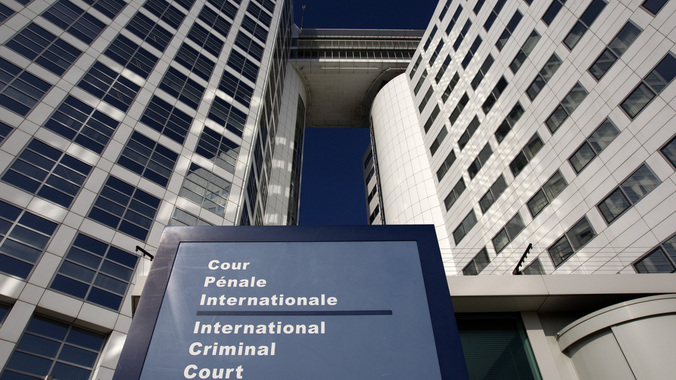
 South Africa plans to withdraw from the International Criminal Court (ICC) over concerns that the court is biased against African nations, Reuters reports.
The ICC has “lost its direction,” Obed Bapela, the South African deputy minister, said after a meeting of the African National Congress (ANC). Many members of the ANC believe the court disproportionately targets African leaders while overlooking violations by the United States and Israel.
South Africa foreshadowed its withdrawal earlier this year when it refused to apprehend Sudanese president Omar al-Bashir on charges of genocide during a meeting of the African Union (AU) in Johannesburg, despite a court order barring his departure. The move sparked outcry inside and outside the country.
“We are not going to use the AU as a platform to arrest leaders,” Bapela said in June, according to the Mail and Guardian, claiming that international criticism of South Africa demonstrated “contempt for the continent.”
Withdrawal from the ICC is rooted in a much longer history. “Its application of law is not only atrocious, given the flawed processes that it employs; it is also selective and clearly targeted towards African and Arab leaders,” wrote memoirist Malaika wa Azania in a June 2015 column for South Africa’s Sunday Independent.
In 2013, a number of AU member states threatened to withdraw from the ICC in response to charges brought against Kenyan president Uhuru Kenyatta. He was accused of stoking violence in the wake of the country’s 2007 presidential elections, in which more than 1,000 people were killed. The charges have since been dropped.
The piece by Azania, a South African writer, argued that the African Union is just as corrupt as the International Criminal Court, however. “While the ICC is a problem in its current state, with its current crop of thugs (otherwise known as leaders), Africa is incapable of being the solution,” she wrote, referring to the general impunity enjoyed by Zimbabwe’s Robert Mugabe and Swaziland’s King Mswati III, who are both strong critics of the ICC.
Read more at qz.com