Kenya’s President Has Urged Fellow African Leaders to Stop Receiving Foreign Aid

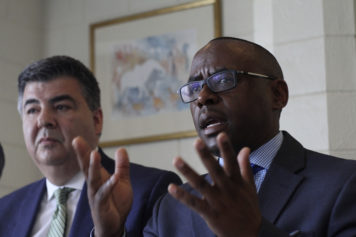
President Uhuru Kenyatta did not say his country would stop accepting foreign aid

President Uhuru Kenyatta did not say his country would stop accepting foreign aid

Kenya’s President Uhuru Kenyatta has urged fellow African leaders to stop receiving foreign aid, saying it is not an acceptable basis for prosperity.

“Dependency on giving that only appears to be charitable must end,” he said in a tweet ahead of this weekend’s African Union summit in South Africa.

The BBC’s Robert Kiptoo in Kenya says it is not a government policy but a rallying cry for African leaders.
Aid is believed to account for 5 percent to 6 percent of Kenya’s total income.

Kenyatta said that foreign aid “often carries terms and conditions that preclude progress.”

“It is time to give it up,” he wrote.

While Kenya does receive a lot of aid, it did survive for four years without foreign assistance after Western countries suspended their aid in 1991 to express their anger with then-President Daniel arap Moi.

The United States, European Union and the United Kingdom are the biggest donors to Kenya.
Since Kenyatta came to power in 2013, he has had an uneasy relationship with the West.

He was accused by the International Criminal Court (ICC) of crimes against humanity for allegedly inciting post-election violence in 2008, in which more than 1,200 Kenyans were killed.

But the case was dropped last year after the prosecutor’s office said it didn’t have enough evidence to prove his criminal responsibility.

Read more at www.bbc.com
Democracy needs journalism it can trust.

This election season, the stakes are higher than usual — and so is the pressure on newsrooms to soften their coverage, stay quiet, or just disappear. Independent reporting, the kind that answers to readers instead of advertisers or political pressure, matters more in a moment like this, not less.

For over 14 years, Atlanta Black Star has stayed independent and reader-funded. We have no corporate owner and no shareholders telling us what to cover or how to cover it. That independence is also our biggest vulnerability: nothing protects it except readers choosing to fund it directly.

Newspaper ad revenue has fallen more than 80% since 2005, and local newsrooms are closing at a rate of roughly two a week nationwide. When outlets go under in a moment like this, it's rarely the independent, reader-funded ones that get to stick around.

We know a request for support isn't why you came here. But without readers choosing to fund this work directly, the depth of reporting we can do at home and abroad shrinks along with everyone else's. If you're not in a position to give, that doesn't change how much we value you as a reader.

If you are able to, a recurring contribution does more for us than a single one-time gift, because it lets us plan the next investigation instead of just the next invoice. It takes about 30 seconds, no long form, no account. Thank you for continuing to support independent journalism and freedom of the press.

Back to top