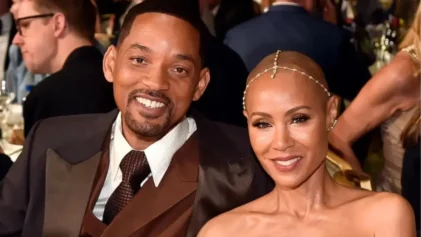
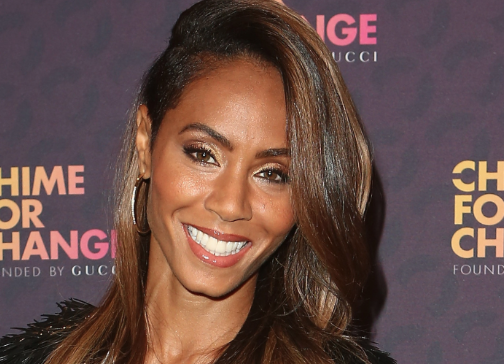
 When Hilary Clinton announced she would be running for president in 2016, she quickly garnered significant support from both Black and female voters. Jada Pinkett Smith, on the other hand, isn’t as excited about the new presidential bid.
Smith acknowledged what so few have done as Clinton hits the campaign trail—a platform touting “feminism” as one of its main pillars tends to leave Black women struggling for any real representation.
Smith resorted to her usual platform of Facebook to voice her concerns about the possibility of voters pushing Clinton into a presidential victory without taking the time to really think about what that vote would mean.
“The only question I have been asking myself is if I’m supposed to vote for Hillary because she is a woman; will she take us to the mountaintop with her or will women of color once again be left out and left behind,” she wrote.
It’s a concern that is completely justified considering how previous pushes for women’s rights have treated Black women as second-rate citizens.
“For example, during the Woman’s Suffrage Movement, black women were specifically excluded because Northern white women feared losing support of Southern white women if black women were included,” Smith explained. “What made it even more offensive is that the two women given the credit of pioneering the woman’s movement were at first abolitionists. Those were complicated times, but as time has gone on it seems as if that sentiment of separatism did not let up and permeated through the feminist movement as a place to facilitate and empower white women only.”
According to the famous actress, she has personally witnessed the wrath of the separatist nature that tends to plague the feminist movement.
“I personally suffered the racism and classism of the feminist movement and now have had to watch my daughter battle even ageism as she journeys to participate in the feminist movement,” Smith continued. “…Can Hillary, whether she becomes President or not, heal the broken political ties of the women of this nation? I know it takes far more than the idea of being the first female President of the United States to run this country, but as a woman, it sure is an exciting idea.”
As the nation prepares to see the exit of its first Black president, that sentiment is one voters should truly understand by now.
Getting a Black man in the Oval Office did not result in waves of change for the Black community and electing a female president could still fail to do much of anything for gender equality. Expecting Clinton to automatically posses the ability to combine both of these fronts seems blindly optimistic in the eyes of many.
That’s exactly why Smith isn’t making any promises about who she will be supporting in 2016.
Smith adds to a growing list of Black women who are expressing concerns that voters may be forgetting that a push for gender equality is often a solidarity push for white women only.
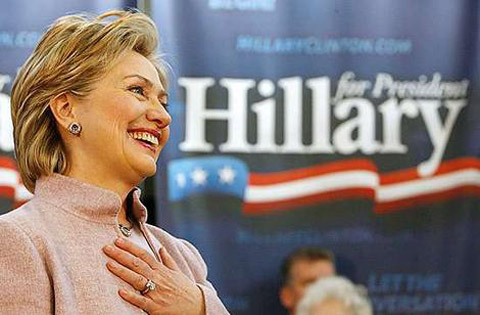 “I am waiting for evidence that she gets how we women of color are affected by issues in ways that are different from our white counterparts,” anti-violence activist Wagatwe Wanjuki said about Clinton during an interview with TIME Magazine.
Perhaps President Barack Obama’s presidency is encouraging voters to realize that a candidate’s identity is not an acknowledgment that he or she understands what needs to be done to help marginalized communities. It is no indication of what their political agenda may be and it should certainly not give them a plethora of votes based on promises they never made.
As Clinton continues to persuade voters that she has their best interest at heart and the ability to start paving a road towards actual change in policy, not just societal views, it has become even more apparent that her greatest task may be proving to Black women that she won’t be like the feminists of the past.
She won’t leave them out of her fight for gender equality.
She won’t forget the unique disparities that Black people face.
She won’t forget that even though she is not a Black woman, she is expected to wage a war that may one day bring both of those marginalized peoples to victory.