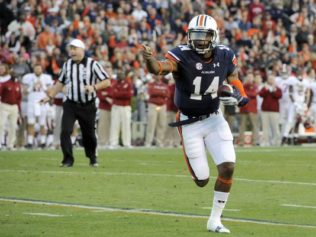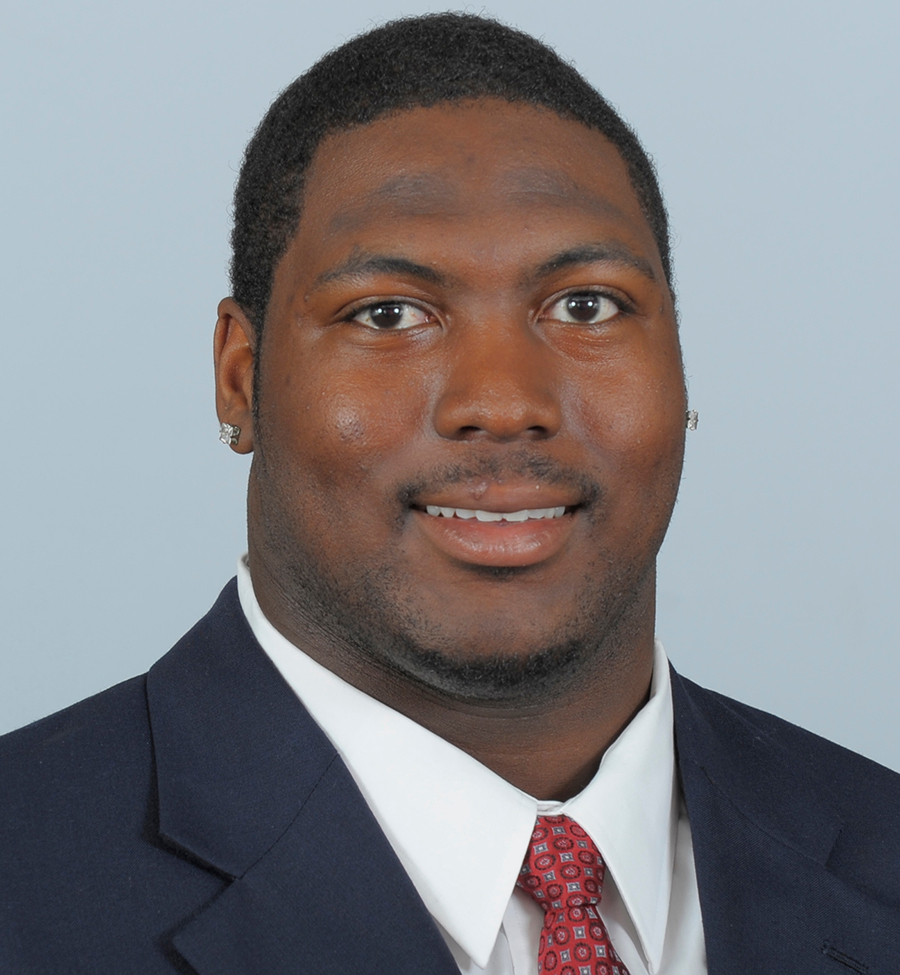
Picture this: A vindictive woman is mad at a prized football player because she thinks he’s seeing another woman. She has bruises on her body as evidence, calls the police and says Jonathan Taylor did it. He gets arrested and loses his football scholarship at Alabama.
A few days later, the 24-year-old woman recants her claims, saying the wounds were self-inflicted and that Taylor did not abuse her, that the dent in the door was already there, not from Taylor kicking it in.
What’s wrong with this picture?
First, the image is all-too-familiar—an athlete involved with a woman who make claims for the twisted sake of retribution, at the same time potentially ruining someone’s life.
Because she’s jealous.
This is the predicament in which Taylor finds himself. A 6-foot-4, 335-pound lineman who has all the earmarks of an outstanding college player with NFL promise. The people around him fervently believe that, though he has not played a game in college.
Now there’s no telling where he will play after the shenanigans of Gina Marie Nawab.
“She made it up to get back at him for cheating on her in December and she thought he was cheating again,” a deposition released by the Tuscaloosa County District Court says.
And the player, who is Black, is the one who suffers?
Nawab, who is white, is charged with filing a false report, which will get her a fine or something far less significant than what her lies get Taylor. No matter her admission, there will be those who believe her first lies, and therefore brand Taylor an abuser.
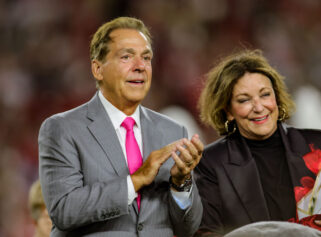
Alabama believed Nawab. That’s why coach Nick Saban expeditiously kicked Taylor off the team. He did not want to wait for details at the risk of looking like he was weak on domestic violence.
But, in the end, it is Taylor who suffers. It did not help him, though, that another woman in Athens filed a complaint that Taylor abused her. It is that claim that gave Nawab the idea to make a similar claim. And it is that second claim that made Saban yank the offer.
Taylor maintains his innocence and is eager to clear his name, a name Nawab clearly knew was sullied and capitalized on it as payback.
Attorney Kim Stephens, who’s representing Taylor in a pending Georgia domestic violence case, said his client has maintained all along he did not assault Nawab or the Georgia woman.
“I know he’s upset and I know that he’s been adamant that he didn’t do anything as far as touching her improperly or hitting her or choking her,” Stephens said. “Nothing criminal in nature.
“He’s happy that she recanted but unfortunately it put the university in an untenable position where they had to take action and there was only one action they could take.”

Gina Marie Nawab lied about Jonathan Taylor assaulting her
Taylor is scheduled for arraignment next Tuesday in Athens on charges of aggravated assault, battery and simple battery from an incident that led to his July dismissal from Georgia. Stephens said he will enter a not guilty plea. He said he worries that publicity in any case can influence jurors, “especially when there are allegations of domestic violence, because there’s a natural tendency to think just because allegations are made, they must be true.”
He has a point. Who knows, really, if Taylor assaulted the woman that caused him his Georgia scholarship?
Assuming Taylor is innocent, as is the right he is afforded in America, the larger issue is women claiming abuse, recanting their stories when it’s too late, after the athlete has been severely punished. In Taylor’s case, he has no team, no school in which to enroll and play football. That surely will change at some point—he’s too talented for everyone to pass on him.
But there’s something inherently wrong when the woman makes a false claim, poisons a kid’s life and she gets to go on with hers as if nothing happened.
We’ve seen it too often. Jameis Winston’s claim at Florida State is that the women picked him up at a bar, went home with him and had mutual sex with him with other guys in the apartment. . . then she claimed assault the next day. An FSU investigation could not prove Winston’s version untrue. Luckily, he’s talented enough to have overcome it, it seems. But it has tarnished his reputation.
There have been worse cases, too. Brian Banks was headed to USC to play football when a classmate who sought him out said he raped her after a make-out session at school. Banks spent five years in prison and five years on probation wearing an ankle bracelet before the woman told the truth—that he did not rape her. Banks’ college career and NFL prospects were lost. Nothing of consequence happened to the lying woman.
And that’s a problem. Athletes have to be smarter in their choices of the women/girls they deal with. That’s likely easier said than done, but beyond that, law enforcement has to punish these fake victims. Enough of them go to jail, maybe it will serve as a deterrent to the next woman who wants to cry rape to get even.