 This week is apparently the Black American Forgiveness Tour, featuring Black folks forgiving white people for despicable acts committed in the name of ugliness and racism.
The latest is the case of Levi Pettit, one of the leaders of the University of Oklahoma fraternity members recorded participating in a gusty rendition of a racist chant about the fraternity’s pride that it will never have a “ni**er” member. Pettit was expelled from Oklahoma and the Sigma Alpha Epsilon chapter was shut down.
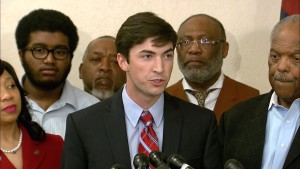
But Pettit made a public spectacle of his apparent contrition, stepping before microphones yesterday in Oklahoma City to tell the world how “deeply sorry” he was.
This came just a few days after Mo’ne Davis asked Bloomsburg University to reinstate baseball player Joey Casselberry after he got kicked off the baseball team for calling her a “slut” in a tweet. The university refused to reinstate him.
And of course there’s the rapper/actor Common, who painfully offered that racism could be ended if Black people could “forget about the past” and extend a “hand in love” to white people.
While some Black people were moved by these examples of the big, forgiving hearts that many Black people possess, others noted that apologies are too easy, too motivated by self-interest.
It appears that centuries of living in the middle of racial terrorism has trained African-Americans to quickly accept any gestures toward apology or contrition on the part of whites because they seem to come so rarely.
In Oklahoma, Pettit stood by himself in front of a row of his Black elders, ready to lend their moral support.
“I am sorry, deeply sorry,” Pettit told reporters. “I’m so sorry for all the pain that I caused. Although I don’t deserve it, I want to ask for your forgiveness.”
“I will be deeply sorry and deeply ashamed for what I have done for the rest of my life,” he said.
He said the incident—which featured Pettit and his frat brothers singing a chant they had obviously sung often enough to memorize—was a “tragic failure with far-reaching consequences.” He said he will spend the rest of his life trying to make amends for the chant.
“I knew they were wrong, but I never knew how wrong or why they were wrong, and the people I have met with have opened my eyes,” he said.
State Senator Anastasia Pittman said she and the other Black community leaders that met with him accepted his apology.
“We have heard the sentiments of Levi Pettit and his family and we want to receive those sentiments,” she said.
Isaac Hill, president of the OU Black Student Association, also accepted Pettit’s “sincere apology.”
“I hope we can use this as a teachable moment,” he said.