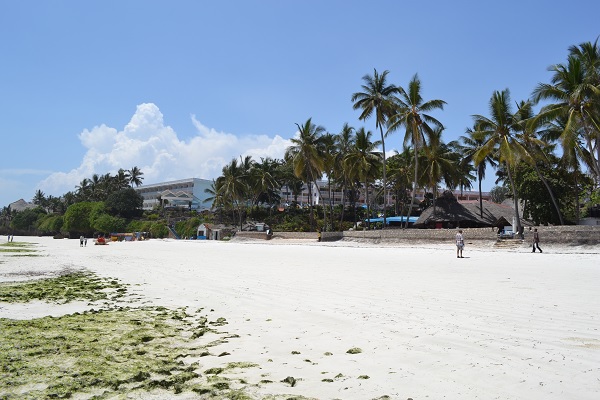
The tourist town of Mombasa, Kenya
Every morning at the Tides Inn, a waiter trudges down from the restaurant to the beach with a huge blackboard advertising the daily specials — deep-fried fish and masala prawns, pepper steak and pizza, all listed in chalk and illustrated with cute drawings.
But nobody ever comes by, not even for a gander.
Up and down the Kenyan coast, it is the same picture. Tables sit empty, dance floors are deserted, crates of Tusker beer collect dust. The fabled white sand beaches along Kenya’s perch on the Indian Ocean have become ghost towns with palm trees.
“It’s the worst time anyone can remember,” said Dhiren Shah, the Tides Inn’s owner.
Kenya’s coastal tourism is collapsing, and part of the reason — a big part of the reason, Kenyan officials say — is Western travel warnings issued after a round of violence last summer in a remote coastal area. The American warning is perhaps the strictest, barring embassy personnel from setting foot anywhere on the coast, unless special permission is granted. It also warns tourists of possible “suicide operations, bombings — to include car bombings — kidnappings, attacks on civil aviation, and attacks on maritime vessels in or near Kenyan ports.”
Kenyan officials are incensed, saying that the coast is hardly a raging war zone and that the Western travel warnings amount to “economic sabotage,” scaring away travelers who rely on government advisories to explain which places are safe and which are not. Worse, many Kenyans contend, and even some diplomats say, these warnings could become a self-fulfilling prophecy.
The logic goes like this: A major reason for the travel advisories is the string of terrorist attacks that Kenya has suffered over the last three years, including some on the coast. But by contributing to the collapse of the coastal tourism industry, the travel warnings may simply be increasing the joblessness, idleness, poverty, drug use and overall desperation — all well-known kindling for terrorist activity — in an already depressed slice of Kenya.
“The weakening of the coastal economy is aggravating the very problem we were trying to combat,” said one American official in Nairobi who was not authorized to speak publicly.
Read more at NY Times