Kenya and South Sudan In Plans To Connect Countries via Fibre Optic Cables

Kenya and South Sudan have signed an agreement that will see the two countries connected by fibre optic cable.

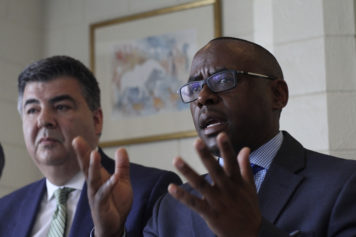
South Sudan’s ICT minister Rebecca Joshua Okwaci and her Kenyan counterpart Fred Matiang’i signed the memorandum of understanding Friday that will actualize laying of the cable from Eldoret to Juba.

The project, to be funded by World Bank, is set to run concurrently with the construction of the Northern Corridor road network.

Fibre optic cable offers reliable and huge data capacity convenient for video conferencing and telemedicine.

“Kenya will be responsible for the laying of the cable from Eldoret to the border, while the government of South Sudan will lay it from the border to Juba and further to other parts of the country,” said Mr Matiang’i.

He noted that part of the project, however, will be part of the second phase of the inland nationwide network National Optic Fibre Backbone Infrastructure plan that is expected to cover 2,100 kilometres and link all of Kenya’s 47 county headquarters.

Ms Okwaci added that the project would go a long way in building South Sudan’s infrastructure and ensure that the country is not left behind in the ongoing development of the region.

“We are a landlocked country and do not even have an inch of fibre optic cable; this project will ensure that we have a better way of communicating with the rest of the world,” she said.

Source: Business Daily Africa
Democracy needs journalism it can trust.

This election season, the stakes are higher than usual — and so is the pressure on newsrooms to soften their coverage, stay quiet, or just disappear. Independent reporting, the kind that answers to readers instead of advertisers or political pressure, matters more in a moment like this, not less.

For over 14 years, Atlanta Black Star has stayed independent and reader-funded. We have no corporate owner and no shareholders telling us what to cover or how to cover it. That independence is also our biggest vulnerability: nothing protects it except readers choosing to fund it directly.

Newspaper ad revenue has fallen more than 80% since 2005, and local newsrooms are closing at a rate of roughly two a week nationwide. When outlets go under in a moment like this, it's rarely the independent, reader-funded ones that get to stick around.

We know a request for support isn't why you came here. But without readers choosing to fund this work directly, the depth of reporting we can do at home and abroad shrinks along with everyone else's. If you're not in a position to give, that doesn't change how much we value you as a reader.

If you are able to, a recurring contribution does more for us than a single one-time gift, because it lets us plan the next investigation instead of just the next invoice. It takes about 30 seconds, no long form, no account. Thank you for continuing to support independent journalism and freedom of the press.

Back to top