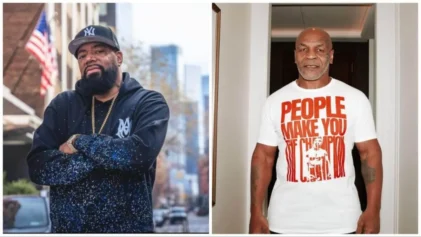
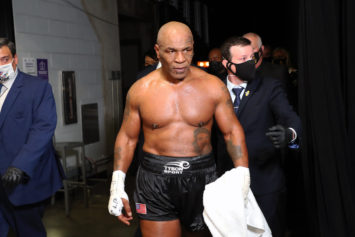
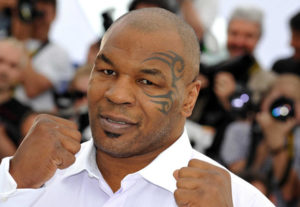
 Boxing legend Mike Tyson stunned the world with a completely different show of strength last week when he revealed that as a child he had been the victim of sexual abuse.
The shocking admission came during an interview on SiriusXM’s Opie with Jim Norton show. Tyson was promoting his new animated series, Mike Tyson Mysteries, which air Mondays on Cartoon Network’s Adult Swim.
According to Tyson, 48, he was abused by an older man who “grabbed me off the street…This guy bullied me, sexually abused me and stuff.” Tyson says he ran away and never saw the man again.
When Tyson mentioned the abuse as part of a larger discussion about inner demons, the radio hosts were clearly stunned. One person can be heard muttering “awkward.”
But according to famed gospel singer Darwin Hobbs, himself a survivor of child sex abuse, honesty like Tyson’s is an essential tool in combatting child sexual abuse and the stigma associated with it.
“Victims feel isolated,” explains Hobbs, who endured years of molestation at the hands of his stepfather. “Victims think, ‘this has only happened to me.’ In addition, there is also a burden of shame and guilt. Especially in the Black community, there can be a preconceived notion that people who are abused are weird, or strange.
“People may also talk about your sexuality, assuming that if you were sexually abused you must be gay,” he continues. “There is so much stigma, that’s why people don’t talk about it.”
Hobbs, whose next album, “Praise and Worship,” will be released in 2015, works with his wife, Traci, as a facilitator for Dark to Light (D2L.org), an organization aimed at ending child sex abuse. Hobbs leads workshops around the country, training adults to prevent, recognize and react to instances of child abuse.
Hobbs and Tyson are not the only Black male celebrities who have come forward with stories of sexual trauma. Tyler Perry and, more recently, former NBA star Keyon Dooling have also shared their torment.
Last month, Dooling, who played 12 seasons in the NBA with seven different teams, released his memoir, What’s Driving You? How I Overcame Abuse and Learned to Lead in the NBA. The former point guard told the Daily News that real healing comes from letting go of secrets and getting into therapy.
“I want to let [survivors] know there is a light at the end of the tunnel,” says Dooling, 34. “I believe you have to seek healing through mental wellness, therapy, support.”
Dooling’s organization, RespectFoundation55.org, offers assistance for survivors.
Hobbs says Tyson’s revelation may prompt others to seek the help they need.
“There is so much stigma around sexual abuse. But when someone like Tyson, a strong Black man, reveals it’s happened to him, it really helps reduce this notion that you are counted out if you are an abuse victim,” he says. “And even more important, it empowers people to come forward.”
According to Darkness to Light, as many as 400,000 babies born in the U.S. this year will be sexually abused before their 18th birthday “unless we do something to stop it.” Adult survivors of child abuse have increased risk of anxiety, depression, substance abuse and social isolation.
“This is going on in our communities, and every time we speak about it we are bringing it into the light, which actually strengthens our communities,” Hobbs says. “Once there is an understanding about the impact and nature of abuse, it actually helps prevent the abuse from happening in the first place.”
If you have been the victim of sexual abuse, there is help. Contact National Sexual Assault Hotline at 1-800-656-HOPE(4673)