 Some of the nation’s largest financial institutions are remaining tight-lipped about their diversity data, sparking speculation that their platforms of equality are nothing more than public relations schemes.
Major companies like JPMorgan Chase, American Express, Goldman Sachs and Morgan Stanley claim to have platforms that celebrate diversity and equality within their workforce, but when it comes to actually revealing their diversity statistics, the companies remain reluctant.
JPMorgan Chase and Goldman Sachs have revealed some of their diversity data but nothing specific enough to actually paint an accurate portrait of their workforce.
The companies only revealed broad percentage breakdowns of women and workers of color but they haven’t released enough data to confirm whether or not their networking groups and diversity seminars have actually been effective.
Meanwhile, American Express has decided to hold back on all of its diversity data.
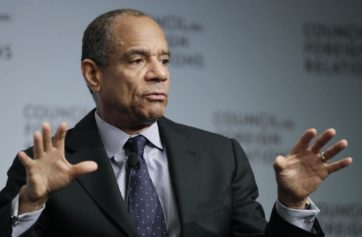
This comes as a surprise for some as there is an even higher expectation for American Express to embrace diversity since it is one of the few major financial institutions with a Black CEO, Kenneth I. Chenault.
Chief diversity officer at American Express, Valeria Grillo, insists that diversity is indeed a part of the company’s “DNA.”
Grillo pointed out that the percentage of female executives at the company has been on the rise. Between 2010 and 2014 the percentage of female executives at American Express rose from 37 percent to 39 percent.
Those numbers still aren’t enough to support their equality platform.
According to Businessweek, American Express has not released a full breakdown of its workforce, which means it’s quite possible that those percentages could still equate to only a handful of women in executive positions.
Marilyn Nagel, the chief executive of Watermark, said companies like American Express are only hurting themselves by sweeping diversity data under the rug.
Watermark is a nonprofit organization whose mission is to increase women’s representation in leadership roles.
According to Nagel, it’s best for companies to be transparent with the data even if the numbers aren’t impressive.
“I think it’s OK to say, ‘This is where we are, and while we know we’re far from our goals, we’re putting in plans to improve,’ “ Nagel told Businessweek. “When you keep it hidden, the assumption is made that you’re hiding the worst.”
A group of city funds recently targeted Goldman Sachs along with American International Group (AIG), U.S. Bancorp and MetLife in a push for the companies to make their diversity data public.
Former NYC Comptroller John Liu has been at the forefront of the push and explained that financial firms need to back up their claims of equality platforms with cold, hard numbers.
“Many financial firms say they are making serious efforts to recruit, retain and promote minorities and women,” Liu wrote in a shareholder proposal earlier this year. “But without quantitative disclosure, shareholders have no way to evaluate and benchmark the effectiveness of their efforts.”
Four of the major financial institutions—Allstate, Bank of America, Bank of New York Mellon and Citigroup—have made their diversity data open to the public.