Mount Vernon Mayor Richard Thomas is speaking out after he claims he and two members of his staff were racially profiled by staff at a New York bank.
Authorities were called to the JPMorgan Chase office in White Plains, New York, on Wednesday as Thomas was speaking with officials about getting access to the city’s bank records, the Westchester Journal News reported. Thomas was joined by city Industrial Development Agency head Marilyn Crawford, who’s Black, and Mount Vernon police Detective Jose Centeno, who’s Latino, when the alleged profiling occurred.
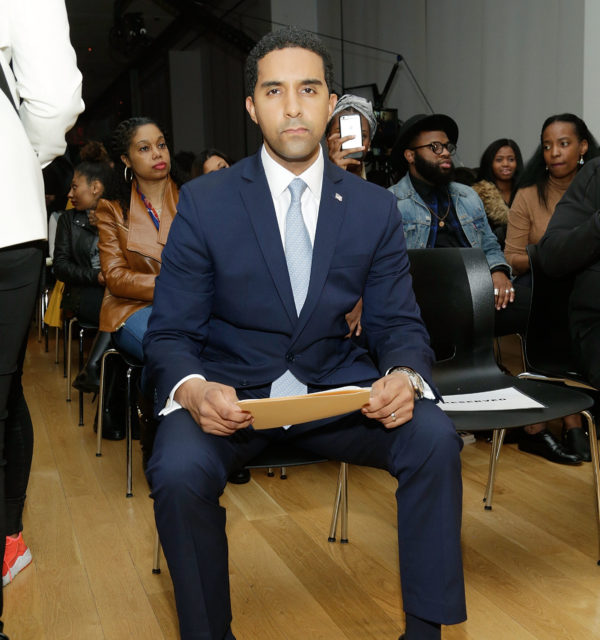
Mayor Richard Thomas claims he and members of his staff were subjected to “an extensive waiting time for someone to address us, then a lengthy wait for a call back,” during their visit at a JP Morgan Chase office. (Photo: Lars Niki/Getty Images for BET)
“As a mayor [and] as a young, well-educated black man living during this turbulent time in society where police are being called on black people for going about everyday life, this is unacceptable,” Thomas wrote in a scathing letter to JP Morgan Chase CEO Jamie Dimon.
The mayor alleges a bank worker called the police on him last week after he attempted to deposit a six-figure check into the city’s bank account. He was also at the office to try and enforce a recent court order requiring Deborah Reynolds, the city comptroller, to grant him access to city finance records.
The two are currently embroiled in a bitter dispute over the city’s finances, according to the Journal News. The aforementioned order requires the pair to co-sign city checks, however.
The mayor claims he has previously been denied access to the city’s bank records by Reynolds and her predecessor, and that JP Morgan won’t honor the contract allowing him access to the city’s financial transactions.
On the day of the incident, Thomas said he was made to wait nearly 90 minutes before seeing a bank executive about his requests. The mayor accused bank employees of “evading questions”and placing him and his team in a conference room, where they were subjected to “an extensive waiting time for someone to address us, then a lengthy wait for a call back, then a phone conversation and then more waiting on a call back,” according to his letter.
At one point, Centeno, who was in plainclothes and armed with a gun, went to grab some food but wasn’t allowed back inside because he had a weapon. That’s when corporate security for the bank instructed an office manager to dial police after spotting the gun-toting detective.
A White Plains officer and police sergeant arrived to scene hours after Thomas had gotten there, after employees were aware that one of the people accompanying him had a firearm, according to the police report.
Bank spokesman Joseph Evangelisti defended the actions of his employees, and shot down claims that Thomas and the city staffers were racially profiled.
“Our staff acted appropriately,” Evangelisti said, adding that police never went upstairs to the bank offices and left once Centeno identified himself as a detective.
Thomas said their meeting with the bank exec was productive, but he still doesn’t understand why the police were called. Centeno never brandished his gun, and there was no threat, he argued.
“It did not happen,” he said.