The country’s largest union, the National Union of Metalworkers of South Africa (NUMSA), claims that more than 200,000 members are striking.
The union is demanding a 12 percent wage increase, almost double the rate of inflation. So far employers have offered an 8 percent pay rise.
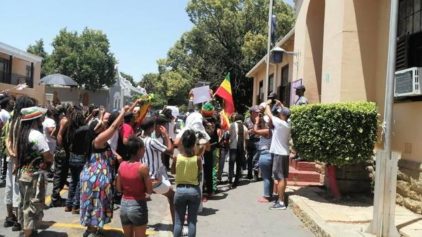
Marches were taking place Tuesday in six major cities across the country, including Johannesburg, Cape Town and Durban.
A few thousand people were gathered at a rally in central Johannesburg, where they shouted slogans and danced. “I’m striking because I’m working but I’m getting peanuts,” said one man. “I’ve got 50 years of age, and I’ve got 30 years working at that company, and I’m earning 29 rand ($2.72) per hour, which is an insult to an old man like me”
One woman declared “No! We don’t want 8 percent or 10 percent, we want 12 percent or 15 percent! Because we’ve been struggling at the company we’ve been working at.”
Long List of Demands
NUMSA also wants a housing allowance of 1000 rand ($94) a month. The union’s secretary-general Irvin Jim has said it will not settle for less than a double-digit increase.
“We have a long list of demands that has been reduced because we have to be objective,” he told the BBC. “Originally, we had a mandate for demanding 15 percent [pay increase] … but we have reduced that to 12 percent.”
The union has about 340,000 members in total, but only about two-thirds were planning to go on strike.
Analysis
Lerato Mbele, BBC News, Johannesburg:
As the winter morning warms up, about 5,000 members of the National Union of Metalworkers of South Africa gathered at the Mary Fitzgerald Square.
It’s the music and theater district of Johannesburg, appropriate because as the workers arrive in waves, they sing, chant and perform war dances.
The songs are about their struggle as the working class. Many are holding up placards stating their negotiating position.
Here at the rally point workers demand a wage increase of 15 percent, despite the union leaders formally demanding 12 percent in the wage talks.
It is a sea of red and gold NUMSA T-shirts, and there is obviously no sign of employer representatives.
The protest has begun on peaceful note, and the mood is somewhat festive.
Read more at bbc.co.uk.