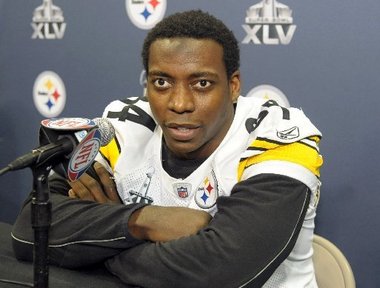
 After just six seasons and at just 26 years old, running back Rashard Mendenhall retired from the NFL. He spent five years with the Pittsburgh Steelers and one with the Arizona Cardinals. He’s quitting football with his health and mind intact. Here are his reasons, in his words:
“I decided not to hold a press conference because I didn’t want to have to say things that were cliché. I’ve done enough of that since I’ve been playing football. I actually didn’t really plan on saying anything about my retirement at all. I just kind of wanted to disappear. The fact that I was done playing would’ve been clear once some time had passed, and I hadn’t signed back with the Cardinals or any other team. Maybe people would’ve thought I couldn’t get another job. Either way, I was okay with the idea of fading to black, and my legacy becoming, ‘Whatever happened to that dude Rashard Mendenhall? He was pretty good for a few years, then he just vanished.’
“The truth is, I don’t really think my walking away is that big of deal. For me it’s saying, ‘Football was pretty cool, but I don’t want to play anymore. I want to travel the world and write!’ However, as I told the people around me that I wasn’t planning on signing again, there was a surprising amount of shock and bewilderment.
“‘Why would you stop now? You’re only 26 years old! You’re just going to walk away from millions of dollars? Is your knee fully healed? You had a pretty good year last year,’ etc. After the initial shock response and realization that I’m not kidding, the question that would continue to arise is: Why?
“‘Why do you want to stop playing football at 26?’
“Honestly, I’ve really enjoyed my time in the NFL and have had tons of fun.
“I feel like I’ve done it all. I’ve been to two Super Bowls; made a bunch of money; had a lot of success; traveled all over the country and overseas; met some really cool people; made lasting relationships; had the opportunity to give back to causes close to my heart; and have been able to share my experiences and wisdom with friends, family and people all over the world. Not to mention all the fun I had goofing around at work day after day with my teammates! I’m thankful that I can walk away at this time and smile over my six years in the NFL, and 17 total seasons of football — dating back to when I started pee-wee ball at Niles West in 1997, when I was 10. These experiences are all a part of me, and will remain in my heart no matter what I do, or where I go.
“Along with the joyful experiences I had, came many trials. In my last piece, ‘The Vision,’ I wrote about traversing through dark and dangerous waters, working to attain peace and refuge. That intense journey described my personal life in the NFL. Journeying through those waters symbolized living a private life in the public eye. Imagine having a job where you’re always on duty, and can never fully relax or you just may drown. Having to fight through waves and currents of praise and criticism, but mostly hate. I can’t even count how many times I’ve been called a ‘dumb nigger.’ There is a bold coarseness you receive from non-supporters that seems to only exist on the Internet. However, even if you try to avoid these things completely — because I’ve tried — somehow they still reach you. If not first-hand, then through friends and loved ones who take to heart all that they read and hear. I’m not a terribly sensitive person, so this stuff never really bothered me. That was until I realized that it actually had an impact my career. Over my career, I would learn that everything people say behind these computer and smartphones actually shape the perception of you — the brand, the athlete and the person. Go figure!
“What was more difficult for me to grasp was the way that the business of entertainment had really shifted the game and the sport of football in the NFL. The culture of football now is very different from the one I grew up with. When I came up, teammates fought together for wins and got respect for the fight. The player who gave the ball to the referee after a touchdown was commended; the one who played through injury was tough; the role of the blocking tight end was acknowledged; running backs who picked up blitzing linebackers showed heart; and the story of the game was told through the tape, and not the stats alone. That was my model of football.
“Today, game-day cameras follow the most popular players on teams; guys who dance after touchdowns are extolled on Dancing With the Starters; games are analyzed and brought to fans without any use of coaches tape; practice non-participants are reported throughout the week for predicted fantasy value; and success and failure for skill players is measured solely in stats and fantasy points. This is a very different model of football than the one I grew up with. My older brother coaches football at the high-school and youth level. One day he called me and said, ‘These kids don’t want to work hard. All they wanna do is look cool, celebrate after plays, and get more followers on Instagram!’ I told him that they might actually have it figured out.
“Over my career, because of my interests in dance, art and literature, my very calm demeanor, and my apparent lack of interest in sporting events on my Twitter page, people in the sporting world have sometimes questioned whether or not I love the game of football. I do. I always have. I am an athlete and a competitor. The only people who question that are the people who do not see how hard I work and how diligently I prepare to be great — week after week, season after season. I take those things very seriously. I’ve always been a professional. But I am not an entertainer. I never have been. Playing that role was never easy for me. The box deemed for professional athletes is a very small box. My wings spread a lot further than the acceptable athletic stereotypes and conformity was never a strong point of mine. My focus has always been on becoming a better me, not a second-rate somebody else. Sometimes I would suffer because of it, but every time I learned a lesson from it. And I’ll carry those lessons with me for the rest of my life.
“So when they ask me why I want to leave the NFL at the age of 26, I tell them that I’ve greatly enjoyed my time, but I no longer wish to put my body at risk for the sake of entertainment. I think about the rest of my life and I want to live it with much quality. And physically, I am grateful that I can walk away feeling as good as I did when I stepped into it.
“As for the question of what will I do now, with an entire life in front of me? I say to that, I will LIVE! I plan to live in a way that I never have before, and that is freely, able to fully be me, without the expectation of representing any league, club, shield or city. I do have a plan going forward, but I will admit that I do not know how things will totally shape out. That is the beauty of it! I look forward to chasing my desires and passions without restriction, and to sharing them with anyone who wants to come along with me! And I’ll start with writing!”


