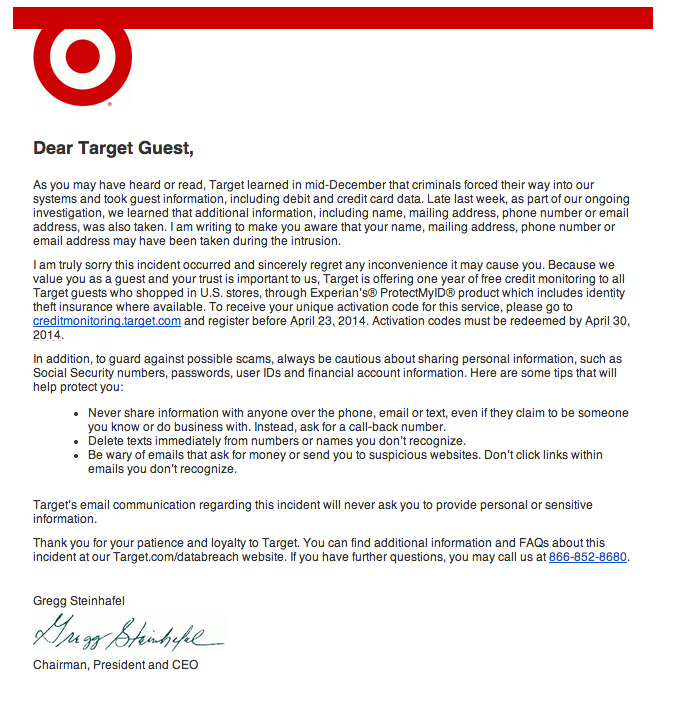
 An email sent to the roughly 70 million Target stores customers who may have been affected by a pre-Christmas data breach is causing panic among those who fear it could be an attempt to victimize them again.
Target says the email, which offers free credit monitoring services to potential victims of the breach, is legitimate. But the company has identified a handful of scammers who are trying to take advantage of the public’s fear and confusion
Consumers have been on edge since news of the data breach broke last month. They’ve been warned to be on alert for possible follow-up attacks that could come in the form of phishing emails, electronic messages designed to implant malicious software on their computers or to draw them to websites that prompt them to enter personal information.
So when Target’s email began circulating earlier this week, many recipients questioned its authenticity. The email was especially suspicious to people who say they haven’t set foot in a Target store in years.
Jim Reid, 60, of Minneapolis says he was a little nervous about clicking on the link in the email and he questioned whether it was a good idea to send Target even more personal information when they were unable to protect it in the first place.
“There’s too much uncertainty,” Reid says. “They keep changing what they’re saying about how many people were affected, about what kinds of information were stolen. It’s obvious that they really don’t know.”
According to Target, hackers stole data related to 40 million credit and debit card accounts and also pilfered personal information, including email addresses, phone numbers, home addresses and names of as many as 70 million customers.
Target spokeswoman Molly Snyder says it’s those 70 million people that Target contacted by email. And while Target believes the theft of the roughly 40 million debit and credit card numbers only affected cards swiped between Nov. 27 and Dec. 15, the 70 million people whose personal information was stolen could have last shopped at a Target store months, or even years, ago.
read the full story at ap.org