Neighboring countries South Sudan and Central African Republic are still grappling with violence and strife among their leadership, leading the interim president of CAR, Michel Djotodia, to quit under pressure Friday after regional leaders held him responsible for failing to halt continuing sectarian bloodshed in the country.
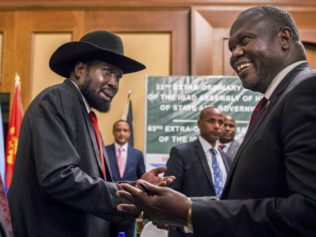
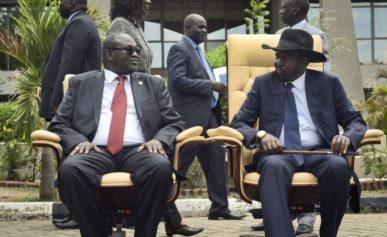
In South Sudan, the U.N. Security Council is trying to bring an end to the bitter conflict there by urging South Sudan President Salva Kiir to release political prisoners, which is a demand made by rebel leader, Riek Machar. Machar said he wants 11 people freed before agreeing to peace.
In CAR, Djotodia’s nine-month rule has been a study in chaos, with accusations of abuses that include looting, killing and kidnapping.
Because of the violence, nearly 1 million people have fled their homes in the Central African Republic as the country has descended into reprisal attacks between Muslims and Christians. In just the last month, more than 1,000 people have been killed.
Noting that civil servants had not been paid in at least three months, Nguendet said the country was ready to “explode,” pointing out that civil servants haven’t been paid in three months.
Nguendet will run CAR for about two weeks, until parliament chooses a new “transitional president.”
“He’s killed a lot of Central Africans, and he certainly targeted the Christians much more; he’s a devil,” Thibault Bomako, a 27-year-old student, said to the Boston Globe, referring to Djotodia.
In South Sudan, hundreds have been killed since last month’s coup attempt by forces working with the former vice president.
This latest conflict has been building since July, when Kiir dismissed his entire cabinet, including his vice president, Machar, in an apparent power struggle. Machar and other senior politicians have accused the president of intolerance and dictatorship. Their struggle is a reflection of a larger ethnic conflict in the world’s newest country. The Nuer have been complaining that the government is dominated by Dinka.
The South Sudan government is trying to mobilize thousands of troops to retake Bor, the last major town controlled by Machar’s forces.