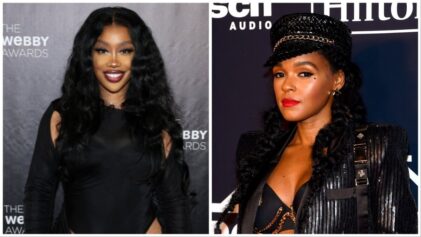
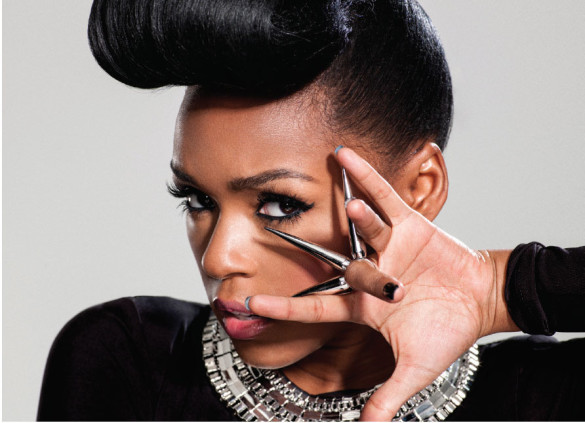
 Janelle Monae let her hair down – so to speak – in her latest interview with Uptown magazine. The “Tightrope” singer known for her perfectly pinned-up pompadour, her black and white uniform, James Brown moves and funky lyrics insists that underneath it all she’s just a “ghetto girl.”
Check out excerpts from her interview below:
On growing tired of journalists asking the same questions:
“Yes. Interviews are like marriages sometimes, and things become old. It’s time to spruce up this sex life! We need to try some new things. I am always asked, ‘Why do you wear that tuxedo?’ Or, ‘We know that your parents wore uniforms, is that why you wear a uniform?’ I want to tell them: ‘You know good and darn well [a scant Southern accent emerges] that you read that somewhere.’ I am wondering, ‘Why are you asking me the same question?’ Let’s talk about the music, the message and why my eyelashes are long.”
On what people don’t know about her:
“People think I am so straitlaced and buttoned-up. There is a lot of life underneath this tuxedo. I like to have fun. I enjoy practical jokes. I enjoy rolling around the mall in wheelchairs. I enjoy taking someone’s baby and putting it on my hip for about two hours straight and then giving it back.”
On not wanting to meet anyone who calls her a hero:
“But if I am anyone’s hero, please don’t meet me. Stay away. I am not what you think I am. We keep coming back to this notion of identity. Honestly, I am just a ghetto black girl underneath it all. My tuxedo is supposed to make me look refined.[…]I will never ever suppress who I am for anyone. Karl Lagerfeld would not change his ponytail or his black and white wardrobe for anyone. But the next person that asks me about wearing a tuxedo, I will give them a hug and then a slap.”
On her social responsibility as a celebrity:
“If I were not a woman, or African-American, or have people in my life that have not been directly discriminated against, then I would not feel a social responsibility. When you love and care about people and you see young people dying, it’s impossible to ignore. Let me be clear: When I speak of androids, I am speaking of the new form of the ‘other.’ You can parallel that to people who are gay or lesbian, those whose skin is considered too dark; women still are not receiving equal rights. I write music that fights against self-hate. It is about loving yourself, even if it makes others uncomfortable.”