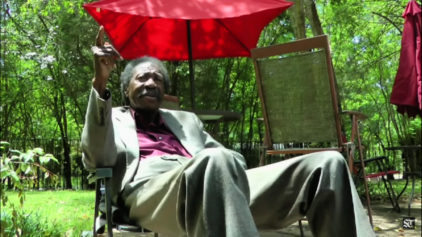
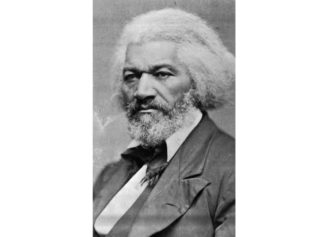
In a Hollywood auditorium, James L. Tolbert tried to induce a room packed with broadcasting and advertising executives to essentially join the civil rights movement in 1963 by pointing out the obvious.
“We Negroes watch ‘Bonanza’ and buy Chevrolets. We watch ‘Disney’ on RCA sets,” proclaimed Tolbert, an entertainment attorney who was speaking to the 125 invited guests in his role as president of the NAACP’s Beverly Hills-Hollywood branch. “We buy all the advertised products, the same as you do.”
Delivered weeks before the March on Washington, the speech pointed out the absence of African-Americans on both sides of the camera. It marked the start of an NAACP campaign that pushed Hollywood and Madison Avenue for greater representation of black people on-screen and in craft unions.
The “March on Hollywood” would cause a gradual but meaningful transformation, according to historians, that resonates today.
“The work of James Tolbert was as pioneering as many other civil-rights advocates who are a well-known part of our history,” Mary Ann Watson, author of the 1990 book “The Expanding Vista: American Television in the Kennedy Years,” told The Times last week.
Tolbert, who was diagnosed with Alzheimer’s disease years ago, died April 22 at UCLA-Santa Monica Hospital, his family said. He was 86.
“What Tolbert and other activists intuited was that entertainment is just as important as any other aspect of civil rights. The storytellers transmit the culture. If you have black people invisible in the main storytelling, that means they are invisible,” said Watson, a professor of electronic media and film studies at Eastern Michigan University.
By 1960, Tolbert was an entertainment attorney with his own firm and soon a co-founder of the Beverly Hills-Hollywood branch of the National Association for the Advancement of Colored People.
As part of the campaign to integrate Hollywood, Tolbert pressured craft unions to “hire one Negro on every movie and television show,” according to a 1963 edition of the Crisis, an NAACP publication…
Read More: latimes.com