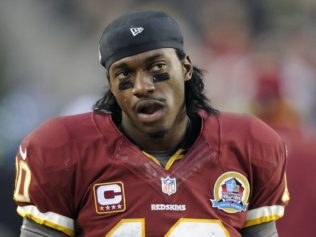
Robert Griffin III of the Washington Redskins not only ended the year with the best-selling jersey in the NFL, more of his No. 10 jerseys were sold in the NFL this fiscal year than any jersey in league history.
Exact sales numbers on NFLShop.com from April 1, 2012, to March 1, 2013, were not revealed.
New Denver Broncos quarterback Peyton Manning came in second in jersey sales and sold the third most in a single year, undoubtedly boosted by the league’s new Nike apparel deal. Brett Favre’s Minnesota Vikings (2009) and New York Jets jerseys (2008) are the second- and fourth-best-selling jerseys in a single season.
Baltimore Ravens linebacker Ray Lewis came in at No. 3 on last season’s jersey rankings, up from No. 17 the previous season, and a Super Bowl run pushed San Francisco 49ers rookie quarterback Colin Kaepernick into the fourth spot. Jerseys of New England Patriots quarterback Tom Brady finished fifth.
The 49ers finished first in team merchandise sales on NFLShop.com, edging out the Ravens despite losing to Baltimore in the Super Bowl. The highest the 49ers had previously finished on the list, since the league started monitoring sales in 1979, was second in 1994 and ’95. The New York Giants, Redskins and Pittsburgh Steelers rounded out the top five.
Lack of playing time may have led to the plummeting sales of Tim Tebow’s Jets jersey, which started the year in the No. 1 spot but finished in 13th, one spot ahead of Seattle Seahawks quarterback Russell Wilson, who had a stellar rookie season. Jerseys of Jets starting quarterback Mark Sanchez did not finish in the top 25.
Another surprise were the sales numbers for Adrian Peterson’s No. 28 Vikings jersey, which ranked only 23rd in the league despite the fact he fell just short of breaking the league’s single-season rushing record.