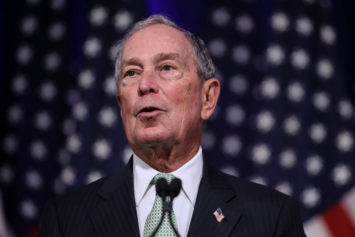
It’s a shame when the mayor and police commissioner of New York City play the race card to defend a discredited policy such as “Stop-and-Frisk.”
Already a federal judge has approved class action status for a lawsuit against the City by victims of the discriminatory policing.
The race-game went into full gear when Police Commissioner Raymond Kelly wrote a bone-headed Op-Ed article in The Daily News, “The NYPD saves minority lives,” on May 21.
It was tag-team play with the newspaper; there was a pro-stop and frisk editorial in the same issue and another column, justifying the unconstitutional policy, in that edition.
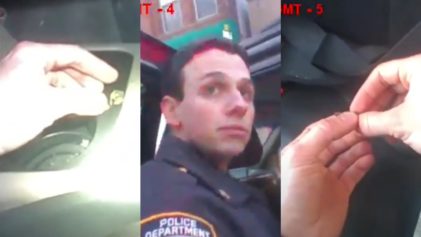
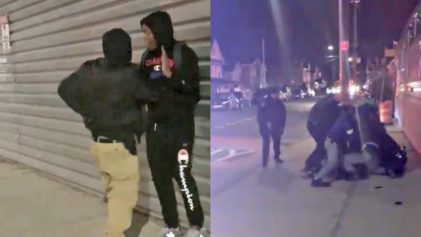
Under Stop-and-Frisk, any police officer can merely observe a Black or Latino person, conclude that the person is a suspect and stop and frisk them. It amounts to illegal arrests and belongs in a police state.
The policy invites comparison to South Africa’s during the Apartheid regime. There, police stopped any Black male on the street and demanded to see his pass-book, an internal identification. The victims were also subjected to unlawful searches and arrests.
Here in New York, last year 685,724 people were stopped-and-frisked by Bloomberg’s and Kelly’s police department. The vast majority of those stopped were Black and Latino males. Under such a blanket regime even tourists from Africa, Europe and Latin America are victims since some of the stops are conducted anywhere in the city.
Police are permitted to stop Blacks and Latinos illegally without any probable cause except that the people halted are Black-skinned and Brown-skinned. Police can then demand that they produce identifications and order them to empty their pockets. In rare cases weapons have been found; in many cases small quantities of marijuana have been found in their possession. That’s how tens of thousands of young Black and Latino males have been ensnared in the “criminal justice” system.
These illegal and race-targeted Stop-and-Frisk campaigns have been conducted primarily in Black and Latino neighborhoods. They are not conducted against Whites in areas such as Columbia University or New York University or near the hundreds of bars on the Upper East Side near Mayor Bloomberg’s neighborhood.
Tens of thousands of young White males and females would also have to be arrested on possession of drugs, weapons and other contrabands charges. In predominantly White neighborhoods citizens enjoy the presumption of innocence. In Black and Latino neighborhoods, the Mayor and Police Commissioner have perverted the justice system. Blacks and Latinos are guilty until stopped, searched, and cleared.
Commissioner Kelly in his Op-Ed did not even use the word Stop-and-Frisk once: The Daily News’ editorial on the same date used the term “stop and question effort.” As if sanitizing the language would somehow make the reprehensible practice more palatable.
Commissioner Kelly argued in his article that over the last few years, New York’s White neighborhoods saw dramatic drops in crime and offered current stats: Murray Hill (0.7 per 100,000); Borough Park (1 per 100,000); and, Mid-town Manhattan (1.1 per 100,000).
On the other hand the numbers were grave in Black and Latino neighborhoods: Brownsville (28.9 per 100,000); Mott Haven (18.4 per 100,000); and Bedford-Stuyvesant (23 per 100,000).
Commissioner Kelly uses these numbers to justify his and Mayor Bloomberg’s racist targeting of Blacks and Latinos.
Kelly is admittedly not a social scientist or development economist; yet he must know that his thesis is bogus. Mayor Bloomberg’s bulb shines a lot brighter than Kelly’s. He knows it’s unfair and disingenuous to point at the glaring differential crime statistics and claim that disarming Black and Latino neighborhoods, by any means necessary, would make these communities as safe as White ones.
What a foolish argument Commissioner Kelly makes in his Daily News Op-Ed.
So why are the crime rates much higher in Black and Latino neighborhoods compared to the White neighborhoods? Rather than dealing with the disease — poverty and unemployment rates that double those in White neighborhoods — Bloomberg and Kelly pretend it’s a behavioral or pathological problem. They have been calling it “Black-on-Black” crime. This is as meaningless as saying there’s fighting in Syria due to “Syrian-on-Syrian” violence or “Arab-on-Arab” violence.
Bloomberg and Kelly know what they’re up to by using the racially-loaded term “Black-on-Black” violence. They want to make their illegal Stop-and-Frisk acceptable to the public, especially White New Yorkers by portraying Blacks as predicate criminals. So what if Stop-and-Frisk is unconstitutional? How else do we deal with congenital criminals?
“Black-on-Black” also casts Black people collectively as “criminals” in the minds of many White New Yorkers, making police abuses against Black males acceptable, including incidents such as: the shooting of unarmed men like Amadou Diallo, Patrick Dorismond, Ousmane Zongo, Tim Stansbury, Sean Bell, and Ramerley Graham.
Would Mayor Bloomberg and Commissioner Kelly prefer that the Black folk who do commit crime travel to White neighborhoods and commit the crimes there? Would such crimes seem less “irrational”? When White people commit crimes in areas that are exclusively White are those referred to as White-on-White crime? When Europeans killed millions of Europeans in World War II was that also White-on-White crime?
This “Black-on-Black” race-loaded term is also applied to African conflicts; they become “tribal” wars. In South Africa during the final years of the Apartheid regime the government financed and trained African gangs to attack members of Nelson Mandela’s African National Congress. The fighting was referred to as “Black-on-Black.” Media talking heads wondered whether Africans would be able to govern after Apartheid.
“Black-on-Black” crime lets Kelly off the hook by condoning racist Stop-and-Frisk policing. At the same time it acquits the Bloomberg Administration of its failure to address intense poverty and high unemployment rates in Black and Latino neighborhoods. For Bloomberg, Kelly — and The Daily News– to pretend as if there’s no correlation between poverty/unemployment and crime is pure lunacy.
The crime and murder rates are much lower in the White neighborhoods: the average income in those neighborhoods are also much higher relative to Black neighborhoods and the unemployment rates lower. In predominantly White Murray Hill and Mid-town Manhattan the incomes are, respectively, $78,944; and, about $50,000.
Income in Mott Haven is $14,271; and in Brownsville, $24,659.
As for unemployment, it’s 8.4% in predominantly White Murray Hill; in Brownsville, it’s nearly 20%.
So instead of addressing these social conditions of mayoral neglect — lack of job creation and work-training programs — Bloomberg and Kelly would rather focus on discriminatory policing: Stop-and Frisk.
This is the real crime.
“Speaking Truth To Empower.”
Thousands of New Yorkers will gather on Father’s Day, June 17th, 2012 for the “End Stop-And-Frisk Silent March Against Racial Profiling.” For more information, please visit www.silentmarchnyc.org
Source: Black Star News