Kenyan Prime Minister Raila Odinga has deemed the Monday explosion that rocked the heart of Nairobi an act of terrorism. This declaration directly contrasts that of Police Commissioner Mathew Iteere, who stated that the blast was the result of an electrical fault.
“This is an attack of terrorism. They have failed elsewhere and we know they are going to fail in our country,” Odinga said, surrounded by the aftermath of the blast, which wounded at least 30 people on Moi Avenue. The blast originated at Assanand’s House, a building which hosts several stores.
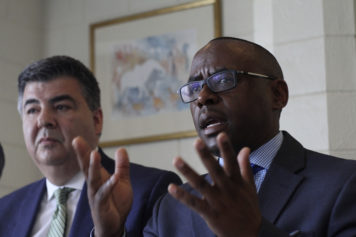
“We should be in solidarity for the sake of our country. We should not shift blame. We should seek the way forward. We need to support our security forces,” Odinga said as he addressed citizens at the scene. “We are urging our security forces to put more efforts to fight these terrorists.”
There has been no group or persons identified as responsible for the blast.
Commissioner Iteere had previously offered a much different scenario for the explosion. “Our preliminary investigation has shown it was not caused by a grenade or a bomb; we are trying to establish if was caused by an electric fault,” he told reporters on the scene.
The Kenya Power company quickly rebuffed the commissioner’s assertion in a public statement. “The affected building has no ground mounted transformer inside it or outside that would explode,” it read, adding: “All the electrical connections to the building including the cut-outs (fuses) on the Kenya Power side that would otherwise blow in the event of a short circuit inside the building were intact. It is therefore not possible that the explosion was caused by an electricity fault.”
Officials from Kenya’s military and police forces are still working to determine the cause of the blast. Closing his remarks on Monday, Odgina vowed to protect his people from future attacks. “The lives and property of Kenyans is precious… it must be protected. We condemn the terrorists and tell them that their days are numbered. Kenyans will succeed, the terrorists will not succeed.”