
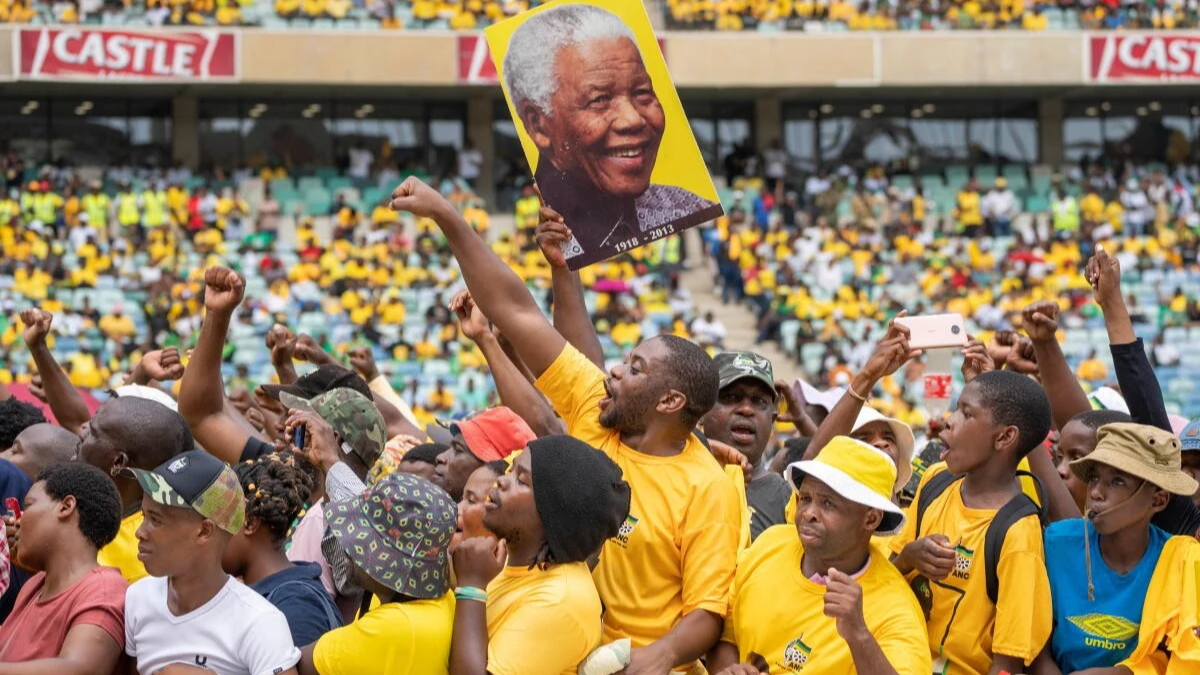
South African political parties were bargaining Friday over who would govern Johannesburg and Tshwane, the municipality that includes Pretoria, after voters handed the African National Congress its worst result in local elections.
The Democratic Alliance finished ahead of the ANC in both municipalities, but neither party secured a council majority, according to The Associated Press. That gives smaller parties considerable influence over coalition negotiations that will determine who governs two of the country’s most important urban centers.
The ANC, once led by Nelson Mandela, remains South Africa’s largest party. Its share of the national municipal-election vote fell nearly 15 percentage points in five years, to 30.76%. The Democratic Alliance received 24.64%, while the uMkhonto weSizwe Party, led by former President Jacob Zuma, finished third with 9.76%. ANC Secretary-General Fikile Mbalula called the result “catastrophic.”
Former President Thabo Mbeki, who succeeded Mandela, questioned whether the ANC’s leadership should take responsibility for the party’s electoral defeat. Speaking on the “African Renaissance Podcast” last week, Mbeki said Ramaphosa would be right to step down, as ANC leaders deny reports that he had offered to resign are true.
He suggested that other senior party leaders should also consider taking responsibility. However, Ramaphosa and Mbalula denied the reports. ANC leaders met Thursday to discuss potential coalition partners, and the Associated Press said the party planned to reveal the results of those talks Saturday.
For many voters, the election came down to what happens when they turn on the tap or need the city to pick up the trash. Years of unreliable water supplies, electricity outages, and deteriorating roads have worn down confidence in local government.
Corruption scandals have further eroded public trust, while widespread unemployment and poverty continue to disproportionately affect Black South Africans. Political analyst Ralph Mathekga told Al Jazeera that the election results reflected growing frustration over failing public services and corruption.
That anger carries particular weight given the ANC’s historical significance in the fight against apartheid. In April 1994, Nelson Mandela cast his first vote at Ohlange High School in Inanda, near Durban. He chose the school because it was founded by John Langalibalele Dube, the ANC’s first president, whose grave was located nearby.
The election was South Africa’s first in which citizens of all races could vote. The ANC won nearly 63% of the vote, and Mandela became the country’s first Black president.
Apartheid enforced white minority rule through laws that institutionalized racial segregation and systematically disadvantaged the Black majority. Its economic legacy remains evident today, with Black South Africans continuing to bear a disproportionate share of the country’s poverty and unemployment.
The ANC had already lost its parliamentary majority in 2024, the first time since 1994. It won about 40% of the national vote and formed a government of national unity that included the Democratic Alliance.
The ANC also faced a challenge from within its own ranks. Zuma broke with the party, was expelled, and went on to lead a rival political movement, the uMkhonto weSizwe Party, commonly known as MK.
In this month’s municipal elections, MK finished first in eThekwini, the municipality that includes Durban, securing 38% of the vote. The result gave Zuma’s party a significant role in negotiations over who will govern the city.
The immediate deadline is Nov. 26, when municipal councils are expected to hold their first meetings and elect their political leaders, according to South Africa’s Business Day. The coalition agreements reached before then will help determine who secures the mayor’s office. Residents will ultimately judge the incoming governments by whether they can keep water flowing, maintain roads, and deliver the basic services voters have demanded.


