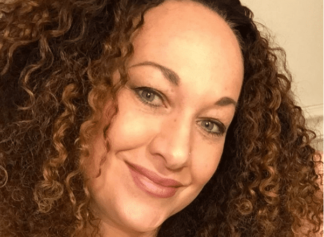
Rachel Dolezal has an unshakable dedication to presenting herself as “trans-Black.” The disgraced former NAACP Spokane chapter leader adopted the term after being exposed for misrepresenting herself as a Black woman for over a decade.
She was reborn through the public humiliation as Nkechi Diallo, a self-identifying non-white woman who resonates with Black culture and experiences. Her controversial stance remains a point of contention for many, but has not stopped her from rebranding as an adult content creator and an intimacy coach in training with ethnic flair.
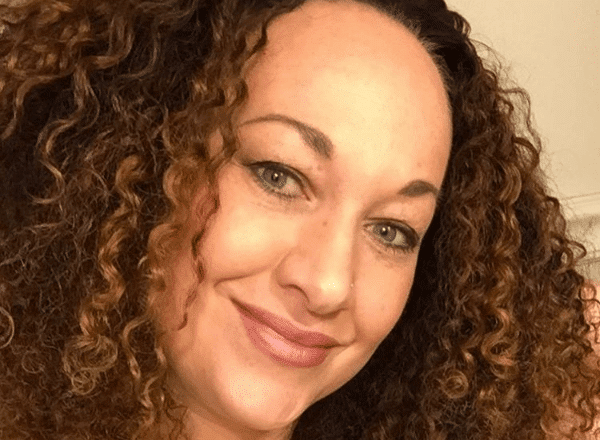
Not even a health scare can force her to accept her naturally paler complexion, and she proved it by recently revealing her bout with skin cancer.
In a since-deleted Instagram post, Dolezal shared her experience of being diagnosed with Stage-1 melanoma. It is the earliest form of the disease that can spread past the epidermis to other organs in the body without intervention.
Dolezal highlighted how she underwent a procedure to remove the affected skin located on her lower back. The influencer showed off her battle wound, a linear indentation, in a selfie wearing a black sports bra and workout leggings.
Daily Mail captured the upload before it vanished from her timeline, reporting that Dolezal described the ordeal as a “tough but grounding reminder of what years of sun (and a childhood in a family that didn’t believed in sunscreen) can do over time.”
People ask me if I think transgender & transracial are “the same thing.” 🌈My short answer? They’re not — & understanding why matters.
— Rachel Doležal (@DialloNkechi) March 10, 2026
Gender & racial identities come from different roots & histories. But can conversations like this open the door to deeper empathy and awareness -… pic.twitter.com/nwHyN2etHb
A Facebook user fed up with the woman’s resurgence wrote, “So karma,” in their reaction to the skin cancer announcement. Another commenter asked, “She’s still at it?”
“Omg when I was younger I really thought this lady was a bi racial black woman she fooled me,” said another person.
Dolezal’s white parents, Ruthanne and Lawrence Dolezal, have spoken on record about their daughter’s complex relationship with ethnicity and reality. “Rachel is clearly white as we are,” her father told ABC News in 2015.
“She is so assimilated into their culture and their community that she may falsely consider herself African American, but by birth she certainly is not,” said Lawrence. The former educator was also raised with adopted Black siblings.
The Howard University alumna has not accepted the backlash as defeat and continues to ignore others’ inability to view her as African-American. Instead, Dolezal is trying out a new method to boost her melanin, bypassing the melanoma’s nudge for her to accept her ethnic composition, this time without frying her skin with excessive tanning: drops that will give her a sunbathed glow.
She explained, “They have carotene in them, and I know that they’re an old tradition to drink carrot juice and beet juice, and it’s supposed to stimulate your melanin.” The combination can make skin appear more radiant, but carotene, found in carrots, can also cause skin to appear orange instead of tanned.
A humored critic joked, “Guess trump must drink a lot of that.” Donald Trump’s bizarre orange hue is the result of makeup and not an effort to appear Black or ethnic. Someone else said, “Imagine being the doctor that had to come tell her .. ‘yeah .. this lil charade u got going on, yeah it’s harming u girl.'”
More responses to Dolezal’s latest headline include people stating, “You’re only as White as you wanna be” and “I’ve always stood with Rachel. She never hurt nobody. She didn’t push her identity unto other’s but she did make great strides for that community.”
Dolezal shared truths about her adopted identity in the book “In Full Color.” She also defended her transformation in the 2021 documentary “Subjects of Desire.”