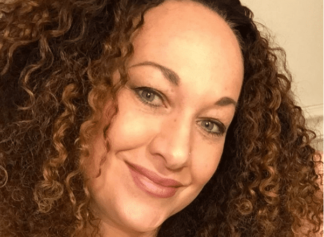
Rachel Dolezal still cannot escape her scandalous past.
A decade ago, Dolezal made national headlines after it was revealed that she, a white woman, had been posing as a Black woman for years, a revelation that ignited nationwide debates about race and identity.
The former civil rights activist, who now goes by Nkechi Amare Diallo, turned 48 on November 12 and marked the occasion by sharing two photos of herself taken decades apart, drawing renewed attention to her controversial transformation.
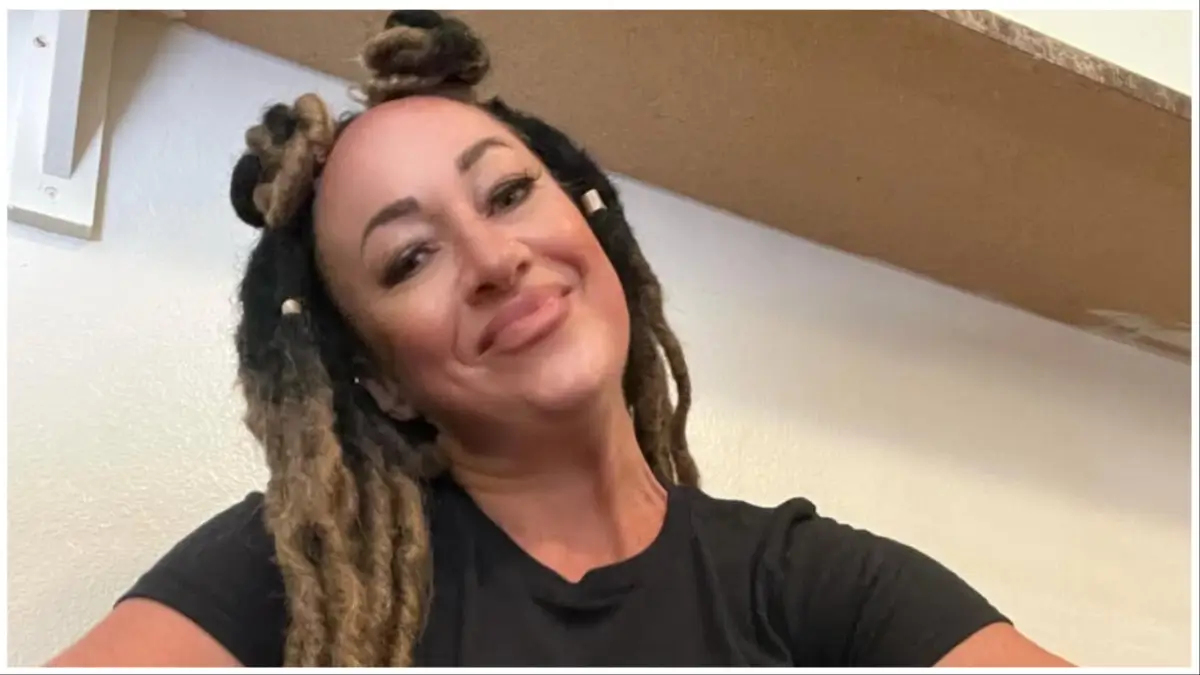
“How it started in 1977, How it’s going in 2025,” Dolezal wrote on X, along with an old monochrome baby photo and a present-day selfie featuring a birthday cake with lit candles.
Dolezal reached mainstream fame in 2015 when the ex-president of the NAACP chapter in Spokane, Washington, was exposed for actually being a white woman, despite self-identifying as Black.
The former Howard University student was accused of darkening her skin and manipulating her hair texture to appear as a Black woman. She was also accused of lying about her parents’ racial identity.
“Unfortunately, she is not ethnically by birth African American,” Rachel’s father, Larry Dolezal, told The Washington Post in 2015. “She is our daughter by birth. And that’s the way it is.”
While Dolezal took to social media to celebrate the day she was born to a white mother and father, other people on X chose to focus on the book author’s made-up personal history.
“Black don’t crack!” one person sarcastically expressed as a retort to Dolezal’s celebratory birthday tweet. Another jokester replied, “Posting a black and white picture is peak comedy.”
A third person on the app wondered, “I thought you were Black?” Similarly, someone sarcastically asked, “Oh… are you white again?”
“This is why Black people hated you so much. They knew you could go back to looking normal whenever you wanted,” an outspoken Dolezal critic stated.
Additionally, several trolls mockingly referred to the mother of two children as a “Black queen,” while she was also sneered at online for apparently now resembling white pop star Katy Perry.
Part of the reason Dolezal has been unable to escape the 10-year-old controversy is because of her initial response to the backlash when the story broke.
At first, Dolezal doubled down on supposedly being Black and denied she purposely misled the public about her ethnicity, blaming other people’s “definition and construct of race” for the confusion.
She was previously married to Kevin Moore, a Black man, with whom she has a son named Franklin, and she later had another son, Langston, with a different Black partner. She has long said she identifies “as Black,” despite widespread backlash and accusations of cultural appropriation
Dolezal resigned as the head of the Spokane NAACP chapter after the truth of her family’s ancestry was revealed. She also lost her position as chair of Spokane’s Police Ombudsman Commission and her position as an instructor for Eastern Washington University.
In 2017, Dolezal legally changed her name to one of Nigerian origin, Nkechi Amare Diallo. Her “In Full Color: Finding My Place in a Black and White World” memoir hit book stores that same year.
Dolezal’s activist work suffered as a result of being outed as a fake Black woman. She reportedly went through serious financial hardships, resulting in her having to get employment at a supermarket.
Netflix explored the life of the woman who became the face of so-called “transracial identity” in a 2018 documentary titled “The Rachel Divide.” The Laura Brownson-directed film covered the fallout from Dolezal’s dishonesty coming to light.
By 2024, Dolezal was back in the news after she was fired from an Arizona teaching job in the Tucson school district when administrators learned about her account on an adult subscription-based website.
Notorious race faker Rachel Dolezal now an elementary school teacher — while raking in thousands on OnlyFans https://t.co/Lbs5qSocyb pic.twitter.com/WJKtqrQd8d
— New York Post (@nypost) February 14, 2024
Her latest project is a podcast called “TradPro,” which she co-hosts and describes as a space for “traditional values with a progressive twist.” The show covers topics like family, culture, gender roles, and personal responsibility — often blending Dolezal’s views on motherhood and identity with broader social commentary.
While some listeners see it as an attempt to rebrand and rebuild her image, others view it as another example of Dolezal leaning into controversy by discussing divisive cultural issues through her own unique, and often polarizing, lens.