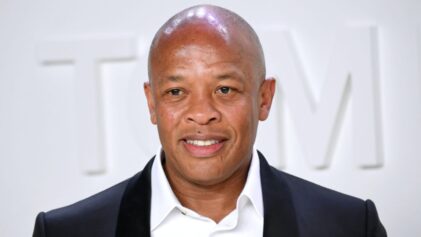
A new report from The New York Times is said to reveal how Grammy Award-winning producer Dr. Dre missed his billionaire mark by several millions of dollars after the West Coast music legend and actor Tyrese Gibson prematurely leaked information about the rapper and Jimmy Iovine’s Beats headphones deal with Apple Music.
In his new book, “After Steve: How Apple Became a Trillion-Dollar Company and Lost Its Soul,” Tripp Mickle’s new details precisely what led to the reported $200 million cut, stating that the deal was said to be $3.2 billion, but Dre’s announcement breached the confidentiality agreement.

As some may remember, in 2014, in what appeared to be a drunk video, Dre declared himself “hip-hop’s first billionaire,” a title that has since only been held by Shawn Jay-Z Carter, who obtained the big B status in 2021.
As published on iMore.com, “It was a sum that Iovine and Dre could barely fathom. As the lawyers worked through final details, Iovine summoned the leadership team of Beats to his home near Beverly Hills. He told everyone that they were on the cusp of finalizing a massive deal. The only thing that could spoil it would be for word of the deal to leak.”
Iovine told his team to keep the information about the pending deal under wraps. However, by 2 a.m., the music executive received a call from Sean “Diddy” Combs who revealed that Dr. Dre and Tyrese had posted a video on Facebook regarding the deal.
Tyrese had posted a chaotic video clip taken in what appeared to be a recording studio, bragging about being drunk off Heineken beers as Dre declared himself the first hip-hop billionaire and Tyrese suggested that Forbes should update its rich-people list.
“At 2:00 a.m., Iovine got a call from Puff Daddy, who was screaming that Dre and Tyrese, a rapper, were talking about the deal in a Facebook video. Iovine pulled up the video and cringed as he saw Tyrese bragging about being drunk on Heineken in a recording studio. When word of the video reached Cook, he summoned Iovine and Dre to Cupertino,” the location for Apple’s headquarters.
The excerpt explained, “He invited them into a conference room for a private conversation. Iovine was anxious and afraid that Cook was going to kill the deal …. He told the music executives that he was disappointed and wished that Dre’s social media outburst hadn’t happened but said that the video hadn’t shaken his conviction that buying Beats was right for Apple.”
The offer was ultimately brought down to $3 billion and officially pulled back the title of first hip-hop billionaire for the “Forgot About Dre” emcee.