 Want to learn some sobering stats? How’s this? About 60 percent of NBA players end up filing for bankruptcy in the first five years after retirement, despite, in many cases, earning tens of millions and sometimes hundreds of millions of dollars over their careers.
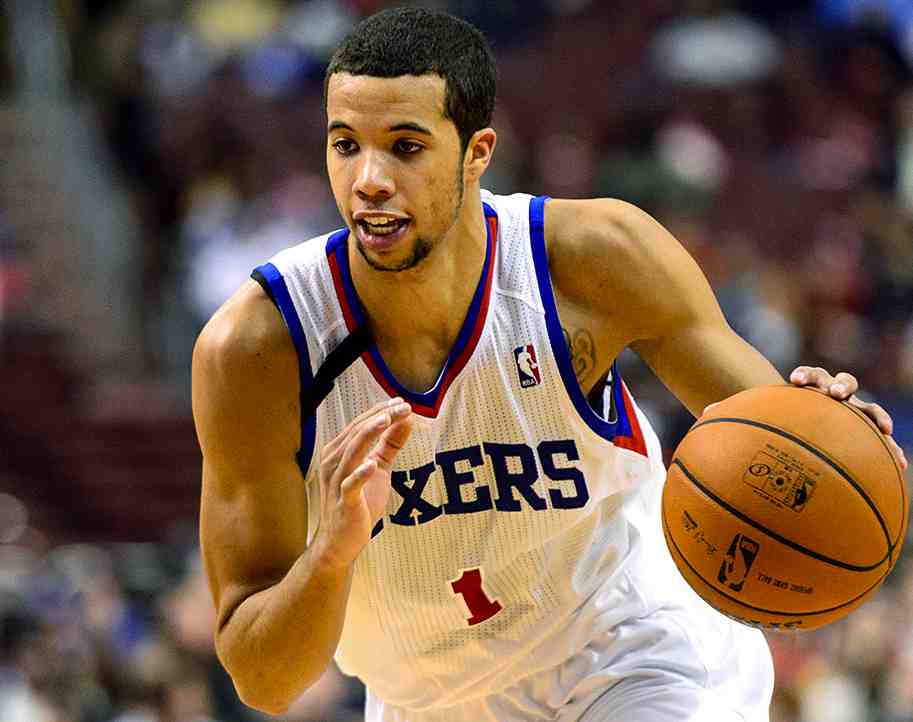
It’s refreshing to learn that the Philadelphia 76ers rookie Michael Carter-Williams is already working to assure he does not go on that list when his playing days conclude.
In an action that much of the league should follow, Carter-Williams, 22, has placed his entire $4.5-million rookie salary in a trust fund that he cannot access for the next three years.
Now that’s planning.
He will live off his Nike and Panini trading card endorsements, which, the way these companies pay, is plenty. More than that, it prevents him from splurging on a mindless array of cars and gaudy jewelry and from extending himself too far with hand-outs to family and friends.
“Our goal is to work with Michael to manage his money in a way that will secure his long-term financial future,” the player’s mother, Mandy Carter-Zegarowski, said in a statement obtained by NBC News. “Right now, the focus is not only to save as much as possible, but also to use his unique position to serve as a role model and give back to the communities that continue to support him and his career.”
His mom and her friend are Carter-Williams’ managers—another unprecedented move.
They all have seen or heard the stories of players like Antoine Walker, the former Boston Celtic who lost his entire career earnings of $110 million, mostly through overspending and bad investments. Walker is the present-day cautionary tale which too many athletes do not hear.
The it-can’t-happen-to-me syndrome prevails in far too many cases, as evident by the pervasive mass spending on automobiles, outlandishly priced jewelry and general posturing.
The pattern for financial ruin is as old as money: Kid from an urban background where the family struggled makes it big on his talents and is overloaded with money and is unable to handle the sudden wealth.
The results are entourages of friends who hang around and syphon money; extravagant spending on multiple cars and other excesses; trusting and granting entrée to finances to unseemly “financial advisers.” In the end, they are broke. . . or close to it.
Walker needed someone to reel him in as he was buying dozens of luxury cars. The 38-year-old told TMZ that he has chronicled his money mayhem in a book and has agreed to participate in a documentary about his financial collapse called, “Gone In An Instant.”
Why?
“If I can help bring down the number of athletes and entertainers who go broke,” Walker said to TMZ, “then I feel I’m doing something to help the cause.”
He said he caused his own problems by not adhering to advice from financial experts in his rookie season. “Through my young arrogance, being ignorant to a degree and being stubborn and wanting to do my own thing with my money, I went against a lot of his wishes,” Walker told Yahoo Finance.
That included having up to five cars at a time, including a $350,000 Maybach. He had multiple luxury homes built for his large family. He gambled extensively, losing, he said, $646,000 as a rookie. Even when he tried to do right, it went wrong. Walker bought 140 properties in Chicago that wrought nothing but debt and legal issues when the housing market crashed in 2008.
Now, Walker, after bankruptcy, does not own a car.
“Even if an athlete has a million dollars today, it has to last until you’re 65,” lawyer Kelly Phillips Erb told the Daily Mail. “In professional sports in particular, you’re going to have health problems and your knees are going to go out. Carter-Williams’ parents are very smart to know he has a shelf life though they hope he’ll go on to good things. But they don’t want him to blow his money on a Lamborghini.”
Walker gave this advice to young athletes through Yahoo Finances, advice that Carter-Williams understands: “Get the word ‘No’ in your vocabulary. You’re going to have to say no to a lot of people that are very important to you. Stick to your financial plan and don’t invest until you’re done with your career when you’re able to be hands-on.”


