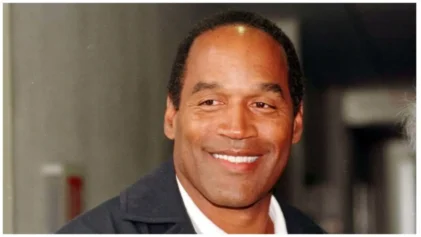
OJ Simpson pleads with Nevada parole board to cut prison term.
Five years after he went to prison for stealing back sports memorabilia he claimed belonged to him, 66-year-old O.J. Simpson is awaiting the decision of a parole board on whether he will be able to significantly reduce the time he has to spend behind bars.
At times emotional, Simpson made his case before the board yesterday on why he deserves parole after five years in a Nevada prison following conviction for kidnapping, armed robbery and other charges.
Along with five other men, Simpson confronted two sports memorabilia dealers in a room at Las Vegas’ Palace Station Hotel and Casino on Sept. 13, 2007, brandishing weapons but not firing them.
Simpson told the parole board, which is expected to issue its ruling in two weeks, that his nearly five years in custody “have been somewhat illuminating at times and painful a lot of times.”
“I missed my two younger kids who worked hard getting through high school; I missed their college graduations,” he said, becoming emotional, as he talked to the parole board members via closed-circuit TV from prison. “I missed my sister’s funeral. I missed all the birthdays.”
Even if a majority of the seven-member board votes in his favor, Simpson still won’t be free because he’d still have to serve at least four more years for other charges that didn’t run concurrently. In the worst-case scenario, Simpson could stay behind bars for more than two additional decades, since he was sentenced to up to 33 years in prison.
Portraying himself as a model prisoner, Simpson said he had promised prison officials “I would be the best prisoner they have ever had here. I think, for the most part, I’ve kept my word on that.”
Simpson said his sentence should be shortened because of a key difference between him and other inmates who are incarcerated for trying to rob others.
“The difference between all of their crimes and mine is that they were trying to steal other people’s property, they were trying to steal other people’s money,” the pro football hall-of-famer said. “My crime was trying to retrieve, for my family, my own property.”
A Nevada jury convicted the legend on Oct. 3, 2008—which coincidentally was the 13th anniversary of his controversial acquittal in the 1994 killings of his ex-wife, Nicole Brown Simpson, and Ronald Goldman, in what was billed “the trial of the century.”
“My intent was not to rob from anybody,” Simpson said.”I knew both of these guys who had my stuff. I was a little upset with them, and I think I wasn’t as civil as I should have been.”
But he said his mistake was bringing “some guys with me who I didn’t know and one I didn’t trust.”
“And that’s on me,” Simpson said. “For that, I’ve been here for five years.”
Tony Bommarito, who was an alternate juror in the case, told CNN earlier this week that the legend’s 33-year maximum sentence “seems like a lot for what he did in that scenario.”
“I would have thought 10 or 15 years,” Bommarito said. “(The longer sentence) made me think that … was there some bias there, maybe? Maybe they were thinking about the old trial?”