
Beyoncé made history as the first artist to reach 100 Grammy nomination for the 2027 Grammy Awards.
Her single, “Morning Dew (Donk),” was originally recorded in her 2006 “B’Day” era and surfaced for the 20th-anniversary.
But social media is talking about the two Black women who earned Album of the Year nominations for the 2027 Grammy Awards.
Singer Olivia Dean earned a nod for “The Art of Loving” and Raye for “This Music May Contain Hope.” Their nominations come with a history that stretches back decades.
Black artists have won just 14 of the 68 Album of the Year awards handed out since the ceremony began. Black women have faced an even steeper climb, with only four winning the coveted honor.
Since the Grammy Awards began in 1959, Black artists have fought for recognition in the ceremony’s biggest categories, even as they earned wins in R&B, jazz, pop and other genre-specific fields.
Since the Grammys began in 1959, only four Black women have won the night’s most prestigious awards.
So can Olivia Dean or Raye become the fifth Black woman to overthrow the Academy and win Album of the Year?
Ella Fitzgerald was the first Black woman to win a Grammy at the first-ever Grammy Awards show in 1959, and the first to win two in one night for Best Vocal Performance and Best Jazz.
Black women have won in categories such as R&B, Pop and Jazz. However, the academy has often excluded them in general categories. Those include the big three: “Record of the Year,” “Song of the Year” and “Album of the Year.”
That contrasts with the long history of Black women winning in genre categories but not general ones.
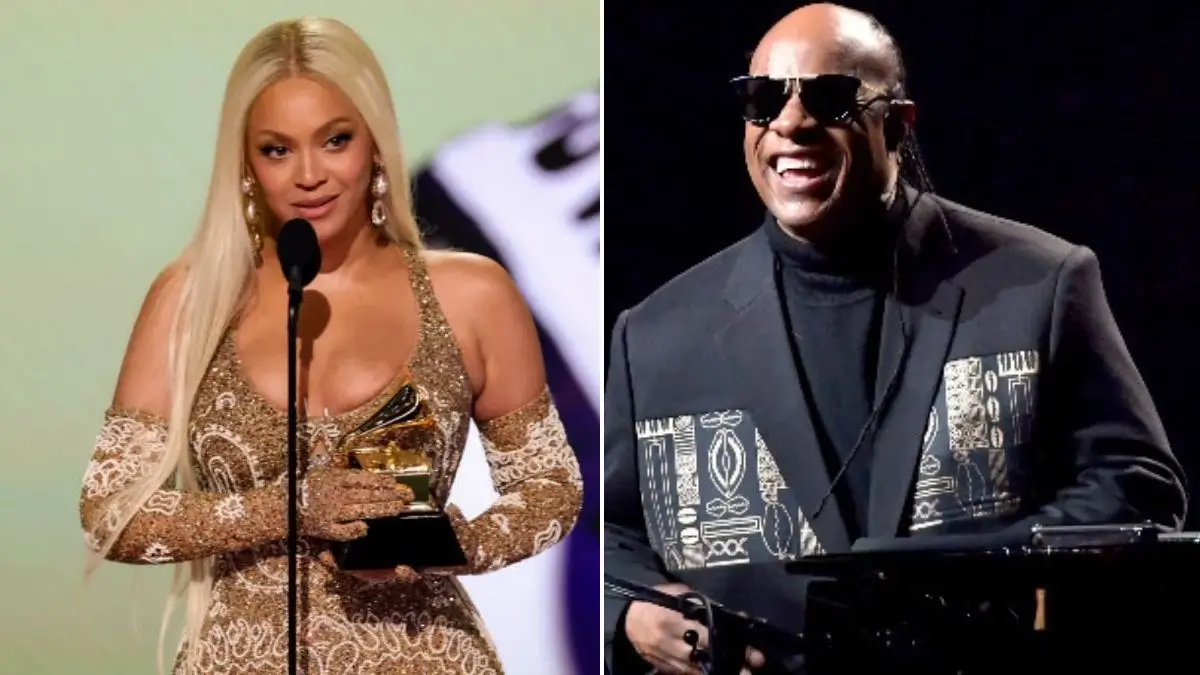
Black men initially struggled as well. Stevie Wonder became the first Black artist to win the Album of the Year category with “Innervisions” in 1974.
Wonder, in what was perhaps the most productive period of his career, went on to win two of the next three Album of the Year Grammy Awards, taking home the trophy in 1975 for “Fulfillingness’ First Finale” and in 1977 for “Songs in the Key of Life.”
That began a little hot streak for Black women. Natalie Cole won for “Unforgettable… With Love” in 1992 and Whitney Houston won in 1994 for “The Bodyguard: Original Soundtrack Album.
Then Lauryn Hill took the award home in 1999 for “The Miseducation of Lauryn Hill.”
But soon came an infamous 25-year drought.
Countless Black women earned nominations for the award, including Beyoncé, Mariah Carey, Alicia Keys, SZA, Janelle Monáe and Rihanna.
The Recording Academy shut out these iconic women for a quarter century, despite their millions of album sales and countless hits.
During this same period four albums by Black male performers won the award. Outkast in 2004, Ray Charles in 2005, Herbie Hancock in 2008, and Jon Batiste in 2022.
Still, mounting backlash over the awards’ unfairness prompted the creation of the “Best Urban/Alternative Performance” category in 2002. Artists like Chrisette Michele and Jill Scott won the award.
But the category’s title and definition drew criticism. The academy eliminated it in 2011 and folded its recognition into other R&B categories.
One of the most defining moments of this drought was Beyoncé’s 2017 loss for “Lemonade” to Adele. Even she felt Beyoncé deserved to win the award, which she stated in her acceptance speech.
Adele humbly thanked her “idol” on stage for the impact “Lemonade” had on her life and the people around her.
“‘Lemonade’ was so monumental, Beyoncé, and so well thought out and so beautiful and soul baring and we all got to see another side to you,” she said.
Beyoncé teared up in the audience as Adele continued. “The way that you make me and my friends feel — and the way that you make my black friends feel — is empowering, and you make them stand up for themselves,” Adele said.
Her loss sparked national conversations about how society treats Black women and recognizes their greatness.
According to the BBC, for years 15-30 academy members out of thousands had the final say in 72 categories.
This system led to conversations about a lack of transparency in the selection process and complaints of favoritism potentially ruining votes.
Zayn Malik openly called out the academy on social media. He stated the system is essentially rigged, “[it] allows favouritism, racism, and networking politics to influence the voting.”
In 2021, the system was completely overhauled, making 90 percent of members go through a re-evaluation process and limiting the categories members could vote in. The changes aimed to address concerns about fairness and representation.
Just four short years after the change, Beyoncé finally won Album of the Year for “Cowboy Carter.” Her victory ended the 25-year drought for Black women in the category after five nominations.
Now Dean and Raye face the question of whether that progress will continue.
This winter, the academy will show whether Beyoncé’s win marked lasting progress or another exception in a long history of Black artists fighting for recognition.


