It took less than a minute for Florida deputies to classify Adam Jamil Leisher’s death as suicide after opening his bedroom door in December 2024, his mother says.
But five weeks later, when an investigator from the Okaloosa County Sheriff’s Office showed his mother the photos of how police found his body, she noticed the gun was in his left hand — which deepened her suspicions that someone had killed her 33-year-old son.
“I said, ‘Do you even realize that Adam is right-handed and that firearm was in the wrong hand?’” Farah Awan said in a telephone interview with Atlanta Black Star.
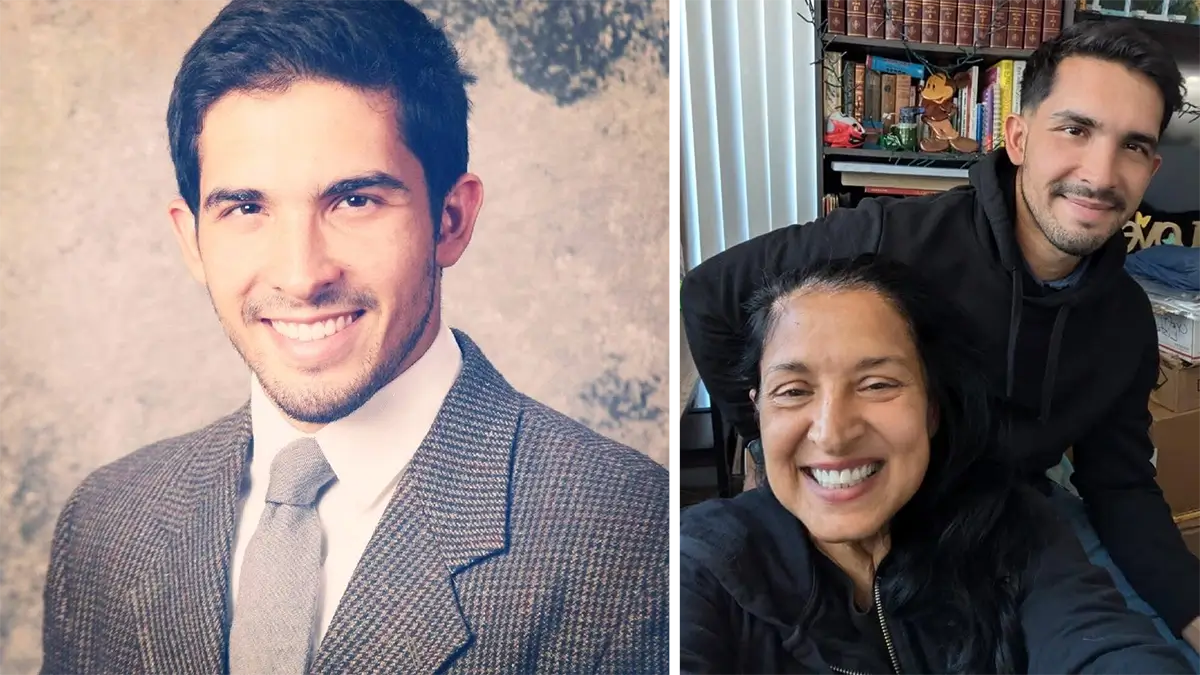
But she said the Okaloosa County Sheriff’s Office dismissed her concerns about a possible homicide, closing the case on March 6, 2025, leaving key questions unanswered.
Later that month, she launched a Facebook page called Justice for Adam Leisher, where she posts commentary questioning the investigation along with materials like bodycam footage and the 911 call.
On Nov. 14, Awan will join Meka Fortson for a rally in the Florida Panhandle to demand justice for her son and Fortson’s son, U.S. Airman Roger Fortson, the Black man shot and killed by an Okaloosa County sheriff’s deputy in May 2024.
A jury acquitted the former deputy, Eddie Duran, in October despite bodycam video showing Duran shooting Fortson within seconds of the airman opening the front door to his apartment, holding a gun by his side, pointed downward.
Demonstrators plan to gather at Fort Walton Beach City Hall at 10 a.m. before marching to the Fort Walton Beach Police Department, the Okaloosa County Courthouse Annex, the sheriff’s office, and the state attorney’s office.
The flyer calls for full, transparent investigations into both deaths.
“I met Roger’s mom when I went to support them at the trial,” Awan said.
“We’re both part of it. It’s about both of our children.”
Fortson said they began organizing the rally after the not-guilty verdict, which left her devastated.
“This village came together when my mind, body, and soul had nothing,” she said. “And in the process of coming together for Roger, they discovered many people have been cheated out of life because of law enforcement,” she told Atlanta Black Star.
Before his death, Leisher, who worked at a Toyota dealership, left work on Dec. 13, 2024, for a “family emergency,” employees told Awan.
He never returned to work, and police found him dead on his bed inside his bedroom on Dec. 23, 2024, according to his mother. Leisher lived in the home with two roommates: roommate A and roommate B.
Awan said roommate A called 911 around 12:28 p.m. that day to request a welfare check. According to her review of the recordings, roommate B told deputies he noticed a bad smell after returning home for lunch, initially checked the refrigerator, and then contacted the landlord. He went to get roommate A from work before calling authorities.
Awan said roommate A told the dispatcher Leisher had been in his room for roughly two weeks and also described more recent contact with him. The roommates told responding deputies they knocked on his bedroom door but got no answer, she said.
According to Awan’s account of the recordings, roommate B said he spoke with Leisher around 11 p.m. on Dec. 20. He said Leisher made unusual comments about his hands or face and told him not to be concerned if he did not see him for five days.
Awan said roommate B also told her he spoke with Leisher by phone that night and that he seemed fine. She said the phone records she reviewed showed a call beginning around 11:08 p.m. and lasting two minutes and 38 seconds.
But Awan also recounted statements referring to contact with Leisher on Saturday, Dec. 21, leaving the timing of his last contact with the roommates unresolved in her account.
Since learning of his death, Awan has been trying to reconstruct the 10 days between her son’s abrupt departure from work for a reported family emergency — which she knows nothing about — and the discovery of his body, reviewing phone records, body-camera footage and the roommates’ accounts for answers.
Awan suspects one of her son’s roommates played a role in his death. Investigators questioned both roommates the day they found his body and interviewed them separately in late January and early February, according to Awan.
But Awan questions whether investigators verified the roommates’ accounts of the days leading up to the discovery of her son’s body. However, no independent evidence has substantiated her suspicions about the roommates.
Awan said photographs showed Leisher lying on his right side on his bed beneath a white comforter, with a firearm in his left hand above his head, resting on a pillow. According to her account of the body-camera footage, a deputy reported a gunshot wound to the head after authorities opened the bedroom door.
After Okaloosa County Sheriff’s investigator Kristopher Staley showed her photographs on Jan. 27, 2025, she noticed the firearm in her right-handed son’s left hand. She said she raised that concern with Staley’s supervisor the following day.
“You could even hear a pin drop at that point,” she said.
Awan also questioned marks she saw in photographs of her son’s neck, which she described as possible ligature marks, along with what she believed were injuries to his face and body. No independent evidence has confirmed her interpretation of the marks and injuries.
Awan also said the medical examiner’s office told her they did not perform an autopsy, a fact she learned only after her son’s burial.
Atlanta Black Star reached out to the medical examiner’s office for comment but did not hear back by the time of publication.
Awan also said that prior to Leisher’s death, he had expressed discomfort about returning to the house he shared with the two roommates.
She also recalled seeing damage she described as bullet holes in his car in October 2024, which she said he attributed to his roommates.
“When he pulled up, gave me a hug, and I looked over and saw all these bullet holes in his headlights,” she said. “And it looks like there’s a bullet hole in his windshield.”
“I said to him, ‘Oh my God!’ I said, ‘Adam, what happened here?’”
She recalled his response: “Oh, Mama, it’s nothing. It’s just my roommates.”
Awan also questioned a hole in a mini-refrigerator in her son’s bedroom. She said her cousin noticed the hole after they cleared the room, and a cleaner remarked that he thought authorities “got both of them.”
She believed the remark referred to two bullets, but no independent investigation has confirmed the existence of a second bullet or linked it to Leisher’s death.
Awan also sought information from investigators about a $500 ATM withdrawal in Navarre on Dec. 19, which she initially found suspicious because its location and evening timing differed from Leisher’s routine.
She said Staley later told her he had reviewed surveillance footage and confirmed Adam made the withdrawal.
But even though authorities closed the case, she said they have refused to let her view the video.
“They won’t let me see the video,” she said.
“Why am I being prevented from having records?”


