A father and son were spending a quiet day fishing at a pond when two white men approached with a claim that has become familiar to many Black Americans in outdoor spaces: you don’t belong here.
In two videos uploaded to Instagram on Oct. 14, a Black fisherman casts his line into a pond with his son. Behind him sits a wide-open grassy field at the edge of a tree line, with houses visible far in the distance.
No “No Trespassing” signs are posted in the area, and none appear in the footage.
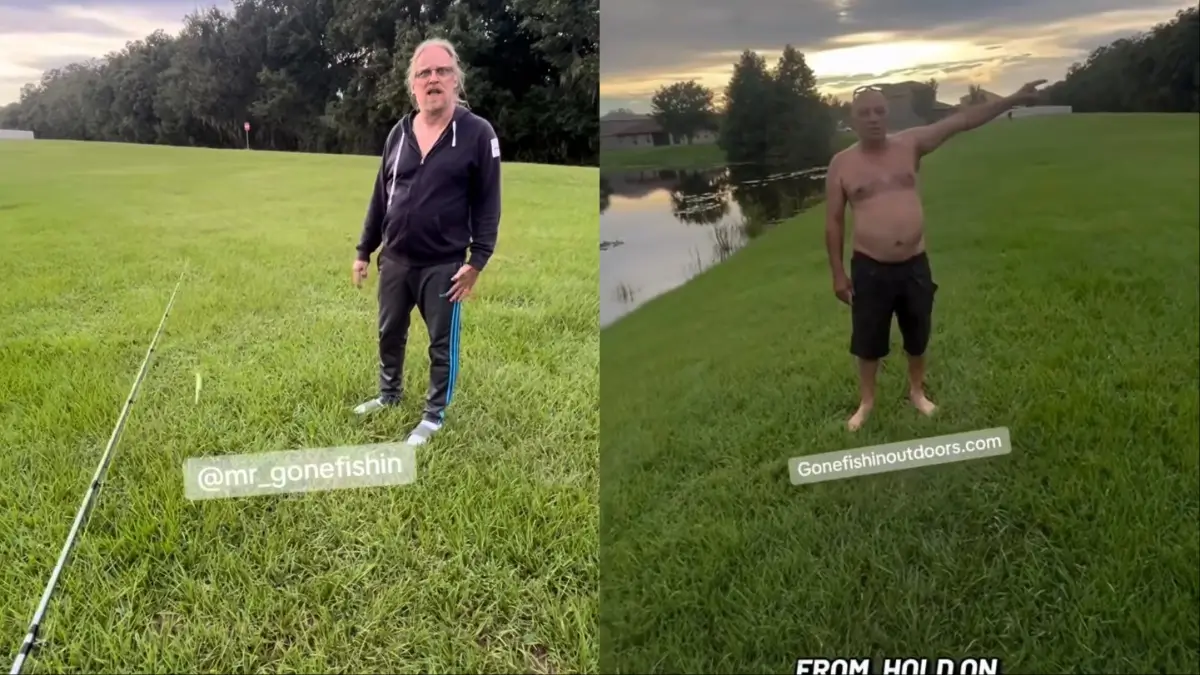
Notably, the fisherman began filming before anyone approached, anticipating what was to come.
In the video, he tells the camera: “Never fails, y’all. Two Black people fishing. We gonna get us a Karen. All we doing is fishing, y’all. Somebody always gotta have a problem with something…never fails, look. All we doing is fishing.”
Moments later, a shirtless, shoeless white man comes into view, walking toward him from the houses in the distance.
When he reached the fisherman, he gestured vaguely to the surrounding area and said he owned it all. “You know, you passed by my property,” he said, without any visible markers to back up the claim. “You are the county?” he asked.
The father calmly told the man he wasn’t the county and said he had lived in the area for 20 years. He added that he had spoken with police about fishing there and they told it was fine.
After some back-and-forth, a second white man approached and launched into an expletive-laden rant about his ownership of the land.
“All the way to the f–king trees,” he said, throwing out the word “trespass” and telling the father that fishing there “broke the law.”
As the fisherman tried to determine where public land ended and private land began, the second man snapped, “It doesn’t f–king matter.”
In fact, it does. Owners typically mark land with fences, posted notices, and, in some states, purple paint on trees or posts. A claim alone doesn’t establish ownership. Anyone can say, “This is my property.”
Through it all, the fisherman never raised his voice or matched the animosity. Instead, he laid out a simple standard, one that could have ended the confrontation before it began.
“If you’ve got a problem with us coming through there, just say, ‘Don’t come through there. That’s my property. No problem,’” he told the men. “But the disrespect, we’re not going to be disrespectful.”


