A newly released analysis of Nolan Wells’ cellphone offers a closer look at how his friends reacted after the 18-year-old disappeared during a Fourth of July gathering off the Mississippi Coast, including messages expressing confusion, concern, and frustration as rumors about his death began circulating.
The 292-page report, compiled by independent investigative firm Garrett Discovery and verified by People, includes communications from 29 group chats involving Wells, along with records of his private Snapchat messages.
Authorities found Wells’ body on Horn Island on July 6, two days after he attended a large holiday gathering with friends. Despite the release of the phone records, key details about his final hours remain unresolved.
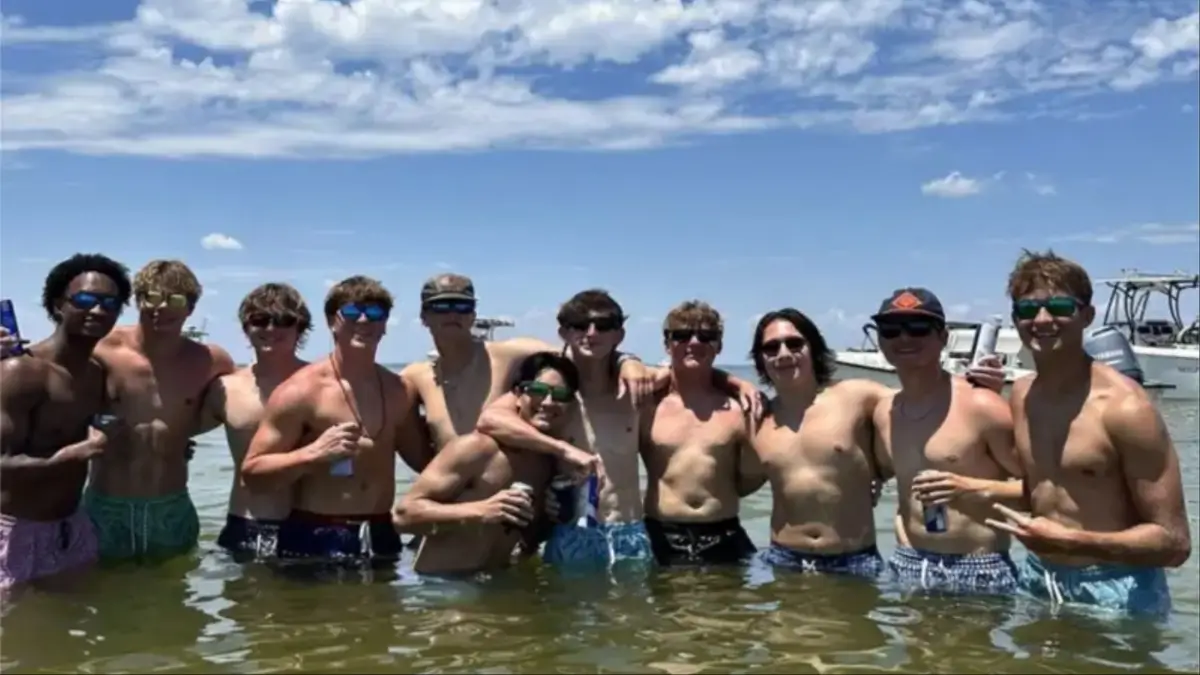
The report tracks the group’s conversations as friends searched for information, challenged accounts of Wells’ last known movements, and later discussed allegations that some members had a role in his death.
At a Sept. 24 news conference, Garrett said Wells last accessed his phone at about 2:18 p.m. local time on July 4 while aboard a boat. Garrett initially raised questions about Snapchat messages that disappeared between that time and the early morning hours of July 5, when Wells’ parents retrieved the device.
He later clarified that the people who sent the messages had remotely deleted them, rather than someone accessing Wells’ phone.
In messages from July 5, Wells’ friends tried to establish when they last saw him and who may have left the island with him.
In one message, a person described seeing Wells around the time people were preparing to leave, writing that “he came and was hanging out with us and around us” and that “he never disappeared with [redacted].” The message continued that, around 6 p.m., Wells “got off our boat with this other guy and they started walking back to their boat.”
Several of Wells’ friends had left Horn Island that afternoon after one of their boats began taking on water, according to their previous statements and public records.
In the early hours of July 5, friends sent messages asking where Wells was and whether he was OK. As the morning progressed without clear answers, uncertainty appeared to turn into suspicion.
At 11:59 a.m., one person wrote in a group chat, “There is def some sus s— going on.” Another message raised questions about someone else’s behavior, asking, “Someone said [redacted] was acting weird too?”
A separate message pointed to the number of people who had been on the island that day, saying that thousands of people had been there but “nobody knows who he was with.”
At 12:24 p.m., a user questioned the account that Wells had chosen to remain on the island after others departed. “If he was gone ride with somebody else, why would he leave his phone on the boat?” the person asked.
Another user encouraged members of the group to review their photos and videos for possible clues. “See if he was talking to anyone we don’t know,” a message sent at 12:56 p.m. read.
As the search continued, the group’s conversations also turned to growing public attention and concern about what members should say.
At 4:28 p.m. on July 5, one person warned that people on Facebook were criticizing their friend group. The message urged others not to engage with online commentary, saying, “dont read that bs or be running yalls mouth bc ppl will make an inch turn into a mile.”
Another message was more direct: “No one say anything to anyone out of our friendgroup.”
At 6:52 p.m., a user said police had contacted them. Another message stated, “They’ve called everyone.”
The following morning, a group member offered advice about how to handle possible police questioning. The person wrote that “if we get called in for questioning,” the “smart move is to ask for an attorney.” The message added that doing so “doesn’t mean we’re guilty” and said the group should avoid being misled by “some potential bias cop.”
Less than 30 minutes later, someone reported that authorities found Wells’ body.
“They got him,” the user wrote.
One person responded, “There’s no [expletive] way,” and described Wells as “the best [expletive] person.” Another message reflected on the group’s loss, saying, “I love Nolan; he would want us to stay together through this and be there to live on his [legacy].”
The news quickly spread beyond the group. At 11:35 a.m. on July 6, a user remarked, “It’s nationwide,” apparently referring to the growing attention surrounding Wells’ death.
Other messages focused on how members should discuss the case. “Don’t speculate about s— y’all,” one person wrote. Another warned, “Bc they can try to get your a–,” while a third advised the group to “just stick to what you know happened.”
At 12:45 p.m. that day, one user added, “We have nothing to hide.”
The following day, a message offered support to someone affected by the situation, saying, “You and your family deserve justice.” The writer continued, “I’m praying you get everything you deserve; that wrong will be shown,” adding that if anyone had hurt Wells, they should be “accounted for and punished.”
By July 7, the group’s conversations reflected growing concern about online accusations that Wells’ friends were concealing information about his death.
“They posted this update and every single comment is just abt how we’re covering it up,” one user wrote at 1:40 p.m.
The allegations continued to circulate in the months after Wells’ death, with attention focusing in particular on the mostly white group of friends who had been with him on Horn Island. The grand jury later said that people on social media had unfairly singled Wells’ friends out.
On July 13, a user, who appears to identify as Tracestin Shepherd, apologized in case an interview had fueled the backlash against the group.
“That wasn’t my intention at all was just tryna clear our group of what I know was the truth,” the message read.
Shepherd had publicly identified himself as the person heard shouting in a viral video that some online users speculated showed evidence of an altercation involving Wells that day. The phone records do not, by themselves, establish that an altercation occurred.
The following day, another message discussed attending Wells’ funeral and responding to public scrutiny. “We need to go to Nolan’s funeral and get with all our other black friends to make a statement for the media,” the user wrote.
Wells’ family had expressed concern that race could factor into the investigation, given Mississippi’s history.
Less than an hour after that message, another person suggested asking Wells’ mother, Christine Wonsley, whether she was comfortable with the group attending the funeral.
On July 20, the day of Wells’ funeral, a user criticized the discussion of a reward being offered in the investigation, writing, “They are doing such a disservice at a funeral and so ignorant.”
Other messages that day were more personal. As members discussed putting up a cross for Wells, one person wrote, “Bring his flip flops.” Another responded, “We can bury those as well.”
Wells’ phone has been a point of contention since the beginning of the case. His friends kept the device after the gathering, saying he had left it on a boat and chosen to remain on the island, where he met a young woman. His parents have said that decision would have been out of character for him.
A friend called Wells’ mother after his disappearance, and the family retrieved his phone within hours of the report. His parents later sought a detailed examination of the device, saying they wanted to analyze the data jointly with state authorities. The family ultimately hired an independent analyst, who presented the findings in part to a grand jury.
The grand jury declined to bring criminal charges, concluding that the evidence did not provide sufficient grounds for prosecution. Both the state’s chief medical examiner and a forensic pathologist Wells’ family hired determined that his cause and manner of death remained undetermined.
The grand jury said the position, condition and location of Wells’ body, along with the time it was discovered, were “consistent with drowning.”
His parents and their attorneys have continued to raise questions about the circumstances surrounding his death, particularly bruising on the back of his head. The grand jury described the injuries as nonfatal.
The family has asked the Justice Department and FBI to conduct independent investigations. President Donald Trump said his administration is aware of the case.


