An extraction of Nolan Wells’ phone has revealed new clues surrounding his mysterious death, including messages sent after he went missing.
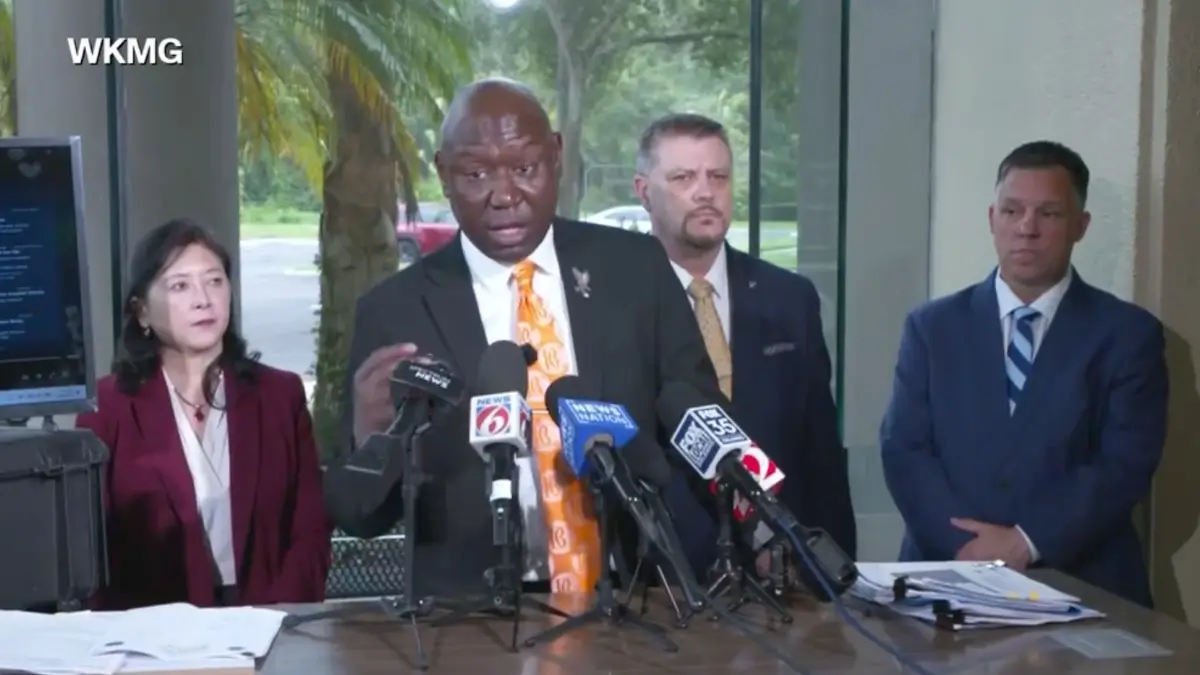
Civil rights attorney Ben Crump, joined by forensic investigator Andrew Garrett and experts from Garrett Discovery, released the findings at a news conference Thursday. The firm, which Wells’ family retained, examined the phone for evidence that could shed light on his final hours.
The newly released data comes days after a Mississippi grand jury declined to charge anyone in the 18-year-old’s death. Searchers found his body in the water near Mississippi’s Horn Island two days after a July Fourth outing.
The grand jury concluded that the location and condition of Wells’ body were consistent with drowning. However, the state medical examiner found no water found in Wells’ lungs nor stomach.
Although Wells never made it back to shore, his phone did around 7 p.m., according to its GPS data. His parents got the phone back from friends around 3 a.m. the next day.
Garrett says it took his team almost 24 hours to extract 1M artifacts of data from before and after his death.
The teen sent his last text message on July 3 around 8:30 p.m., where he said ‘thank you’ to his aunt. Garrett said Wells rarely used the text app, but rather Snapchat to communicate with friends.
“We have all of the Snaps from his friend group. The district attorney [also] has them,” Crump said.
Attorney Crump read aloud a message Thursday that revealed his friends may have been suspicious of people who were hanging out on the island that day after they left.
“‘Do y’all remember the sketchy looking guys behind us in two boats,'” the Snap message said. “I mean, one looks like, and I won’t say the name, the guy was really scary. The one that was behind us. Yes, one was black and one was white. Those guys were apparently like felons or something.'”
Garrett says Wells did use his phone on July 4, unlocking it with Face ID. He also communicated with others and then locked it again. The teen’s phone stayed on a boat during his time on Horn Island.
Based on the team’s examination, data was deleted from the teen’s phone between the last time he had it and when his parents got it back.
“There were things that were deleted from the phone. I can’t talk to intent,” Garrett said. “But in order for that to be done, somebody had to take a user action to delete data.”
The forensic investigator confirms that the deleted items were Snapchat-related. He also notes that individuals kept talking in chat groups after Wells was dead.
“The individuals that are part of this chat group continue talking after he was dead, not understanding that their messages were also syncing onto Nolan’s phone. So, we have the messages,” Garrett said.
Wells’ parents have also believed that someone tampered with their son’s phone. They initially agreed to a joint examination of the phone with the Jackson County District Attorney’s Office, but that examination never happened.
Attorney Lisa Parks said the family ultimately declined because they would have had to turn over the phone to law enforcement without being present during the examination, which differed from the original agreement.
“The parents of Nolan Wells never kept the phone intentionally to keep away from DA or any law enforcement,” Parks said. “We’d been playing by the rules.”
The family instead had Garrett Discovery download the phone’s data and turn over the information to the DA’s Office. Garrett says the DA’s officer never told him to have the reports ready by a certain time for the grand jury’s review.
He first gave the DA a preliminary review and then the full report a week later that the grand jury did eventually review before their decision.
“We gave them all of our hard work on a silver platter,” Garrett said.
The grand jury found insufficient evidence to charge anyone in his death. But neither the state medical examiner nor an independent pathologist hired by his family could determine the cause or manner of death.
The state medical examiner also noted that there was no water found in Wells’ lungs nor stomach.
The family’s pathologist, Dr. Roger A. Mitchell Jr., documented unexplained blunt-force injuries to the back of Wells’ head and other areas of his back. Crump has pressed investigators to explain those injuries and warned against treating drowning as a settled finding.
“Would any parent accept those findings of the grand jury and say, ‘thank you and move on?’ No parent would do that. So why are they asking Christine and Elmore Wonsley?” said Crump.
Wells’ family and legal team want investigators to keep the case open. They want an independent review by the U.S. Department of Justice.


