A Michigan man convicted of killing his close friend and injuring three other men during a brawl in downtown Grand Rapids in 2022 deserves a new trial, the Michigan Court of Appeals ruled last month.
On Sept. 9, two judges on a three-member appellate panel vacated the convictions of Genesis Lewis, 28, including second-degree murder and three counts of assault with intent to commit murder. The judges found that the trial judge had improperly instructed the jury in October 2023 by failing to have jurors consider mitigating circumstances that could have affected their verdict.
The appeals court sent the case back to Kent County Circuit Court for a new trial.
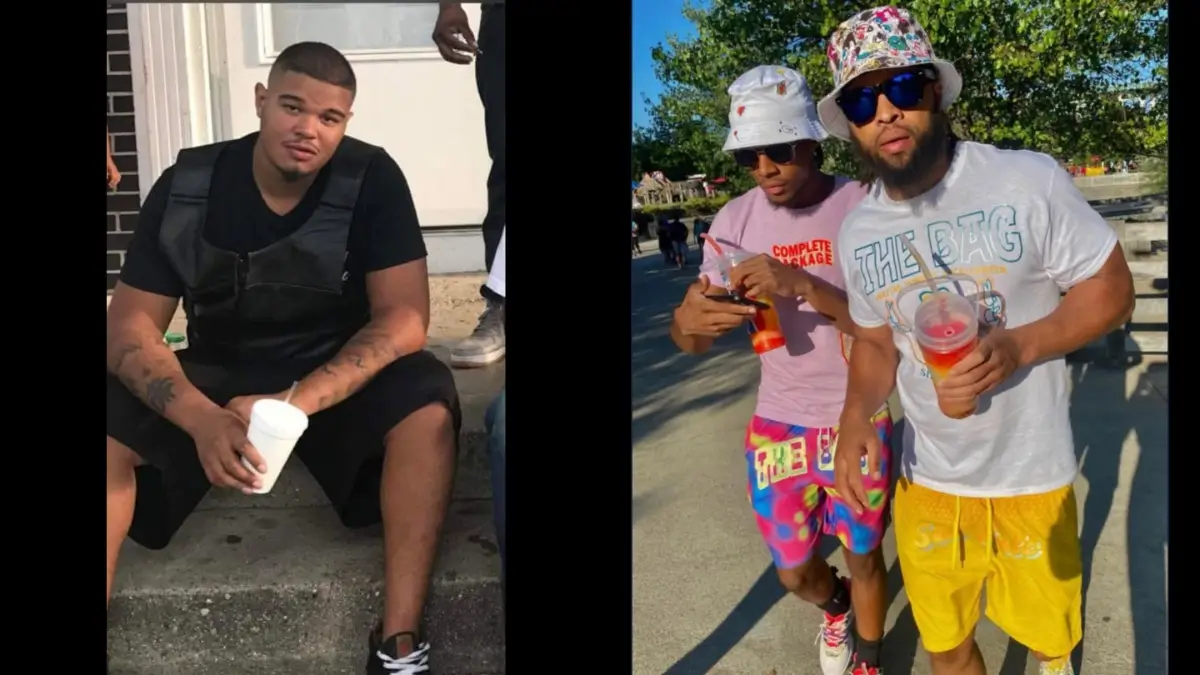
Police arrested Genesis Lewis on June 5, 2022, after a physical fight outside Grand Rapids nightclub Ambiance involving his father, Jerome Lewis, his 25-year-old friend Armonie Acklin, and three other men. The confrontation ended when Lewis opened fire into the crowd.
What motivated Lewis to do so is at the heart of his defense. He says he felt afraid and angry as he defended his father against two younger men who were attacking him.
Court records show that Genesis and Jerome Lewis co-owned a clothing business and delivered an order to Ambiance that night. They stayed outside the club near their street-parked truck, where they interacted with potential customers. Acklin, a close friend of the younger Lewis, happened to drive by, spotted the two men, and circled back before joining them by their truck.
About 45 minutes later, Jerome Lewis noticed a man smoking outside the club entrance and staring at him and his son. The man was Marcellus Wilkerson-Allen, a former high school classmate of Genesis. A verbal argument ensued and escalated into a physical fight involving Lewis, his father, and Acklin on one side and Wilkerson-Allen and two other men on the other. The men were Marcellous Suttles, who was celebrating his wedding that day, and Richard Caldwell, a member of the wedding party. Wilkerson-Allen had also attended the ceremony.
During his weeklong trial, Genesis Lewis testified that he had a valid concealed pistol license and retrieved two guns from his truck as the altercation escalated. When he returned to the fight, he saw Caldwell had tackled his father while Jerome Lewis was fighting Suttles. Genesis testified that he fired at Caldwell to get him off his father, saying he did not intend to kill him but understood that shooting could seriously injure Caldwell or someone else.
Video footage and shell casings recovered at the scene showed that Lewis fired at least 13 shots. He shot his friend Acklin in the head, killing him, and wounded Suttles, striking him 10 times in the shoulder, stomach, thigh, and hand. Lewis also injured Caldwell and Wilkerson-Allen. All three men survived their injuries.

Faye Suttles, the new bride of Marcellous Suttles, who witnessed the shooting, told WoodTV that she used ties and belts to stop his bleeding.
Prosecutors charged Genesis Lewis with second-degree murder, three counts of assault with intent to murder, and four counts of felony firearm possession.
The trial court instructed the jury on second-degree murder, assault with intent to murder, felony firearm, and involuntary manslaughter, but declined a request by Lewis’ defense counsel to include an instruction on mitigating circumstances.
The jury convicted Lewis on all charges. A judge sentenced him to 28 to 90 years in prison for second-degree murder and 18 to 70 years for each assault conviction, with those sentences running concurrently. He also received two-year concurrent sentences for the firearm convictions. He faces a minimum of 30 years in prison.
Lewis’ attorney, Daniel Schwalm, told WoodTV after his sentencing in January 2024 that Lewis fired the shots to defend his father as he was lying on the ground.
“There were three men standing above him that were attacking his father,” Schwalm said. “In his opinion, he was using deadly force to defend his father. He may have had bad skills or bad marksmanship, but it was certainly not a situation where he intended to kill Armonie Acklin at all or the other people.”
Schwalm said Lewis and Acklin considered each other brothers and that Acklin tried to help Jerome Lewis when someone shot him.
“When he went over to help, one of the assailants punched [Acklin], and he went back,” Schwalm said. “At that exact moment, [Lewis] fired to stop the attack, and [Acklin] got punched into the line of fire and [he] died.”
Kent County Circuit Court Judge Trusock admonished Lewis during the sentencing hearing about his role in provoking the fight. He said that Lewis and his father were “in the [wedding group]’s face” outside of the bar, and “quite frankly, I think your father was the instigator of a lot of this.”
“You didn’t mean to, but acting recklessly, discharging that gun 13 times, you hit the groom,” Trusock said. “It’s a miracle of modern medicine that he didn’t die.”
Jerome Lewis, 50, told Atlanta Black Star (ABS) that the groom, Marcellous Suttles, turned what started out as “a fair, one-on-one fist fight” between his son and Wilkerson-Allen into a brawl involving six men when Suttles stepped in and “sucker punched” Genesis Lewis, prompting himself and Acklin to jump in.
He said his son acted in self-defense and defended a family member during the fight, adding, “I stand 100% behind the decision my son made.”
At his sentencing, Genesis Lewis apologized, saying he would accept his punishment for taking his friend’s life.
“What’s most important to me is Armonie gets justice. He’s no longer here with us,” Lewis said. “If me having to take the responsibility for my actions and the actions of the person that assaulted him and was in the line of fire is what I owe to him, then I’m willing to do whatever it takes to pay the fraction of the debt that he put his life on the line for me and my dad.”
Brenda Bables, Acklin’s mother, told Lewis, “We have a hole in our hearts that can’t be filled because of just carelessness,” reported WoodTV. “You took away my first true love, my son, my best friend.”
She told Lewis that she hoped to forgive him one day for killing her son.
“Armonie would want that from me,” she added, and encouraged Lewis to do something positive in prison. “Be a mentor for young men to break this cycle,” she said.
What Lewis did do in prison was some fruitful legal research. After reviewing the trial transcripts and court records and researching the law, he filed a brief challenging the jury instructions in his case.
In a majority opinion issued last month, Judges Daniel Korobkin and Adrienne Young ruled that the trial judge had improperly instructed the jury. They found that the circuit court judge should have instructed jurors on mitigating circumstances and given them the option of returning a voluntary manslaughter verdict.
The judges wrote that the elements of assault with intent to murder (AWIM) are “an assault … with an actual intent to kill … and which, if successful, would make the killing murder.” But “if a defendant would have been guilty of manslaughter rather than murder had the assault resulted in death (due to an absence of malice), there can be no conviction of AWIM,” they wrote. And if a jury could reasonably find that to be the case, a mitigating circumstances instruction should be given to the jury.
The judges found the evidence presented at Lewis’s trial “supported the requested mitigating-circumstances jury instructions” for his AWIM charges.
They noted that Acklin’s girlfriend and Lewis himself testified about how angry and “emotionally involved” he was after seeing his father attacked by the other men, and said that their testimony and the video footage “constitutes evidence from which a jury could have found that defendant acted in the heat of passion, caused by an adequate provocation” while assaulting Suttles, Caldwell, and Wilkerson-Allen and that he “acted before a reasonable amount of time had passed to allow him to calm down.”
Those circumstances, they said, should have triggered a mitigating circumstances instruction to the jury.
The appellate court also ruled that the trial judge should have instructed the jury on voluntary manslaughter, which goes hand in hand with an instruction on mitigating circumstances.
Although the trial judge instructed the jury on involuntary manslaughter as a lesser offense of murder, the appellate court noted that the charge “contemplates an unintended result and thus requires something less than an intent to do great bodily harm, an intent to kill, or the wanton and willful disregard of its natural consequences.”
The elements of voluntary manslaughter mirror those of murder, except that voluntary manslaughter, unlike murder, does not have malice as an element,” they wrote. “Voluntary manslaughter occurs when a defendant kills “in the heat of passion” caused by “adequate provocation” before they “cool down from the emotional excitement.”
The judges noted that it was impossible to know whether a properly instructed jury might have reduced Lewis’ second-degree murder charge to manslaughter. They ruled that the trial court’s failure to instruct jurors on mitigating circumstances and voluntary manslaughter was not harmless error, concluding that “a new trial is required.”
In Michigan, voluntary manslaughter is a felony punishable by up to 15 years in prison, a fine of up to $7,500, or both. The actual sentence depends on factors such as the defendant’s criminal history and the judge’s discretion and may include a combination of incarceration and probation.
Lewis had no prior criminal history before the killing besides a fishing violation.
In a dissenting opinion, Appeals Court Judge P.J. Boonstra disagreed that the trial court erred by failing to instruct the jury on voluntary manslaughter. He argued that Lewis’ attorney had not requested the instruction and that it did not apply to the case.
Boonstra noted that Lewis said “he did not see his father ‘on the ground and being jumped by multiple individuals’ until after he had retrieved his guns and was returning to the fight. These facts indicate that ‘[e]ven if he was scared and confused, his decision to retrieve the gun[s] was a deliberate and reasoned act.”
Further, the dissenting judge wrote, Lewis “testified that he was ‘angry,’ that he ‘had a lot of adrenaline going’ and was emotionally overwhelmed, but he nonetheless stated that his intention in aiming his gun was ‘to get them off, my dad.’ … He also testified that when he shot into the crowd, he consciously chose to shoot the gun he was holding in his left hand because he did not want to use the more lethal gun in his right hand. Therefore, defendant’s own testimony indicates that ‘his emotional state did not reach such a level that he was unable to act deliberately.'”
Genesis Lewis’s mother, Theresa Lewis, is hoping a new trial means he will not spend the rest of his life behind bars.
“I am not asking anyone to ignore the pain of that night or the loss suffered by another family,” she said in a statement. “I am asking people to remember that my son is more than a case number, more than a conviction, and more than the worst night of his life. … My son deserves the fair trial the Constitution guarantees and the opportunity for the complete truth to be heard.”
Jerome Lewis told ABS that he believes jurors will acquit his son at a second trial.
“We’re going to win. We have no doubt about it,” he said. “Not Guilty. The jury will see it’s a clear self-defense situation, that my son was licensed to carry and did everything by the book.”
The appellate court sent the case back to Kent County’s 17th Circuit Court for a new trial. Judge Clay M. West scheduled a status conference for Nov. 2.
The Kent County Prosecutor’s Office has not issued a statement or filed new court documents outlining its next steps. Options could include appealing the decision to the Michigan Supreme Court, retrying Lewis, or offering him a plea agreement.
The prosecutor’s office and the families of Acklin and Suttles did not immediately respond to requests for comment from Atlanta Black Star.


