Eryn Bonner, a 21-year-old Black college student in Arizona, faced a felony charge of aggravated assault on a first responder after a confrontation with Tempe police earlier this year — a charge that carried a potential prison sentence of more than two years.
However, Maricopa County prosecutors declined to pursue the charges because no video shows Bonner assaulting a police officer, even though at least three separate cameras recorded her arrest.
Instead, the videos show Tempe police officers shoving and punching her and groping her buttocks during the encounter. The footage prompted Bonner to file an internal affairs complaint about a month after the incident, accusing Officer Daniel Ireland of sexual assault.
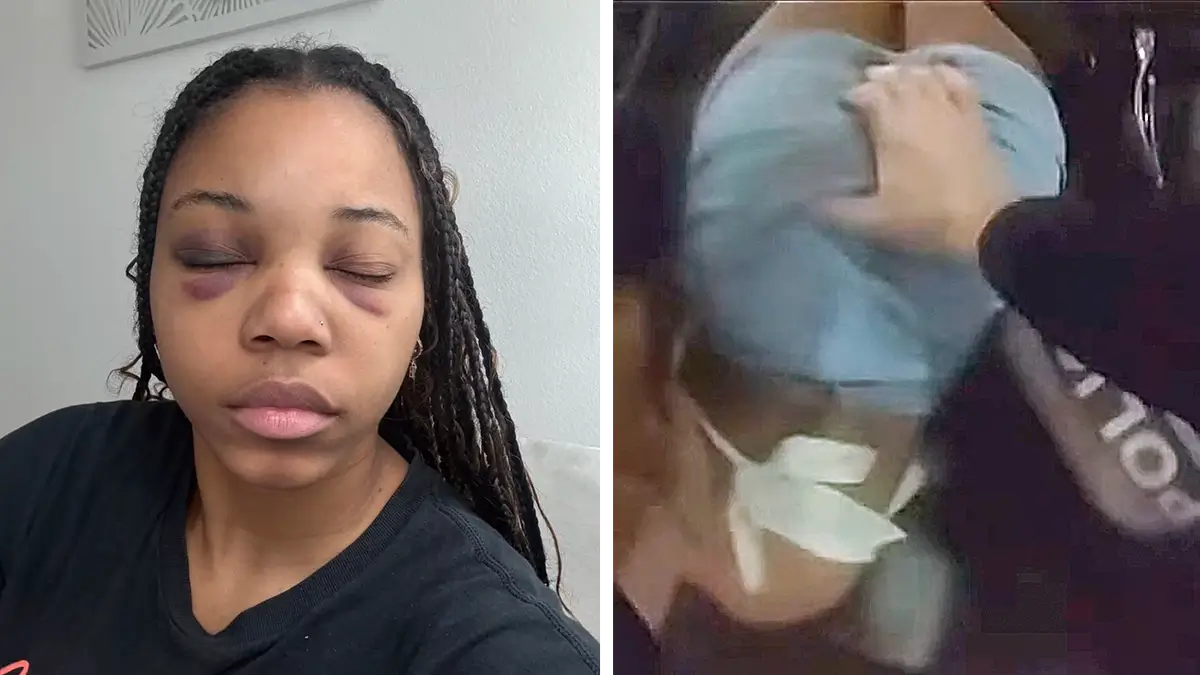
“The body camera footage shows the groping and this officer straddling her,” Benjamin Taylor, the attorney representing Bonner in her criminal case, said in an exclusive interview with Atlanta Black Star.
“And at the very end of it, after she’s handcuffed, he’s humping her from her back. He’s just sitting on top of her next to her butt.”
That complaint led Tempe city prosecutors to file two misdemeanor charges against Bonner a month later, in what her attorney says is an obvious act of retaliation.
“It’s retaliation and vindictiveness because they’re trying to cover up for the officers instead of taking responsibility for their actions,” Taylor said.
“They know if you put criminal charges on a person, it throws up a hurdle to sue them civilly.”
Tempe police arrested Bonner on July 19 on Mill Avenue, an area filled with bars and restaurants frequented by Arizona State University students.
Surveillance video shows Bonner with two male friends walking past another man holding a pizza box. Although the video shows the exchange, it contains no audio.
Bonner’s group begins to walk away, but one of the men returns to confront the man with the pizza box while the second friend tries to hold him back.
The man in Bonner’s group then knocks the pizza box from the other man’s hands. Several officers immediately grab him from behind, taking him to the ground.
Bonner then walks up to the officers piling on her friend and tells them to “let him go,” prompting one officer to shove her to the ground.
She gets back up and starts yelling at the officer, who shoves her a second time over a police bicycle. More officers join the struggle, with one planting his hand on her buttocks.
“He grabs her butt and sexually assaults her with his hand,” Taylor said. “It’s very deliberate.”
“She’s not a threat to anybody. So why are you grabbing her butt? That’s the question that Tempe has never answered,” Taylor continued.
Taylor said he filed an internal affairs complaint regarding the alleged sexual assault in August but never received a proper follow-up.
“Next thing you know, radio silence,” he said. “Really, no response in regard to the sexual assault allegations.”
Instead, about a month later — two months after Bonner’s initial arrest — Tempe prosecutors filed charges of disorderly conduct and interfering with police against her. Those charges remain pending.
Taylor described the internal affairs investigator, Tempe Police Sgt. Kevin Ameiss, as “rude, condescending, and judgmental.”
Taylor also questions how Ameiss can lead a proper internal affairs investigation given his own record. In 2020, Tempe police suspended Ameiss for a week for supervisory failure after one of his officers held a Black hotel employee at gunpoint.
Officers responded to a report of a white man threatening to shoot hotel staff, but they never found the suspect. Instead, they confronted a Black employee who had committed no crime.
The officer who drew his weapon, Ronald Kerzaya, resigned from the force and surrendered his law enforcement license in Arizona. The employee, Tre Cumpian, received a $300,000 settlement.
“Why are you having him, of all people, contact us, contact Ms. Bonner, when he’s already had issues with excessive force and been suspended for it in another case?” Taylor asked.
Taylor, who has represented numerous Black victims of police abuse over the years, said the problem within the Tempe Police Department goes beyond racial profiling.
“They’ve had a culture of doing this to Black people and all types of people here in Tempe,” he said. “I’ve had white clients and other races complain about being attacked. I think it’s the culture of having overly aggressive cops.”
Because of this, Taylor does not trust the department to investigate its own.
“This frivolous prosecution of Ms. Bonner is retaliatory,” he said.
“It feels very fishy that you wait two months after the arrest, and after the county attorney decided not to pursue felony charges, to have your own city employees bring up charges to protect the city.”
“This is why we asked for an independent investigation, because Tempe has been known to be very biased,” he concluded.


