One white Texan couple who live near an HBCU gets an “F” when it comes to friendliness.
The couple’s home sits just steps from Huston-Tillotson University, a private institution with around 1,000 students, in East Austin’s Chicon neighborhood.
Students accuse the unidentified wife of leaving rude notes on their legally parked cars near her home and even blocking a professor’s car with trash cans.
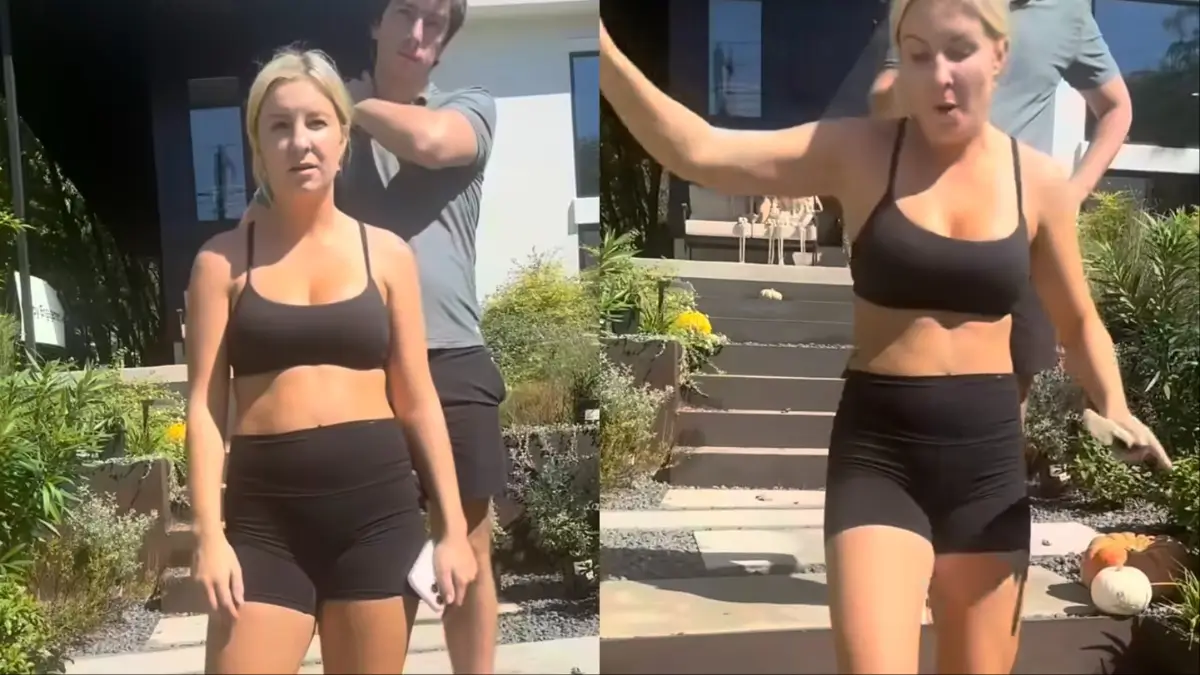
“They have been terrorizing the students,” wrote senior Bri Nunn in the caption of her October 5 Instagram Reel. “Keep in mind, people have been parking here for YEARS with no complaints, and the neighbors are friendly and understanding.”
Nunn, a student activist at the university, approached the couple outside their home to discuss the issue, but the conversation quickly went sideways.
At first, the woman feigned ignorance, but the floodgates soon opened.
“We paid 1.5 million dollars for our house, and those guys’ graduation rate is like 25 percent,” she snapped.
Nunn then reminded her that she lived in a historically Black neighborhood, and the woman shouted, “This is our neighborhood! OK. This is our neighborhood.”
She then ordered Nunn off her property, but Nunn was actually standing on a public street.
It wasn’t the only fact the woman got wrong.
Huston-Tillotson University’s graduation rate is about 34%. The university serves many first-generation students and lower-income students, who are more likely to work long hours to stay enrolled and may need to pause their studies.
It’s also the top private HBCU in Texas, according to U.S. News & World Report, and No. 9 among HBCUs nationwide, per Niche.
Nunn also asked the woman to “stop touching people’s cars,” and the woman acknowledged that she didn’t want to “damage” anyone’s vehicles, but the request appeared to fall on deaf ears.
At one point, she told Nunn to take it up with the police instead, saying, “Call the cops.”
“The fact that she degraded our school and said she paid 1.5 million dollars to gentrify our neighborhood and said we only have a 25% graduation rate is SO racist and disgusting,” wrote Nunn.
She posted the video to alert the school community, adding that students are “SO tired of the disrespect.”


