St. Louis police maintained a false narrative for almost two years that they shot and killed a Black teen after he had pointed a gun at them in 2024, making them fear for their lives — refusing to release bodycam footage to prove their allegations.
That was until the attorney representing the family of 17-year-old Emeshyon Wilkins obtained the video through discovery in a federal lawsuit earlier this year after multiple public records requests for the video were denied.
But despite the evidence contradicting the police narrative showing Wilkins had a phone in his hand when the officer shot him in the back of the head, prosecutors last week cleared the cop of wrongdoing on the basis that the cop acted in an “objectively reasonable manner.”
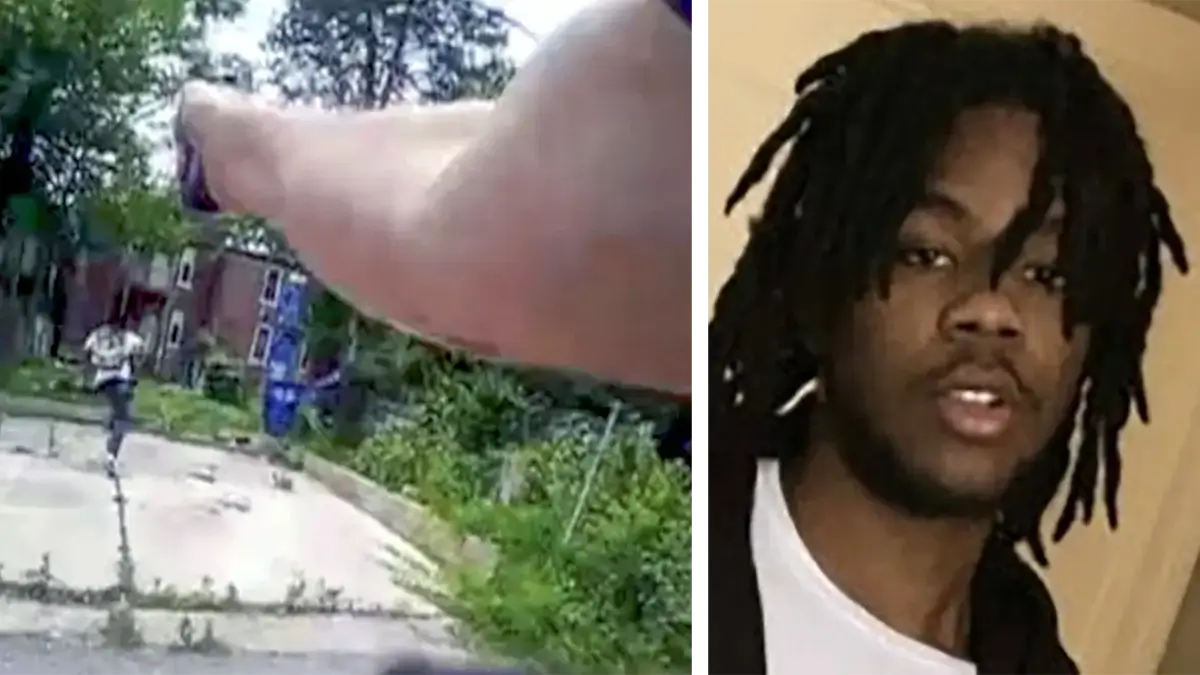
However, the federal wrongful death lawsuit remains pending, accusing the St. Louis police officer who killed the teen, Brett Carlson, of using “inappropriate force” when he fired four shots while pursuing Wilkins.
The claim filed in May 2025 alleges that the other officer chasing Wilkins had pulled out his Taser, indicating he knew the fleeing teen was not holding a gun in his hands.
Instead, police found a disassembled gun in his pants pocket that was “incapable of being discharged,” the claim states.
According to the lawsuit:
E.W. was not armed with functional weapon, was actively fleeing on foot, and posed no threat of death or serious physical injury to either Defendant Brett Carlson or the public; Defendant Brett Carlson did not investigate or inquire as to whether E.W. had a gun; Defendant Brett Carlson fired his weapon at E.W. without justification, intentionally and wrongfully causing the death of E.W.
The circuit attorney’s office said that Wilkins was driving a stolen Mazda CX-5 on June 18, 2024, with a 16-year-old male in the passenger seat when an unmarked cop car began following the car.
The unmarked car initially followed the Mazda for about seven minutes without its emergency lights on, during which time the two teens picked up a 17-year-old girl, and then the officer in that cruiser activated emergency lights to pull over the Mazda.
According to the office, the Mazda did not stop, even after officers deployed spiked strips, damaging the tires.
The three teens then jumped out of the moving car, but the girl stayed behind, and police arrested her. The two boys ran in the same direction before splitting up.
Police detained the passenger and arrested him while Carlson and the other officer were chasing Wilkins.
“Get on the f–king ground now! Drop that f–king gun! Drop that f–king gun!” Carlson yelled before firing three shots.
The entire foot pursuit lasted five seconds, the circuit attorney’s office stated.
Carlson then handcuffs the teen’s hands behind his back, yelling, “F–k,” apparently realizing Wilkins had been holding a phone.
“The gun’s right f–king here,” Carlson then says, but no gun appears on the video, and it appears he is claiming the gun is underneath Wilkins.
Carlson then uses a knife to cut off the teen’s backpack, telling the other cops there was a gun underneath the teen, but he then walks off. The disassembled gun never appears on the video.
Following the shooting, police created a false narrative to justify the shooting to the public.
“During a foot pursuit, an armed suspect turned and pointed a gun at officers when the detective shot the armed suspect,” St. Louis police said in the Facebook description.
Police then spent the next 22 months refusing to release the body camera footage to Wilkins’ parents through public‑records requests.
St. Louis police finally released the bodycam footage to avoid a possible default judgment against them in court. Police then blamed the contradictory narrative on an unnamed “third party.”
“Information provided by a third party to investigators in the immediate aftermath of the incident was not consistent with the actual events or what was initially shared with the community,” police explained in a statement to the media.
But they did nothing to clear up the inconsistencies for almost two years, only because the court required them to. And they never identified the third party.
“We had to fight for it. Now we see why they did not want it released,” Al Watkins told CBS News after the video was released.
This month, the St. Louis Circuit Attorney’s Office acknowledged in its press release clearing Carlson of wrongdoing that police created a false narrative to the media about Wilkins pointing a gun at Carlson.
“An SLMPD Spokesperson on the day of the officer-involved shooting indicated that Mr. Wilkins turned and pointed his firearm at the officer who utilized lethal force. SLMPD has acknowledged that the statement ‘was not consistent with the actual events,’” according to a footnote in the four-page press release dated Oct. 2.
“SLMPD has also since indicated that the spokesperson’s statement regarding Mr. Wilkins turning and pointing his firearm at the officer was not attributable to the officer who used lethal force.”
Wilkins’ mother, Shaina Wilkins, told CBS News earlier this year that police “seen a phone. They didn’t see a gun.”
“He was a kid, you know, he probably wasn’t making the best decisions, but he should still be here right now,” she added.


