A former Tulsa pastor pleaded guilty to federal bank fraud and tax evasion after prosecutors accused him of diverting more than $504,000 from a historic Black church.
Prosecutors say Keith Rydell Mayes Sr. used some of the money from Vernon AME Church for gambling, personal expenses and firearms.
The 63-year-old entered his guilty plea Sept. 14, according to the U.S. Attorney’s Office for the Northern District of Oklahoma.
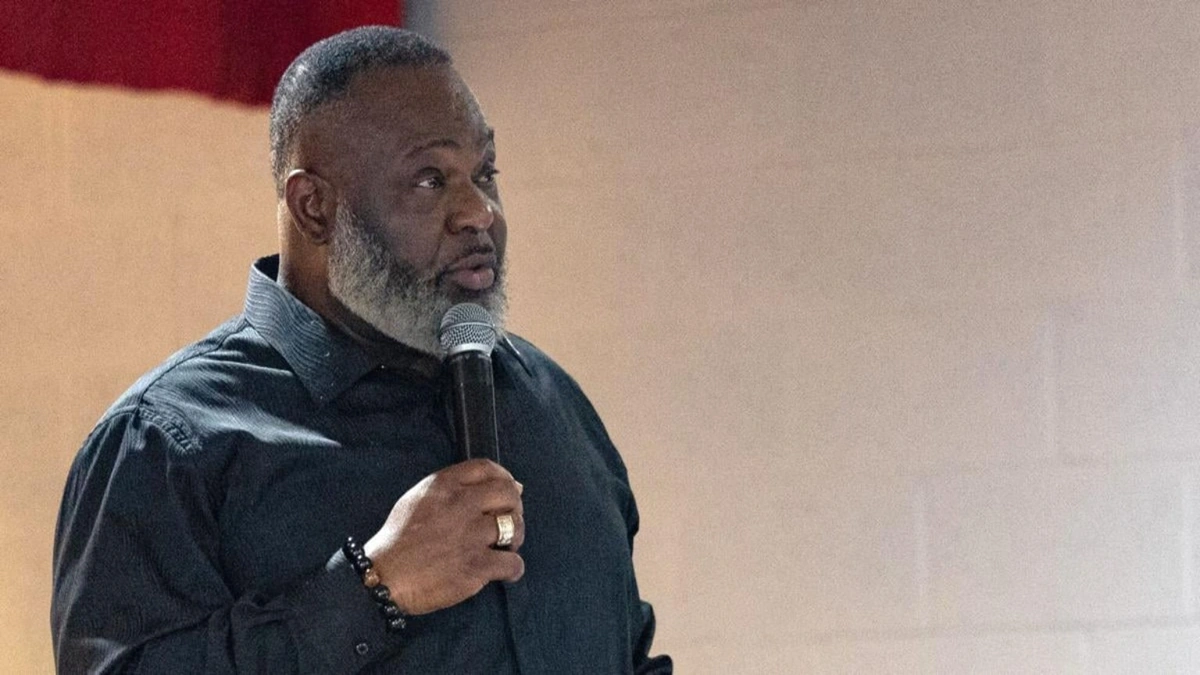
Federal prosecutors said the scheme lasted from at least March 2022 through November 2025 and involved donations that Mayes controlled through a church account he established shortly after becoming pastor.
The African Methodist Episcopal Church’s 12th Episcopal District said the financial activity described in the federal case occurred without the approval or knowledge of Vernon’s leadership. Bishop Silvester Scott Beaman said in a Sept. 15 statement that the conduct “was not authorized by the congregation or the leadership of Vernon A.M.E. Church.”
Mayes became Vernon’s senior pastor in October 2021 and was responsible for church finances, including donations, collections and payments. Prosecutors said he soon created a bank account labeled “Administrative Expenses” and made himself the only authorized signer.
He also listed his home address as the account’s mailing address, according to federal prosecutors.
Mayes deposited donations from church members and charitable organizations into the account. One of the largest transactions involved a donor who intended to give Vernon $365,000 in stock.
According to court documents cited by prosecutors, Mayes established a brokerage account in the church’s name to receive the donation. The stock transferred during 2021 and 2022, and he later liquidated it. Prosecutors said Mayes moved the proceeds into a church account before taking most of the money for himself.
The federal case alleges Mayes used the diverted funds to support gambling, cover personal expenses and purchase firearms. Prosecutors also said he failed to report the money as income, leaving him with more than $205,000 in unpaid federal taxes.
Under his plea agreement, Mayes agreed to repay $504,313.88. That amount includes $205,765.60 owed to the Internal Revenue Service. He also agreed to surrender firearms and ammunition purchased with money prosecutors say came from the scheme.
The case has drawn attention because Vernon AME is more than a local church. The Greenwood institution is closely tied to the history of Tulsa’s Black community and the aftermath of the 1921 Tulsa Race Massacre.
Vernon was one of the Greenwood institutions that received renewed attention as Tulsa prepared to mark the massacre’s centennial. In April 2021, the 1921 Tulsa Race Massacre Centennial Commission awarded the church $200,000 for renovations.
At the time, Vernon was undergoing an approximately $1 million renovation that included work on its stained glass, bathrooms, roof and accessibility features, along with plans for a prayer wall.
The National Fund for Sacred Places also reported a $250,000 contribution to Vernon around the centennial, while the National Trust for Historic Preservation documented a separate $150,000 grant supporting the restoration of the church’s stained glass.
Prosecutors have not tied those grants to the alleged embezzlement. Mayes did not become Vernon’s pastor until October 2021, months after the Centennial Commission awarded its $200,000 contribution. Prosecutors also have not publicly said whether the $365,000 stock donation was connected to the centennial fundraising.
Still, the timing places Mayes’ tenure within a period when Vernon was receiving significant financial support because of its historic role in Greenwood.
The church has since reviewed its financial procedures following the change in pastoral leadership.
“Strengthen safeguards” and increase oversight were among the steps the 12th Episcopal District said Vernon took after Mayes left his position, according to a statement sent to The Black Wall Street Times.
Mayes has not served as Vernon’s pastor since May. The church remains open under new leadership.
The district did not publicly detail the financial controls it used during Mayes’ tenure or explain how the alleged activity continued for several years without detection.
The Black Wall Street Times also sought information about whether Vernon plans to conduct an independent audit covering Mayes’ time as pastor and whether any diverted funds came from donations intended for preservation work or centennial-related projects.
Vernon’s history stretches back more than a century and includes its survival through the destruction of Greenwood during the 1921 massacre.
The church’s basement survived the attack, and the congregation later rebuilt above it during the 1920s. The National Fund for Sacred Places has described the basement as the only surviving intact Black-owned structure from the massacre.
The congregation’s financial history is also part of that legacy. A historic ledger known as the “Book of Redemption” documents contributions from people who helped Vernon recover financially after the destruction of Greenwood.
Church officials have emphasized that Mayes’ alleged conduct should not overshadow that history.
“We ask that the actions of one individual not be allowed to define a church that has served Tulsa for more than 120 years,” the 12th Episcopal District said.
Mayes’ attorney also acknowledged the former pastor’s responsibility following the guilty plea.
In a statement reported by the Tulsa World, his attorney said Mayes “accepts full responsibility for his conduct” and will face consequences for what he did. The attorney also asked that Mayes’ actions not overshadow Vernon’s broader history and contributions to the Black community.
After his court appearance, Mayes posted bond and remains under supervision while awaiting sentencing.
The FBI and IRS Criminal Investigation investigated the case. Assistant U.S. Attorney David D. Whipple prosecuted it. A federal judge will determine Mayes’ sentence at a later date.
The 12th Episcopal District said the congregation remains focused on transparency, accountability and its ministry despite the federal case involving its former pastor.


