Nkechi Diallo, the former NAACP official formerly known as Rachel Dolezal, has entered a new line of work more than a decade after her claims about her racial identity thrust her into the national spotlight.
Diallo, 48, announced Saturday, Sept. 12, that she had completed a 300-hour certification program through the Sexology Institute. She is now working as a “certified sex coach.”
She also said she launched Bandwidth, an online intimacy and relationship coaching business.
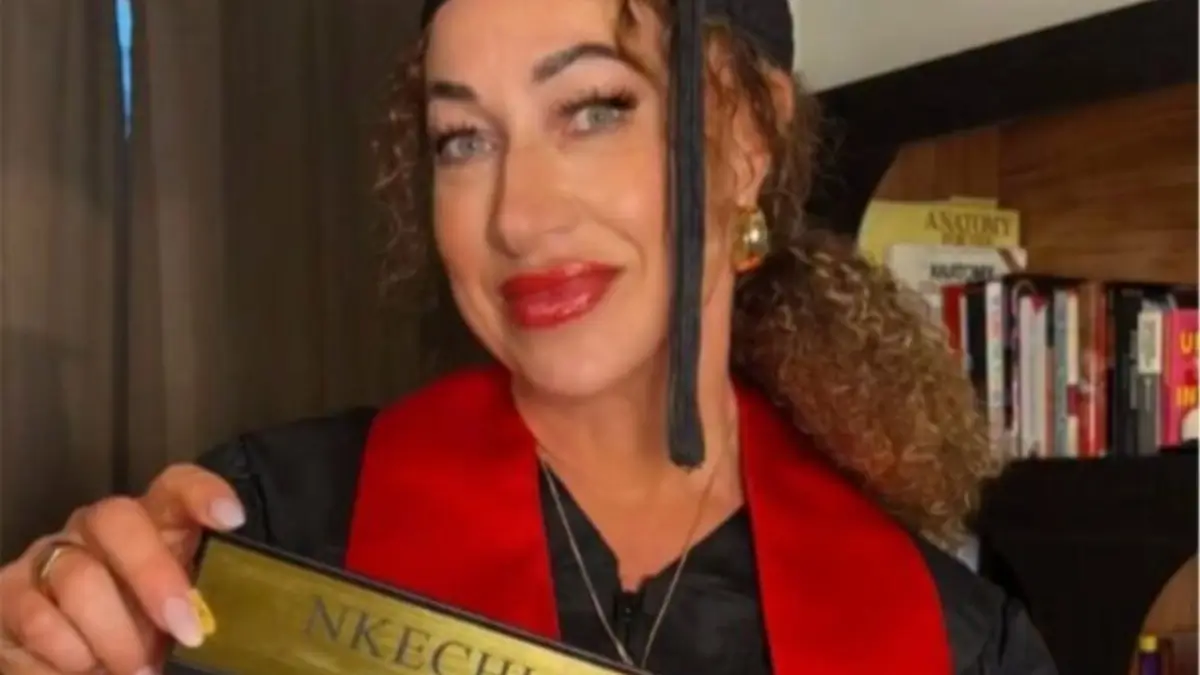
“Certified. I did it! Woohoo, my office is open!” Diallo wrote across a series of photos celebrating her graduation.
The images showed Diallo wearing a black cap and gown with a red stole and fishnet tights. In one, she held a desk nameplate displaying her name and new professional title as “Pomp and Circumstance” played in the background.
“The cap & gown and a new title,” she also wrote in the caption.
Diallo said her new work is rooted in her own experiences as a mother and is intended to help people who struggle to make room for intimacy while managing demanding personal responsibilities.
“This work is personal. As a single mom of three boys, I know what hypervigilance, burnout and carrying the mental load do to connection — and I believe joy, closeness, and aliveness in your body aren’t luxuries. They’re capacities we can design, develop and expand,” she said.
She described Bandwidth as a service for people who spend much of their time taking care of others.
“Bandwidth is for the people who’ve poured into everyone else: single parents, parents of neurodivergent kids and folks whose work lives at the margins,” Diallo wrote. “Together we clear the static, make room for what matters, and expand your bandwidth for a life that’s authored — not absent or performed. Make room for what matters.”
The career announcement gives Diallo a dramatically different professional identity from the one that made her a household name in 2015.
At the time, Diallo was serving as president of the NAACP’s Spokane, Washington, chapter when questions emerged about her racial background. She had publicly identified as Black despite being born to white parents, Ruthanne and Larry Dolezal.
Her parents spoke to The Spokesman-Review in June 2015 and accused their daughter of changing her appearance and presenting herself as Black after the family adopted four Black children.
However, Diallo rejected the suggestion that she had intentionally deceived people.
“There’s a lot of complexities … and I don’t know that everyone would understand that,” she told the newspaper at the height of the controversy.
The scrutiny intensified, ultimately costing her leadership position with the NAACP and her part-time teaching position in Africana studies at Eastern Washington University.
She described the fallout to Vanity Fair that July.
“[I lost] friends and the jobs and the work and — oh, my God — so much at the same time,” Diallo said.
Even as the controversy grew, she maintained that she did not believe she had misrepresented herself.
“If people feel misled or deceived, then sorry that they feel that way, but I believe that’s more due to their definition and construct of race in their own minds than it is to my integrity or honesty, because I wouldn’t say I’m African American, but I would say I’m Black, and there’s a difference in those terms,” she told the news outlet.


