Boosie Badazz is pushing back against how his story was portrayed on CBS’ “60 Minutes.”
He says the program left out critical details from an hour-long interview that featured his failed attempt to obtain a presidential pardon.
The Louisiana rapper, whose legal name is Torrence Ivy Hatch Jr., appeared in the program’s Sept. 13 investigation into the growing business surrounding presidential pardons.
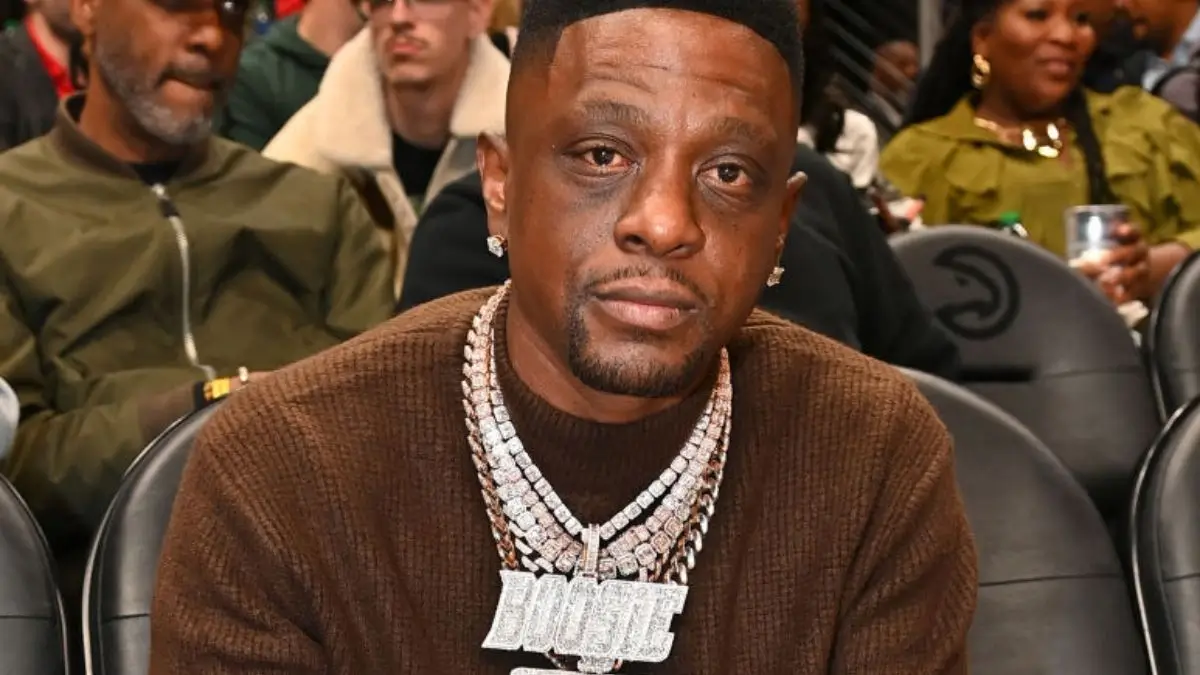
The report, titled “The Pardon Economy,” detailed how high-priced brokers and political operatives charge criminal defendants and convicted felons hundreds of thousands of dollars on promises of access to the Trump White House.
Boosie told viewers he paid $600,000 to political operatives Jack Burkman and Jacob Wohl to secure a pardon from President Donald Trump.
The pardon never happened.
After the broadcast aired, Boosie took to X to complain. He says viewers did not hear the full account he gave during his interview.
“I DID A HOUR INTERVIEW WITH 60 MINUTES ABOUT WHAT HAPPENED WITH MY LAWSUIT BUT ONLY A FEW THINGS GOT PUT OUT,” he wrote.
Boosie said he discussed his previous conversations with Alice Marie Johnson, whom the Trump administration has dubbed its “Pardon Czar,” as well as why he believed he deserved clemency.
“I WANTED THE PRESIDENT TO LOOK AT MY CASE WITH MS ALICE N SEE IF ITS WORTH A PARDON!” he wrote.
Boosie said he wanted Trump to consider what he described as wrongdoing by the people who claimed they could help him.
He added that he hoped the interview would strengthen his legal case against Burkman and Wohl.
“MY STORY WASNT TOLD FULLY BUT HOPEFULLY THIS INTERVIEW WILL PROVE MY POINT CLEARLY N CIVIL COURT THAT I NEED TO BE COMPENSATED X 10,” Boosie wrote.
CBS did include portions of Boosie’s account. During the broadcast, correspondent Lesley Stahl asked him how much he had paid the operatives. “$600K. Yeah,” Boosie responded.
On-screen, Stahl examined text exchanges where the brokers dropped prominent conservative names to convince Boosie of their influence.
The messages referenced Laura Loomer, Erika Kirk and House Speaker Mike Johnson. Another message mentioned Natalie Harp, a close Trump aide. It suggested that she could personally deliver Boosie’s pardon application to the president.
Boosie said he believed that was how the pardon process worked.
“Yeah, yeah. I just thought, I mean, ‘This is the way it’s done.’ I’m paying these guys, you know? And they’re gonna make it happen,” he told the reporter.
They did not make it happen.
According to “60 Minutes,” the people Burkman and Wohl claimed to have connections with denied involvement in Boosie’s case. His agreement with the operatives also reportedly included a provision requiring them to return half of his payment if he did not receive a pardon.
That money has not been returned, and Boosie is suing.
“I said, ‘Just return it. You didn’t give me my pardon.’ It’s a bunch of BS. And they were so cocky,” he told CBS.
The broadcast also featured law professor Mark Osler of the University of St. Thomas. Osler spent years assisting people seeking presidential clemency.
“There’s definitely a lot of money flowing around. And that makes a Petri dish for corruption,” Osler said.
He questioned the idea that wealthy pardon seekers could improve their chances by paying intermediaries who claim to have special access to the president.
“People think, ‘Well, if I can get to this person who can find the president at Mar-a-Lago,’” Osler said. “If I can pay a million dollars to this friend of a White House counsel then I will have a shot.”
“That is not a system,” he added. “That’s something different entirely. It’s anarchy.”
CBS also used hidden-camera footage to document Burkman and Wohl pitching their services to another potential pardon seeker.
The White House, however, rejected the idea that presidential clemency can be purchased, telling CBS that anyone paying lobbyists for pardons is “foolishly wasting their money.”
Boosie’s dispute with the operatives dates back to his own efforts to obtain clemency for a federal firearms conviction.
He agreed to pay Burkman and Wohl $600,000 after they claimed they could help him secure a pardon. The agreement included a provision for a $300,000 refund if the pardon failed to materialize. The operatives allegedly told Boosie’s attorney that Trump had signed the pardon, but no such pardon could be verified.
The rapper later realized the pardon he believed he had secured was never issued. A federal judge ultimately sentenced him to credit for 10 days of time served along with three years of supervised release. This ended his California gun case.
Boosie is seeking to get back the money he says he was promised. Burkman and Wohl have claimed to secure pardons for other clients.
Yet, federal records reportedly show far fewer successful clemency outcomes connected to their work. Boosie subsequently sought to recover the $300,000 refund he says he was contractually entitled to receive.
His criticism of “60 Minutes” does not alter the central issue explored by the broadcast: whether private brokers can commercially profit by convincing people that access to presidential clemency is for sale.
For Boosie, the dispute also centers on making sure people hear his version of events.
“I TALKED ABOUT HOW BEFORE THIS SITUATION HAPPENED THAT I SAT DOWN WITH THE PARDON CZAR AT THE WHITE HOUSE DISCUSSING WHY I FELT I NEEDED A PARDON,” he wrote.
The rapper made clear that viewers saw only part of his story during Sunday night’s broadcast about his pardon experience.
Rapper Boosie Badazz tells Lesley Stahl that he was led to believe that if he gave $600,000, he would be issued a pardon.
— Reggie B. (@reggiebblue) September 14, 2026
He was promised that Laura Loomer, Erika Kirk, Mike Johnson and Natalie Harp would advocate for his pardon.
"I just thought this is they way it's done."… pic.twitter.com/FeUFYLIbrI
