A former Columbus, Ohio police officer pleaded guilty on Thursday, Sept. 3, to a reduced charge in the 2022 fatal shooting of 20-year-old Donovan Lewis, who was in his bedroom when officers executed an early-morning arrest warrant at his apartment.
Ricky Anderson, a former K-9 officer with the Columbus Police Department, entered an Alford plea to reckless homicide, acknowledging that prosecutors had enough evidence to secure a conviction without formally admitting guilt. In exchange for the plea, prosecutors dropped the murder charge he had been facing.
In August 2022, officers went to Lewis’ apartment around 2 a.m. to serve warrants for domestic violence, assault and felony improper handling of a firearm, then fatally shot him.
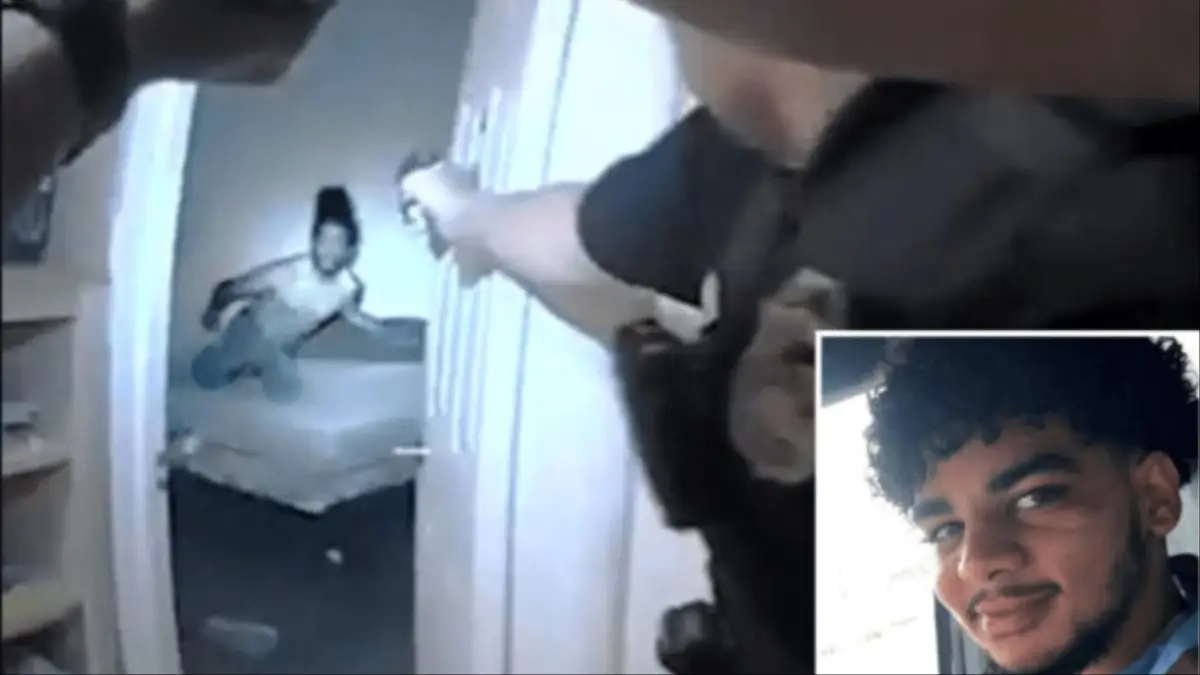
According to the Associated Press, Anderson’s attorneys previously argued that evidence would show the officer was justified in using deadly force.
However, an attorney representing Lewis’s family countered that body-camera footage tells a different story, showing Anderson firing his weapon less than a second after opening the bedroom door where Lewis was sleeping.
The case comes amid longstanding scrutiny of the Columbus Police Department’s treatment of Black residents. In 2021, the Department of Justice agreed to review the department’s practices following several fatal police shootings involving Black citizens, including the April 2021 killing of 16-year-old Ma’Khia Bryant.
The federal review also evaluated the city’s handling of racial justice protests in the summer of 2020 following the murder of George Floyd.
The court has not yet scheduled Anderson’s sentencing. His punishment could range from probation to as much as three years behind bars, according to his defense attorney, Mark Collins.
Lewis’ family also has a civil lawsuit pending against the former officer.
Rex H. Elliott, an attorney for Lewis’ family, said the guilty plea does not erase the loss Lewis’ loved ones have carried since the shooting.
“We acknowledge a police officer finally admitting he recklessly killed a young man. But nothing that happens to him will bring Donovan back. He lives his life while Donovan’s family will suffer his loss for the rest of theirs. Is this truly justice?” Elliott said.
As reported by ABC6, Fraternal Order of Police President Brian Steel, a longtime advocate for Columbus police officers, said officers made mistakes in their handling of the encounter that night.
Steel said officers don’t know whether a suspect has a weapon when they respond to a warrant situation, making the potential for an armed suspect a concern.
“I have been in those situations where you don’t quite know what’s going on,” Steel explained. “You know someone’s in there; you have a reason to believe they’re armed; you have a reason to believe they are absconding from justice. Your job is to take them into custody.”
Anderson had been a member of the Columbus Division of Police since September 1991.
The department fired him in May 2004 but reinstated him the following month. After the 2022 shooting, officials placed him on leave before he ultimately retired in March 2023. Department officials explicitly noted that he left in “bad standing” because of the ongoing criminal and internal investigations.
The circumstances surrounding Lewis’ death also prompted changes to how Columbus Police handle certain misdemeanor warrants, particularly those involving late-night raids.
“We no longer serve some of these warrants that meet certain criteria in the middle of the night,” Steel said. “And I think that is a good thing that may possibly have prevented this.”
The Lewis family has continued to push for additional changes through its civil lawsuit against the city, with attorney Ben Cooper arguing that the circumstances surrounding Lewis’ death exposed the need for broader reforms.
“There was an initial change about how the Columbus police serves misdemeanor warrants shortly after Donovan was killed in his bed in the middle of the night,” Cooper said. “One of many changes are still needed.”
Steel acknowledged that the shooting left lasting consequences for everyone involved.
“We can, ‘What if?’ all day long,” Steel said. “It is a tragic situation. I wish to God we never would have been here. And my heart goes out to both families.”


