An older white woman was kicked out of a restaurant’s happy hour after allegedly trying to touch a stranger’s locs, hitting him when he told her to stop, and crying once she got caught.
The man, who goes by __blanco09 on Instagram, was having a drink with a friend at Rocco’s Italian restaurant in Towson, Maryland, when he felt the woman hovering behind him. In his August 23 video, the woman’s uninvited attention, treating a total stranger like she had every right to touch him, clearly made him uncomfortable.
“Don’t you try. You better back up,” he warned her. She’d been sitting across from him at the bar but was now inches from his hair.
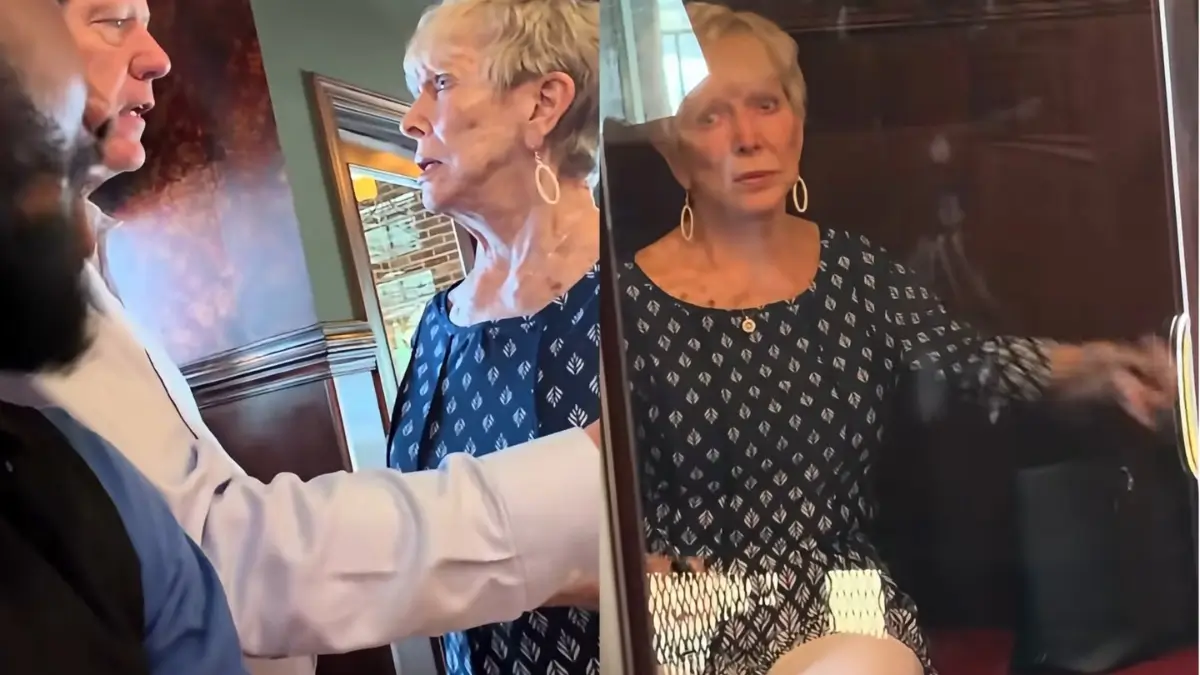
She shot back, “Don’t try what?”
“I’m recording you right now,” he told her. “Do not play with me!”
She kept pushing forward until a manager stepped in to hold her back — and take her cocktail away for good measure. She swiped it right back off the counter and moved toward him again, still on camera.
The manager ultimately asked her to leave.
“They thought I was going to get loud on them,” __blanco09 told his companion at the bar. Instead, he taught her an important lesson about boundaries, in a scenario that usually plays out the other way around, with women doing the complaining.
‘At Her Big Age?’
The video has struck a nerve, with many viewers frustrated that some people still feel entitled to touch Black bodies without asking. What’s more, it’s not just Black women who have to keep defending that space.
One top comment read: “We NEVERRRRR come up to them and touch their hair without consent. WTF makes them think it’s ok to do that to us? Or anybody for that matter. It’s weird.”
“She started crying? Let me guess, now she’s the victim somehow!” another commenter wrote, joining a chorus praising him for standing his ground.
Rather than leave quietly, the woman tried to approach him one more time before retreating to a bench near the exit, watching him through a mirror with tears in her eyes.
“At her big age?” one commenter asked. “She over there in the corner pouting like a two-year-old. Them sangria’s gotta be LETHAL.”
Perhaps the restaurant will introduce a new happy hour special: two-for-one sangria, with a side of personal boundaries.


