President Donald Trump must have heard all the chatter about his appearance and decided to switch it up.
The 80-year-old’s signature look triggers a wave of fraud claims over one distracting accessory that has fascinated critics for years.
Yet when he stepped on stage in Las Vegas for a speech, everyone pointed and wondered, ‘What is that?”
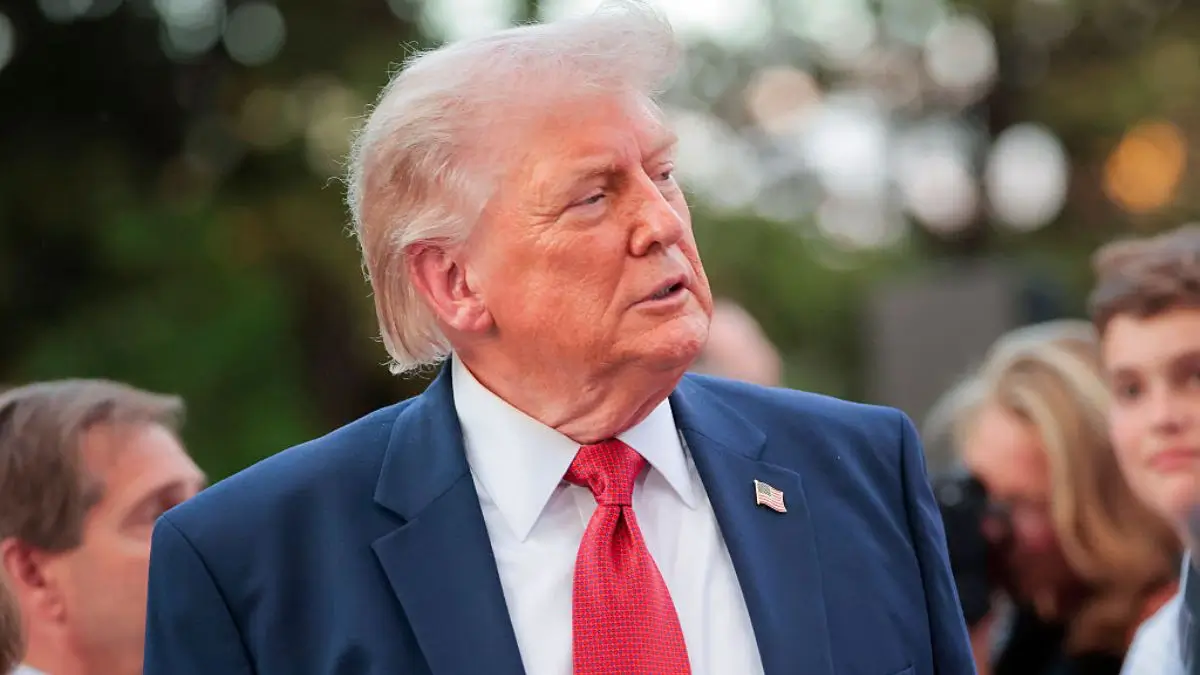
Trump has aged in the public eye. His signature look is equipped with a navy blue suit, a red tie, and noticeably thin hair.
Today, photographers frequently capture his balding crown and windswept hair during public appearances.
The president showed up for an event at the Red Rock Resort in Las Vegas on Aug. 5 with a new look and a noticeably fuller head of hair.
“Trump’s hair, uh, has a lot more volume than normal,” one political commentator wrote on X.
Former Republican congressman-turned-outspoken Trump critic Adam Kinzinger asked, “Did he get something done?”
is Trump rocking a wig, or what the hell is going on here? pic.twitter.com/3opMA5Ngzg
— Aaron Rupar (@atrupar) August 5, 2026
From there, the jokes piled on as people said he looked like a “wig. Others said he looks like Alec Baldwin on “Saturday Night Live.”
Most agreed, “Something ain’t right about Donald’s hair,” though not many could pinpoint what it was.
One user wondered, “Did he get a toupee? Looks very different from yesterday.” Meanwhile, a Democrats post claimed Trump had much less hair just three months ago.
This was Trump's hair less than 3 months ago 🤔 https://t.co/3QhA2gZXEg pic.twitter.com/D65dXM2JPh
— Democrats (@TheDemocrats) August 6, 2026
“So it is true then? That President Trump has finally taped a ferret to his head?” read a tongue-in-cheek tweet.
Someone else on the app blasted the president by declaring, “Trump’s a complete narcissist. Obviously, that’s not his hair on top.”
Speculation about whether Trump’s hair is real has hovered over him even before he won the White House for the first time in 2016.
Weeks before the 2016 presidential election, “The Tonight Show” host Jimmy Fallon playfully mussed Trump’s hair live on air.
Fallon, 51, later spoke about getting savagely dragged on social media for his jovial encounter with the then-presidential candidate.
“It just got bigger and out of control,” Fallon said about the fallout. He said, “I saw other comedians from other shows making fun of me on Twitter, and I go, ‘OK, now I’m just gonna get off.’”
Trump fired back, blasting Fallon for “whimpering” after taking heat for humanizing him. The president then dropped a brag about “monster ratings,” before adding, “Be a man Jimmy!”
Feud with Fallon aside, Trump’s thinning hair problem was already making headlines amid his trip to Vegas. A new report covered his history of hair-loss prevention.
According to The Washington Post, the president’s recent medical reports no longer include him taking finasteride after he reportedly used the drug that treats male pattern hair loss in his first term.
As Trump is the oldest person ever inaugurated to the presidency, there is heightened interest in his well-being.
Questions about his mental and physical abilities remain hot topics amid his obvious declining condition.
There’s concern that if Trump and his staff are willing to cover up the truth about his appearance and his medications, then the administration could also conceal other important aspects of his health.


