An Atlanta woman filed a medical malpractice lawsuit against Kaiser Permanente this week after mishandling of her tissue sample resulted in her being misdiagnosed with an aggressive form of uterine cancer and needlessly undergoing a full hysterectomy.
Cassandra Barksdale was 43 when she went to her OB-GYN at a Kaiser medical facility in Jonesboro, Georgia, in January 2025 seeking an evaluation of uterine fibroids and abnormal bleeding, according to her lawsuit filed in Clayton County State Court on August 4 and obtained by Atlanta Black Star.
She was referred to another obstetrician for a consultation, and then underwent an endometrial tissue biopsy in March 2025 during that visit.
The tissue biopsy collected from Barksdale that day was identified, labeled and processed by Kaiser lab technicians and then sent to Quest Diagnostics in Atlanta for pathological analysis.
The lawsuit asserts that Cecelia Prestridge, a senior laboratory information analyst for Kaiser and/or five other unidentified lab technicians failed to maintain proper identification of the sample and to follow proper chain-of-custody procedures while handling it.
Grim Test Results
The result of their bungling was that they incorrectly identified and labeled another patient’s tissue samples as belonging to Barksdale.
On March 12, 2025, Quest Diagnostic reported pathology findings that Barksdale had high-grade endometrial uterine carcinoma with serous features, an aggressive form of uterine cancer.
A few days later, Barksdale received a call from Kaiser informing her of the grim results and advising her to schedule a CT scan to determine what stage of cancer she had.
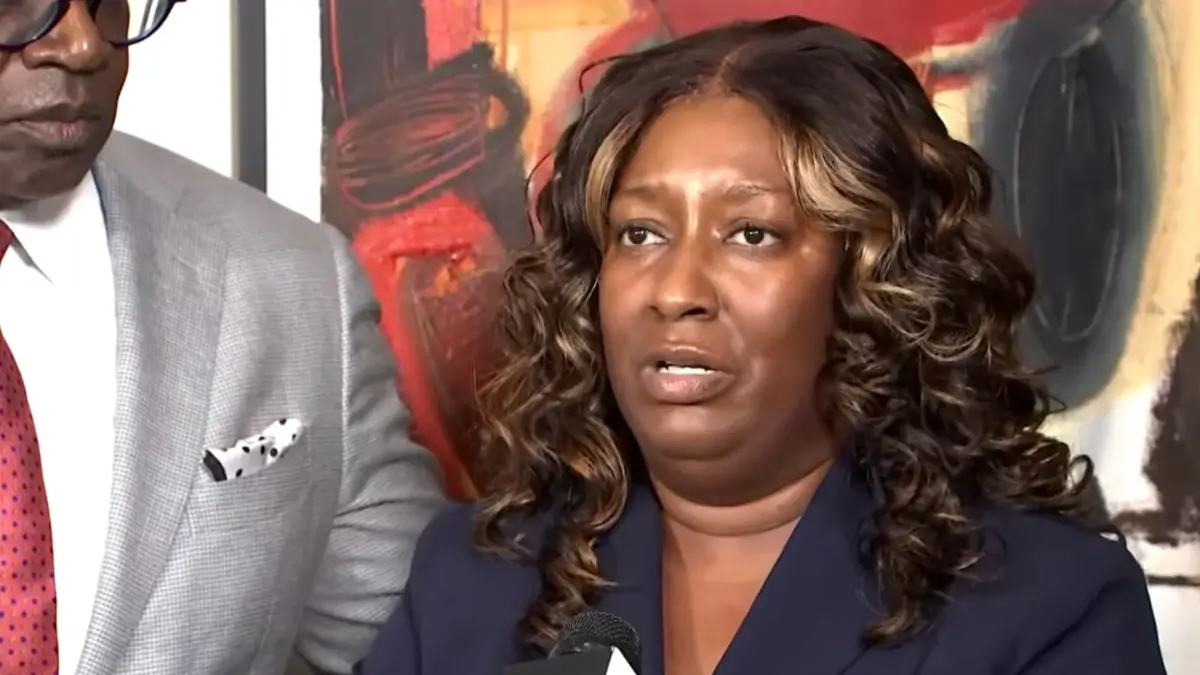
“The first thing that came to mind, I thought I was going to die,” Barksdale recalled at a press conference at her attorneys’ office on Tuesday. “When I researched it, it said I have up to five years to live.”
She says she gathered her two adult children to tell them she had aggressive cancer and was likely to die soon, then contacted an attorney to set up a trust fund in order to leave her house to them.
“My sons went into a deep depression,” she said. “It took a big hold on my family.”
A Total Hysterectomy, Despite No Evidence of Cancer
A week later, she had a CT scan of her chest, abdomen and pelvis that showed no evidence of cancer or spread of cancer, the complaint says.
In May of 2025, she was evaluated by Dr. Adam Pyzark, a gynecologic oncologist practicing at Northside Hospital in Atlanta. He conducted a pelvic examination of Barksdale and reviewed the imaging records and pathology reports generated as a result of her incorrect tissue sample.
On Pzyark’s recommendation, Barksdale underwent a total hysterectomy including removal of her uterus, cervix, fallopian tubes, ovaries and four lymph nodes on May 15, 2025.
She did not undergo any additional confirmatory testing prior to that surgery.
Her female organs and tissues were then sent to a lab for pathological analysis, which indicated that no malignant cells were found. On May 20, 2025, a surgical pathology report confirmed those findings — no evidence of cancer was found in the entire endometrial cavity submitted.
Still, on June 1, 2025, during a follow-up appointment, Pyzark told Barksdale that she did indeed have an aggressive form of cancer, but that it had been caught early, and that she needed to undergo chemotherapy, said her attorney Shannan Young.
Kaiser Admits Tissue Is From ‘A Different Patient’
The doctor told her to wait for further instructions from Kaiser about her specific treatment plan. Barksdale heard nothing substantive about her condition until Sept. 23, 2025, four months later, when administrators from Kaiser informed her that DNA analysis from the tissue sample that showed aggressive uterine cancer was not her tissue and “belongs to a different patient.”
She received a similar notice from Quest Diagnostics in December instructing her to disregard the results previously reported because the specimen used “belongs to a different patient.”
Barksdale told reporters that she was stunned by the news, as she had spent the last seven months thinking and worrying about dying.
“I was excited that I didn’t have cancer, but I was upset thinking about the person out there that got my tissue [sample]. They’re walking around for seven months thinking they only have fibroids,” she said, when they actually had an aggressive form of cancer.
“It made me feel very angry and I was very concerned about the other person,” she said. “It messed with me mentally. And there was days when I felt suicidal.”
Barksdale says she has been in weekly counseling with a therapist over the past year.
‘How the Hell Did This Happen?
Roderick Edmond, co-counsel in the lawsuit, who is also a medical doctor and surgeon, said the firm’s analysis of her medical records so far indicates that the fault lies with the Kaiser lab technician or technicians who negligently mishandled and mislabeled her tissue sample, not Quest Diagnostics or the physicians who later misdiagnosed her and recommended the hysterectomy based on the faulty lab results.
“It’s a bizarre case,” he said, noting that the modern medical industry relies on “hyper technology — we’ve got computers, we’ve got science, we’ve got AI” — and that Kaiser Permanente is a multi-billion-dollar global health care business.
“How the hell did this happen?” Edmond said. “We’ve got technology all up the wazoo here. In 2026 these types of mishaps should never, ever occur.”
He vowed to uncover exactly what went wrong at the Kaiser lab during the litigation’s discovery process.
Woman’s Ability to Have Children Taken Away
The lawsuit seeks a jury trial to determine damages of at least $10,000 to compensate Barksdale for her serious, permanent and irreversible injuries, including surgical menopause, permanent and premature anatomical and physiological changes, severe mental pain, emotional distress, anxiety and depression, fear of future medical treatment, medical distrust, loss of bodily integrity, embarrassment, humiliation and diminished quality and enjoyment of life.
Barksdale said that prior to her unwanted hysterectomy, despite having her tubes tied a decade ago, she was considering having more children through IVF (in vitro fertilization).
“I could have had kids,” she said.
Edmund said her surgical treatment for cancer, loss of her ovaries, “and the complete extinguishing of her ability to have more biological children was unnecessary. The seven months of fear and dread and anxiety was unnecessary.”
Of her lawsuit’s aim, Barksdale said on Tuesday, “I want accountability. And also, what happened to me, I don’t want it to happen to no one else.”
“The big issue is this,” Edmond said. “All major institutions need to basically buck up to make sure the procedures on handling patient tissue and identifying proper patients is tight.”
Kaiser Plans to Fairly ‘Resolve’ Its Costly Mistake
In a statement, Kaiser Permanente said, “Our most important responsibility is to safely, expertly and compassionately care for the people who entrust us with their health. If we make a mistake, it can have profound effects.”
“Ms. Barksdale should not have experienced this. We have highly trained staff and very thorough processes in place to prevent errors like this from taking place. After this occurred last year, we took immediate steps to ensure it could not happen again.”
“We realize the impact of this incident, and are working with Ms. Barksdale and her counsel to resolve this in the most fair and accountable way we can.”
The defendants in the case, including Cecelia Prestridge, Kaiser Foundation Health Plan of Georgia, Kaiser Foundation Health Plan, Inc., Kaiser Permanente Insurance Company, and five unnamed Kaiser employees, have 30 days after being served with the complaint to respond in court.


