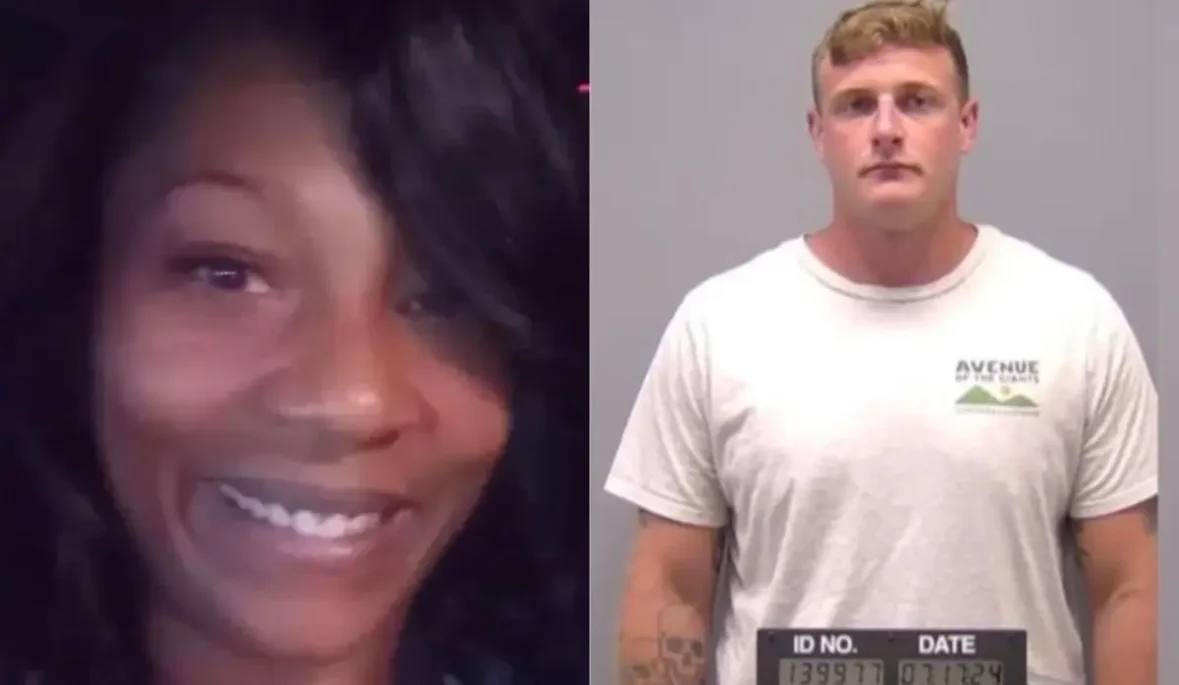
The former Illinois sheriff’s deputy convicted of fatally shooting Sonya Massey inside her own home will remain behind bars after state officials rejected his request for an early medical release, ruling that his advanced cancer diagnosis does not warrant cutting short his 20-year prison sentence.
On Friday, the three-member Illinois Prisoner Review Board unanimously denied former Sangamon County sheriff’s deputy Sean Grayson’s petition for compassionate release, according to board officials.
Grayson argued that his deteriorating health qualified him for release under Illinois law after a jury convicted him of second-degree murder and a judge sentenced him earlier this year.
Grayson’s Cancer Diagnoses
Doctors diagnosed Grayson with colon cancer before he fatally shot Sonya Massey in July 2024. By the time a judge sentenced him in January, his attorney said the disease had progressed to Stage 4 and spread to his liver, lungs and rectum.
In May, after serving roughly six months of his sentence, Grayson formally applied for release under the Joe Coleman Act, which allows certain terminally ill or medically incapacitated inmates to seek early release.
Medical records included in the application concluded that Grayson’s condition is “irreversible and incurable” and indicated he is likely to die within 18 months. However, the evaluating physician also determined that he could still care for himself and did not meet the legal definition of medical incapacitation, a key factor the review board considered.
The decision drew praise from Sonya Massey’s family and the attorneys representing them, who argued Grayson should serve the sentence imposed by the court.
Governor, Leaders and Attorneys Respond
Civil rights attorneys Ben Crump and Antonio Romanucci said the board “made the right decision.”
“Today the board recognized what this family has said from the start,” the attorneys said in a joint statement. “No one is above accountability, and a badge does not provide an early way out.”
Illinois Gov. JB Pritzker also addressed the ruling, noting that while state law required the Prisoner Review Board to consider Grayson’s request, the circumstances surrounding Massey’s death remained impossible to ignore.
“Sonya was innocent, unarmed, and calling law enforcement for help,” Pritzker said. “It was a painful reminder that too many innocent Black Americans have faced this kind of violence — and they deserve justice.”
Sangamon County State’s Attorney John Milhiser opposed Grayson’s application, arguing that the judge had already considered the former deputy’s medical condition before imposing the maximum sentence
“To release Grayson under these circumstances would be a miscarriage of justice,” Milhiser wrote. “… an insult to Sonya Massey’s memory and family.”
The prosecutor also disputed the argument that Grayson’s illness made him less dangerous.
“Grayson was already diagnosed with cancer when he shot and killed Sonya Massey in her kitchen. His temper and willingness to escalate minor misunderstandings into fatal encounters shows that he poses a danger to any person he comes into contact with,” Milhiser wrote. “Cancer does not make him less dangerous.”
Massey’s mother, Donna Massey, likewise urged the court not to shorten Grayson’s sentence during earlier proceedings.
“He did it, and I’m done. He did it, and he is a menace to society. He should not be walking around,” she testified.
She also expressed that she was tired of the situation. “I’ve never been depressed before, but now I’m depressed all the time, especially when they keep dragging us through the mud.”
The Shooting
The shooting became one of the country’s most closely watched police use-of-force cases after body camera footage showed Grayson responding to Massey’s Springfield home when she called 911 to report a possible prowler outside.
According to prosecutors’ account of the encounter, as reported by NBC News, Massey picked up a pot of boiling water from her stove as Grayson stepped backward.
After he remarked that he was moving away from the hot water, Massey replied, “I rebuke you in the name of Jesus.” When Grayson appeared confused, she repeated the statement.
Moments later, Grayson pointed his firearm at the 36-year-old mother and threatened to shoot. Body camera footage shows Massey apologizing and immediately lowering herself to the floor before Grayson fired three shots and struck her. Authorities also said Grayson failed to render medical aid as Sonya Massey lay wounded before doctors later pronounced her dead at a hospital.
Grayson Apologized for Massey’s Death
During his sentencing, Grayson apologized for Massey’s death. But in the handwritten statement accompanying his request for early release, he continued to characterize the shooting as self-defense.
“The female [Sonya] Massey invited me inside,” Grayson wrote. “… while inside she attacked me with a pot of boiling water and I fatally shot Ms. Massey.”
The denial means Grayson will continue serving the 20-year sentence handed down after his conviction in a case that sparked nationwide protests, renewed conversations about policing and systemic racism, and prompted a review by the U.S. Department of Justice.
Friday’s unanimous vote ensures he will remain incarcerated despite his terminal diagnosis, with state officials concluding that his medical condition does not outweigh the seriousness of the crime or the sentence already imposed.


