It was Christmas Eve 2024 when a 14-year-old Black teen named Juwan Walker was shot to death inside a car in Delaware.
His mother, Victoria Sewell, who was in the car with him, told police that two Black boys approached them, and one of them, wearing a surgical mask, opened fire.
Dover police arrested two Black teens four days later — Tyreze Miller, 15, and Marlo Tolliver, 13 — charging them with several felonies. Tolliver accepted a plea deal shortly after his arrest and was sentenced to two years.
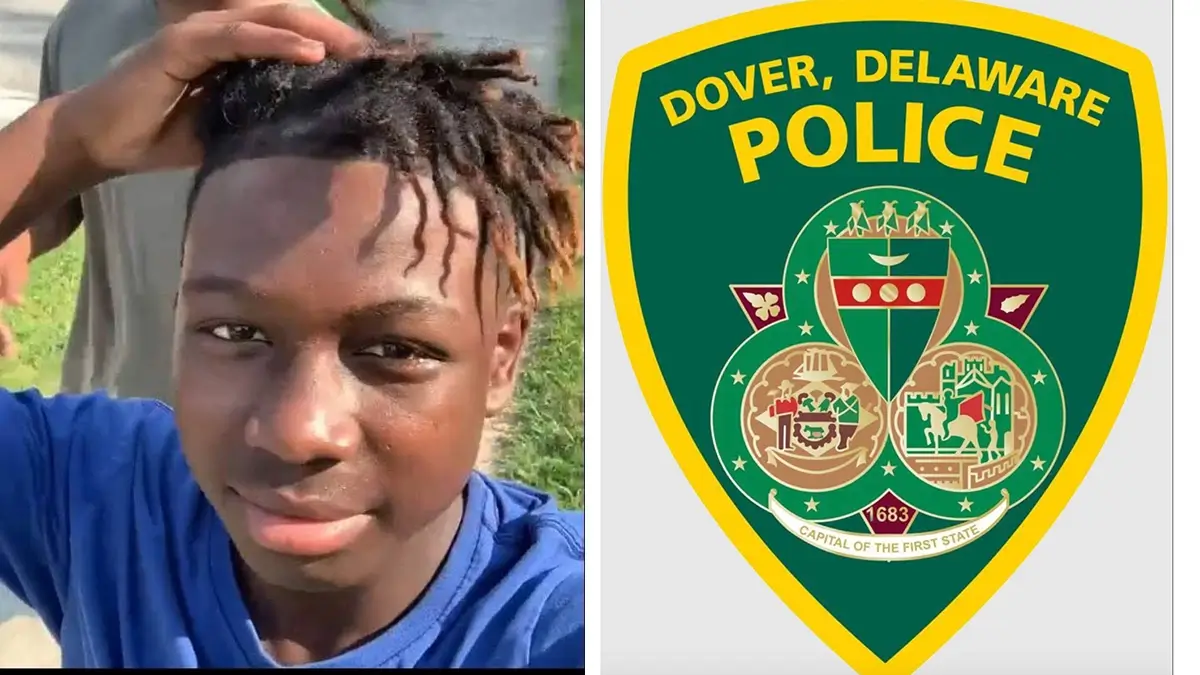
Cops Offer Teen Plea Deal for Murder He Says He Didn’t Commit
But Miller refused to accept the plea deal, maintaining his innocence and pointing to an alibi: his former girlfriend and her family, who told police he was at their home on Christmas Eve, four miles from the murder scene.
By rejecting the plea deal, Miller now faces the possibility of life in prison if convicted because prosecutors are trying him as an adult.
Miller has remained incarcerated since his arrest and is scheduled to go to trial on August 10 on charges of first-degree murder, first-degree conspiracy, possession of a deadly weapon during the commission of a felony, and possession of a firearm by a person prohibited.
“He’s been in there for two years for a murder he didn’t commit,” said Miller’s mother, Davita Lopez, in an exclusive interview with Atlanta Black Star.
“There has definitely been prosecutorial misconduct as well as police misconduct.”
Court records claim Dover police used “coercive interview tactics” during his interrogation, violating Miller’s Miranda rights by misleading him about the purpose of questioning.
Records also allege police failed to inform his mother why they were interrogating him, a violation of state law.
“My son has maintained his innocence this entire time,” Lopez said.
The Interrogation
Lopez said the ordeal began in November 2024 when Miller ran away from home to live with his 16-year-old girlfriend and her parents.
She reported him as a runaway, and although officers tried multiple times to locate him, she did not hear anything until Dec. 28, 2024, when police called to say they had him in custody.
Detective Gunner Goad told Lopez they were holding Miller on a capias warrant for missing a truancy court date and asked for permission to question him, as required by state law.
However, Goad did not tell her they intended to question Miller about a murder, leading her to believe the questioning would focus only on truancy.
Inside the interview room, Goad spent just 18 seconds rushing through Miller’s Miranda rights while framing the conversation as related to truancy. Court records state Miller only nodded to indicate he understood his rights.
Once questioning began, Goad and Detective Wood shifted to the killing of Walker and told Miller another teen had implicated him.
“That don’t got nothing to do with me,” Miller responded. He repeatedly asked for his mother, but detectives refused to bring her in.
After more than three hours of questioning, police finally allowed Lopez into the room. She immediately demanded to know what physical evidence justified arresting her son for murder.
Detectives claimed they had “ample evidence” based on witness statements — even though those statements came from other suspects blaming Miller.
Miller never confessed. His legal team moved to suppress his statements, arguing detectives used high-pressure tactics, rushed his Miranda warnings, and misled both him and his mother by presenting the interview as related only to truancy.
On July 9, Delaware Judge Reneta L. Green-Streett granted the motion, suppressing any statements Miller may have made during the interrogation.
Judge Calls Out Weaknesses in Case
However, Judge Green-Streett denied a separate motion from Miller’s attorneys seeking to transfer the case from Superior Court, where he is being tried as an adult, to Family Court.
In her ruling, the judge acknowledged the weakness of the evidence against Miller while also noting the seriousness of the charges.
“The State opposes that transfer, contending the seriousness of the allegations and the juvenile’s treatment needs render transfer inappropriate,” she wrote.
“The State has not provided proof positive or presumption great that Mr. Miller used, displayed, or discharged a firearm — a failure, on this evidentiary record, that undercuts many of the allegations against Mr. Miller.”
Atlanta Black Star reached out to Miller’s attorney, Adam D. Windett — considered one of the top attorneys in the state — but he has not responded.
However, Lopez said Windett expressed confidence in the case.
“He says we have a 90 percent chance of winning,” she said.
The Evidence
Although Sewell initially told police she saw two boys approach the car, investigators later claimed surveillance video showed three individuals.
Police said they made a breakthrough after receiving a tip from a girl who recorded an Instagram call in which Tolliver allegedly bragged about participating in the shooting.
The tip led police to Tolliver. The girl also told investigators she believed the shooter was Tolliver’s brother, Quincy May, who lived in the same apartment complex as Lopez.
Police executed a search warrant at the brothers’ home, where several juveniles were present, and transported them to the station for questioning.
Court records allege the boys’ mother, Jessica May, told police Miller was involved despite no physical evidence linking him to the crime. Tolliver also implicated Miller after giving contradictory statements.
Lopez believes others blamed her son to protect a third boy, Micah Boyd, who resembles Miller and allegedly moved to Chicago after the shooting.
“He is the spitting image of my son,” she said. “Just a year older.”
Court records allege that Lamar Suarez, an older brother of Tolliver and May, initially said his younger brothers left home on Christmas Eve with Boyd.
May told police he was walking through Dover Park with Tolliver and Boyd near the scene of the shooting. However, “he later amended his story to place Mr. Miller in the park instead of Mr. Boyd,” court records claim.
Police then chose to arrest Miller instead of Boyd.
The Alibi
During the search of the brothers’ home, police recovered .40-caliber ammunition matching shell casings from the crime scene in May’s bedroom, along with clothing similar to what Sewell described. Officers also found a notebook containing rap lyrics referencing the shooting.
The brothers told police they planned to visit Miller’s girlfriend’s home, a known hangout spot.
The girlfriend and her parents told investigators Miller was there on Christmas Eve, making it unlikely he was involved in a shooting four miles away.
On December 28, 2024, Dover police searched the girlfriend’s home and found Miller asleep. Officers also recovered a glove containing gunshot residue, which they claimed implicated him.
But Lopez said the glove could have belonged to someone else, noting that multiple teens frequented the home — a claim the girlfriend supported.
“She provided an alibi for Mr. Miller, affirming that the two spent Christmas Eve together and that Mr. Miller remained in her house during the timeframe the shooting occurred,” court records allege.
“She confirmed Mr. Tolliver visited her the day after the shooting.”
Although the glove tested positive for gunshot residue, it did not contain Miller’s DNA.
“They tested the glove for DNA,” Lopez said. “It did not match my son’s DNA.”


