Last week, Theodore Connor, a 46-year-old Lyft driver, finished a seven-hour shift and walked into a church in Atlanta where local rideshare drivers and union organizers were meeting to discuss their pay and how driverless vehicles are hurting their business.
After earning $211 for the day, he had just filled up his 2025 Chevy Tahoe SUV, paying $4.76 a gallon, about $1.15 more than it cost in January (even with Georgia’s suspended gas tax of 32 cents a gallon, which ended this week). A full tank now costs him about $120, about $30 more than it did before America bombed Iran and the ensuing conflict choked off oil tanker traffic in the Strait of Hormuz, sending gas prices soaring.
Connor told Atlanta Black Star that if he clears $1,500 in rideshare payouts after driving five days this week, he’ll spend about $700 on gas, which is about $300 more per week than he paid just four months ago.
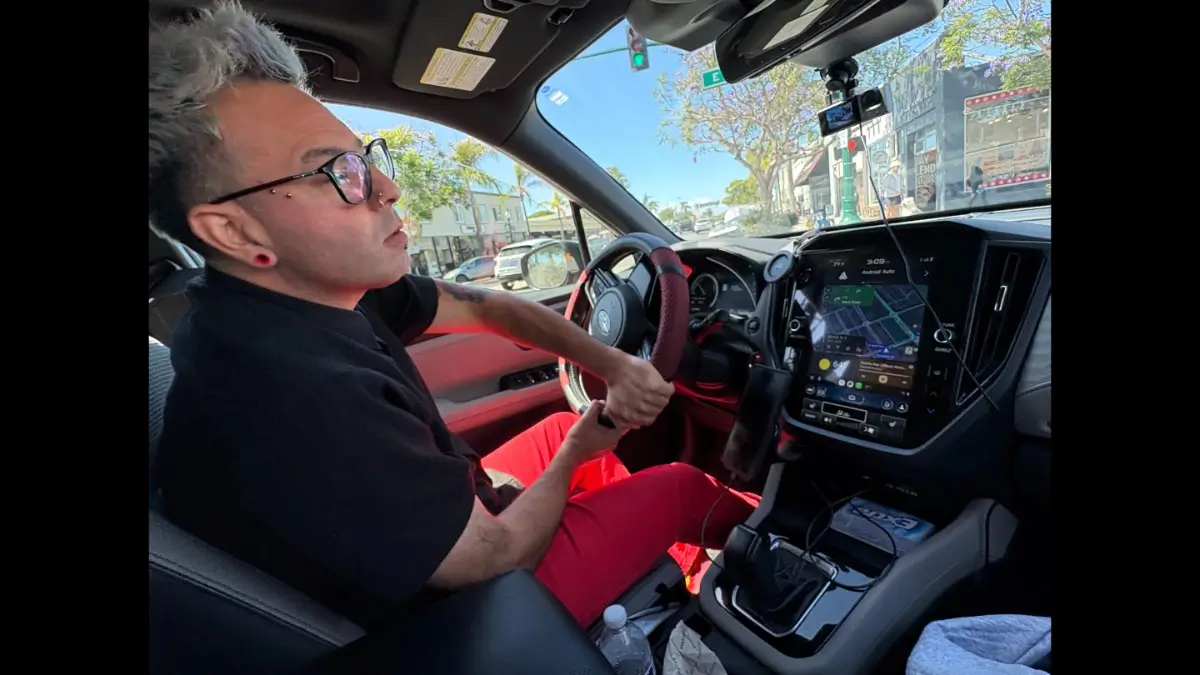
He also works construction jobs on weekends to help make up the difference.
Meanwhile, he says Lyft has been charging customers more per trip to offset rising fuel costs, but is not paying its drivers more and sometimes pays them even less. He estimates the platform is now paying drivers about 40 percent of what it charges customers for a ride, about half of what he earned when he began rideshare driving ten years ago.
“They don’t really explain how they justify this continual reduction of our pay despite our increased operational costs — fuel, vehicle maintenance, insurance, and the higher cost of living,” he says, adding, “I’m only going to keep doing this as long as it makes sense for me and my family.”

Connor is not the only rideshare driver or gig worker feeling the squeeze in the currently turbulent economy.
According to an analysis by Gridwise of rideshare drivers’ 2025 earnings (base pay, bonuses, and tips), Uber drivers earn a median gross pay of $21.92 per hour, and Lyft drivers make $22.45 before expenses on average. After expenses, their pay ranges from $12 to $22 per hour, which is competitive with fast food jobs in the U.S.
And since the pandemic, many more Americans have joined the gig economy, saturating some markets. The number of people earning income from ride-hailing or delivery-gig driving climbed from fewer than 300,000 in 2014 to 5 million in 2023, according to a study by several economists, as reported by the Wall Street Journal. Most do other work as well, said Andrew Garin, a Carnegie Mellon University economist who worked on the study.
Fed-up Drivers
In postings on social media, many drivers say high gas prices and overall inflation are making their rideshare and delivery jobs, whether they do them as a side gig or a main gig, an even tougher grind than ever. For some, it’s becoming untenable.
Kasiya T. Hola V-Son, a member of the DoorDash Delivery Drivers Facebook group, described picking up a Chipotle order and driving to the drop-off location, a dark, fenced area with no number on the building. It turned out to be a jail.
“Waste of my time going in circles,” she wrote, noting she’d receive only the base charge of $2.50 for her fruitless effort. “DoorDash is becoming more of a headache than it’s worth.”
‘Immature Man Baby’: Trump Posts His Nastiest AI Video Yet — and When Viewers Pull the Thread, They Realize He Probably Didn’t Mean to Hit Send
Steven Urban posted a photo of two shopping carts full of food he picked up at a BJ’s Wholesale Club warehouse near Fortville, Indiana, and delivered to a local day care. “$1K in food. Guess the tip,” he wrote, replying, “Ding Ding Ding” to the driver who guessed zero.
“95% of the offers are a slap in the face,” wrote Jim Miele, who was among many rideshare drivers who said people order $4 or $5 worth of Chick-fil-a or Taco Bell and don’t tip, while drivers, who may wait for 10 minutes inside a fast food restaurant, earn only a few dollars from the DoorDash platform after driving several miles to deliver the food.
Carol Holmes, an Uber Eats Driver in Wichita, wrote, “I live in a big city. But gig work pay is low. I don’t see how anyone is making a pile of money from this job.”
She said she stopped doing pickups at Lowe’s as “Too many peeps taking advantage and Uber takes most of the $. I’m not hauling 6 40-lb bags of soil for $5 for anyone! I don’t care if I’m driving next door to Lowe’s or 20 miles away! …You have to be very selective or you’ll go in the hole! My car [radiator] needs repair and I can’t run AC until it’s fixed.”
John Penaté, 51, is a full-time Uber driver in the metro San Diego area who told Atlanta Black Star he is an experienced wine sommelier, saving up to pursue his entrepreneurial dream of leading wine tours in Southern California and Mexico.
He says he needs to make at least $1,200 a week to pay his regular household bills, and more to make headway on his business plan. That means he needs to earn at least $1 per mile, and preferably $1.50, given that he calculates his overhead (including fuel, maintenance and repairs, and insurance) at 50 cents a mile.
With gas prices hitting $6.35 a gallon in Southern California lately, he’s been turning down ride offers from Uber that he says don’t make financial sense.
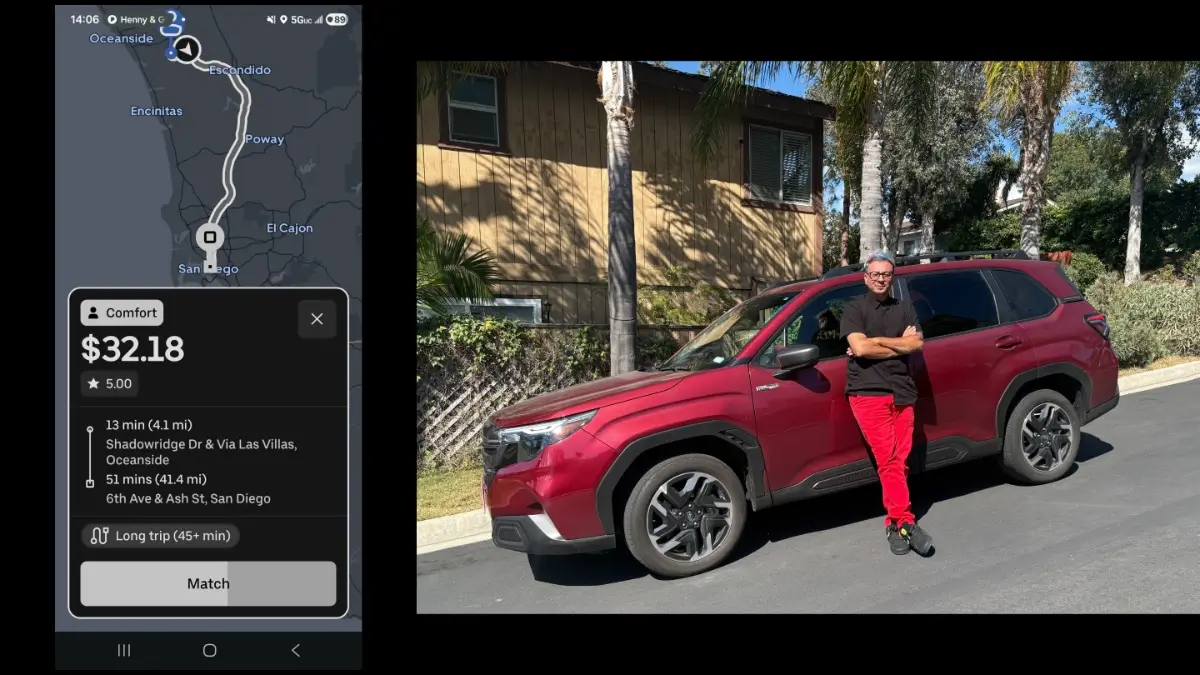
One such offer that popped up on his Uber app last week was for a 41.4-mile ride from Oceanside to San Diego. The pickup spot for that rider was 4.1 miles away. He quickly calculated that a 45-mile, one-hour-plus trip in his 2025 hybrid Subaru Forester SUV, considered an Uber Comfort vehicle, would pay him $32.18, or 71 cents a mile, plus a tip.
“Uber is likely charging $60 or $65 for this ride. I should be getting paid $45. If I take what they’re offering, I’m literally losing money,” Penaté said after rejecting the ride offer.
Being picky about what rides he accepts saves him money on the one hand, but it also has a downside in terms of the Uber app’s algorithm that determines what rides he’ll be offered in the future.
“The algorithm rewards people who accept rides with status and then gives those people more work,” he says. “They try to incentivize you to take those bad jobs.”
The Pain of Gassing Up
One way Uber and Lyft reward their most active and ride-accepting drivers is by offering rebates on gas, oil changes and other rewards based on their earned driver tier. With Uber, the tiers start at Blue, and then progress to Gold, Platinum and Diamond.
“To help mitigate the exceptional and rapid price increases that drivers have been seeing at the pump,” Uber said in an announcement on May 22, it is expanding fuel discounts and offers to Uber drivers and couriers through June 30.
They include $1 off per gallon of gas for its drivers who use the Upside app and up to an additional 21 cents off per gallon for Uber drivers using Shell Fuel Rewards, based on driver tier. Drivers who use the Uber Pro debit card can get an additional 5 percent to 11 percent back, with Diamond-tier drivers receiving the most.
Penaté, who says his status fluctuates between Gold and Platinum, uses Upside but doesn’t pursue the other incentives Uber offers because drivers have to fill up at certain affiliated gas stations to claim them. He thinks he gets a better deal at other fuel spots.
Among them is what he calls “a jewel of a mom-and-pop shop” in Escondido, which is charging about a dollar less per gallon of premium ($5.67) than many other San Diego area gas stations. But he’s still paying $75 or $80 to fill up his tank every other day, or about $225 a week. Before the Iran conflict, he says, it was closer to $150 a week. That adds up to $300 more in fuel costs per month.
Also eating into his net is an emergency waiver from the Environmental Protection Agency that allows gas stations to sell gas that is blended with 15 percent ethanol, which costs 40 cents less per gallon, but is also less clean and fuel-efficient. He figures he’ll be getting 420 miles per gallon from a full tank instead of his usual 480 miles per tank using that degraded gas, which produces more smog.
Penaté, who also leads wine tastings on days when he’s not driving, has driven for Uber on and off for five years, but says he really started hustling to sock away money last December. He often has to work 50 or 60 hours a week to earn the $1200 he needs to make ends meet.
After a 10-hour day last week when ride offers were sparse, and he didn’t make his $200 minimum daily earnings goal, Penaté said, “There’s less work, because, as I’ve been told by customers, Uber is charging them more to offset the rising gas prices, so they’re not using rideshare as much. But I’ve also noticed that Uber is not passing that additional cost on to us. The cash back program for gas is a stunt more than anything else because the savings are negligible. It’s just a cover for Uber to cheat us.”
He said a year ago he thought he’d be able to reach his savings goal to launch his wine tour business by June, but has now pushed that back to next March.
Rideshare Workers Slowly Organizing While Robotaxis Expand
At the union organizing meeting in Atlanta, Connor said he came to see if “as a collective, we drivers can do anything to improve our situation. Right now, we have zero say, no representation, while the platforms have all the power.”
Because rideshare drivers are classified as independent contractors rather than employees under federal law, companies like Uber and Lyft are not legally required to recognize the drivers’ unions or to bargain in good faith. But unions in a few states, including Illinois and Massachusetts, have successfully negotiated higher pay, better working conditions and company contributions to benefits such as medical insurance.
On June 1, Illinois lawmakers approved House Bill 5090, a measure that creates the Transportation Network Driver Labor Relations Act and would allow rideshare drivers in the state to unionize and establish collective bargaining rights over wages and working conditions with rideshare companies. It awaits the governor’s signature.
The Atlanta Rideshare Drivers Union (ARDU), which has organized one-day boycotts of Uber and Lyft at Atlanta’s Hartsfield-Jackson International Airport to protest for higher pay, has not had a breakthrough with the rideshare companies. But it has won some concessions from airport management, such as placement of port-a-potties in the airport’s rideshare driver waiting area.
“Talking to Uber and Lyft is like talking to a wall,” ARDU leader Thyron Spears told Atlanta Black Star. The union is currently circulating a petition to ban driverless cars now widely circulating in Atlanta, which it sees as a direct threat to the livelihoods of its members.
Last year, Lyft announced a partnership with Waymo to launch autonomous ride-hailing in Nashville in 2026. Lyft’s Flexdrive subsidiary is handling fleet management, with riders initially hailing rides on the Waymo app, and with plans to use Lyft’s network for matched Waymo rides later this year.
Uber, Lyft’s biggest rival, is spending $100 million to build autonomous fleet management hubs in San Francisco, Los Angeles and Dallas, reported Axios.
Collaborations between robotaxi and rideshare companies will eventually go nationwide, transportation experts say, displacing some human drivers.
Meanwhile, Lyft announced a new policy starting in May that promised to cap its share of what passengers pay at 30 percent, and make “external fees for costs set by outside parties,” specifically for insurance, taxes and government fees, more visible and clearer to drivers on the platform. It is called the 30 percent cap “a ceiling, not a target. On average, our fee is around 14 percent, and we expect that to remain true.”
Lyft said that if its fee exceeds 30 percent of passenger payments in any given month, drivers will automatically receive an adjustment.
Connor credits Lyft for “being more transparent in the payment breakdown,” but says he never receives more than half of what passengers pay. The fees the platform deducts from each ride remain unclear — and frustrating — to him.
“They control what insurance they buy, and they’re probably making a profit on that,” he says. “The whole equation is designed to make more and more money off of our labor, our vehicles, and our financial risk.”


